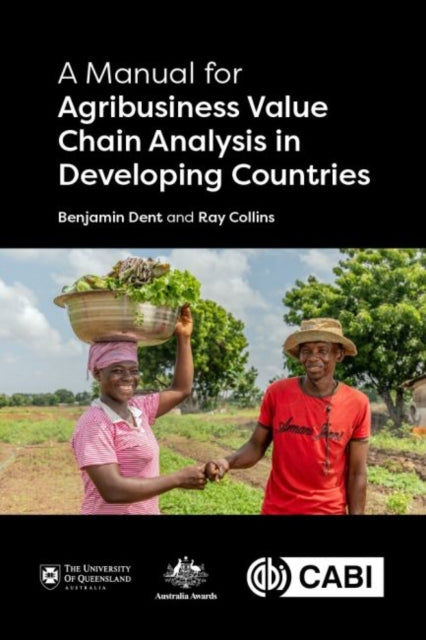
Dr BenjaminDent,Professor RayCollins
Manual for Agribusiness Value Chain Analysis in Developing Countries
Manual for Agribusiness Value Chain Analysis in Developing Countries
💎 Earn 167 Points (£1.67) on this item.
- Condition: Brand new
- UK Delivery times: Usually arrives within 2 - 3 working days
- UK Shipping: Fee starts at £3.89. Subject to product weight & dimension
Bulk ordering. Want 15 or more copies? Get a personalised quote and bigger discounts. Learn more about bulk orders.
Couldn't load pickup availability
- More about Manual for Agribusiness Value Chain Analysis in Developing Countries
Value Chain Analysis (VCA) is a tool to improve a value chain's effectiveness and efficiency, but it can be limited by time and funding in developing countries. This manual provides practical guidance on how to undertake an affordable VCA that generates valid data and produces meaningful recommendations. It covers planning, conducting research, analyzing data, creating recommendations, and reporting. Case studies are included to illustrate successful VCAs in Ghanaian pineapples and Kenyan indigenous chicken. The manual is designed for a wide audience, including NGO practitioners, government policymakers, private sector managers, consultants, and academics.
Format: Paperback / softback
Length: 120 pages
Publication date: 27 October 2021
Publisher: CABI Publishing
Value Chain Analysis (VCA) is a powerful tool that assesses the current state of a value chain and provides recommendations for enhancing its effectiveness and efficiency. However, implementing VCA in developing countries often faces challenges such as limited time and funding. This manual aims to demonstrate how VCA principles can be applied in such circumstances, ensuring that valid data is generated and impactful recommendations are made.
The manual is divided into four parts:
Part 1: Our Approach to Value Chain Thinking: This section outlines the principles and practices of taking a value chain approach. It explains how to identify the key stakeholders, analyze the market dynamics, and understand the interdependencies within the value chain.
Part 2: Conducting Value Chain Analysis: This section provides step-by-step guidance on planning a VCA, conducting consumer research, interviewing, analyzing, creating recommendations, and reporting. It includes practical tips and techniques for conducting VCA in resource-constrained environments.
Part 3: Case Studies: This section showcases successful VCA implementations with case studies from Ghanaian pineapples and Kenyan indigenous chicken. It demonstrates how VCA can be used to identify opportunities for improvement, enhance competitiveness, and increase profitability.
Part 4: Further Reading and Biographies: This section provides additional resources for those interested in learning more about VCA and related topics. It includes references to relevant literature, research papers, and biographies of key individuals who have contributed to the field.
The manual is designed in a practical and accessible style, making it suitable for a wide audience. It will be valuable to NGO practitioners, government policymakers and extension officers, private sector managers and consultants, and academics for teaching and researching.
By applying the principles and techniques outlined in this manual, organizations can improve their value chains, enhance their competitiveness, and contribute to sustainable development in developing countries.
Weight: 274g
Dimension: 152 x 235 x 17 (mm)
ISBN-13: 9781789249361
UK and International shipping information
UK and International shipping information
We deliver throughout the United Kingdom and to 128 countries and territories worldwide, including the United States, Australia, Canada, Germany, Spain and France.