Jaware
Medical Imaging and Health Informatics
Medical Imaging and Health Informatics
YOU SAVE £30.16
- Condition: Brand new
- UK Delivery times: Usually arrives within 2 - 3 working days
- UK Shipping: Fee starts at £3.89. Subject to product weight & dimension
Bulk ordering. Want 15 or more copies? Get a personalised quote and bigger discounts. Learn more about bulk orders.
Couldn't load pickup availability
- More about Medical Imaging and Health Informatics
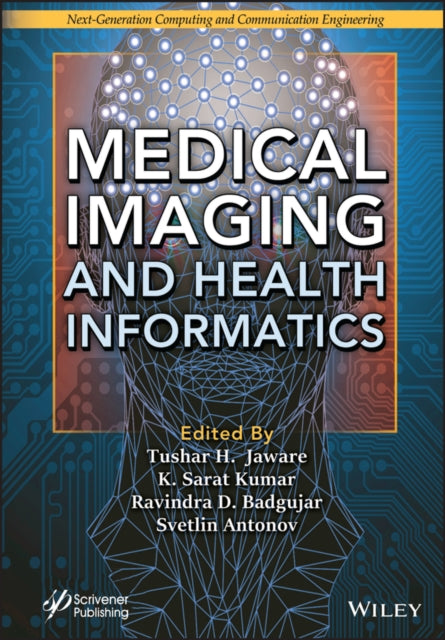
Medical imaging and health informatics is a subfield of science and engineering that applies informatics to medicine and includes the study of design, development, and application of computational innovations to improve healthcare. AI and associated technologies are becoming more common in society and healthcare, and deep learning algorithms are a promising option for automated disease detection with high accuracy. This book explores a wide range of image segmentation, classification, registration, computer-aided analysis applications, methodologies, algorithms, platforms, and tools, and gives a holistic approach to the application of AI in healthcare through case studies and innovative applications. It also highlights the significant issues and concerns regarding the use of AI in healthcare together with other allied areas, such as the Internet of Things (IoT) and medical informatics, to construct a global multidisciplinary forum.
Format: Hardback
Length: 384 pages
Publication date: 29 August 2022
Publisher: John Wiley & Sons Inc
Medical imaging and health informatics is a rapidly evolving field that combines the principles of computer science and medicine to improve healthcare outcomes. It encompasses the study of artificial intelligence (AI) in medical imaging, as well as the practical application of machine learning (ML) and deep learning (DL) techniques for clinical applications.
Medical imaging refers to the use of imaging technologies such as X-rays, CT scans, MRI, and ultrasound to diagnose and treat medical conditions. AI in medical imaging has the potential to revolutionize the way we diagnose and treat diseases by enabling faster, more accurate, and less invasive imaging techniques. One of the key applications of AI in medical imaging is the development of automated disease detection algorithms. These algorithms can analyze medical images and identify patterns that are indicative of certain diseases, such as cancer, heart disease, and neurological disorders. By using these algorithms, physicians can detect diseases earlier, which can lead to more effective treatment and better patient outcomes.
Another area of application for AI in medical imaging is the development of personalized medicine approaches. By analyzing patient data, including medical images, genetic information, and clinical history, AI algorithms can tailor treatment plans to individual patients. This can lead to more effective and targeted treatments, which can improve patient outcomes and reduce the risk of side effects.
In addition to AI, ML and DL techniques are also being used in medical imaging to improve image analysis and interpretation. ML algorithms can learn from large datasets and identify patterns that may be difficult for humans to detect. DL algorithms, on the other hand, can process and analyze large amounts of data, making them ideal for tasks such as image segmentation, which involves dividing an image into smaller, more manageable parts.
Image segmentation is a critical step in medical imaging, as it allows physicians to identify specific regions of interest in an image and analyze them more closely. By using DL algorithms, physicians can segment images more accurately and efficiently, which can lead to more accurate diagnoses and better treatment plans.
Another area of application for ML and DL techniques in medical imaging is the development of computer-aided analysis applications. These applications can help physicians analyze medical images more efficiently and accurately, which can lead to better patient care and more efficient use of healthcare resources.
In conclusion, medical imaging and health informatics is a rapidly evolving field that is being transformed by the application of AI, ML, and DL techniques. These technologies have the potential to improve healthcare outcomes by enabling faster, more accurate, and less invasive imaging techniques, as well as by developing personalized medicine approaches and computer-aided analysis applications. As the field continues to evolve, it is likely that we will see even more innovative applications of these technologies in the future.
Weight: 954g
Dimension: 187 x 264 x 25 (mm)
ISBN-13: 9781119819134
UK and International shipping information
UK and International shipping information
We deliver throughout the United Kingdom and to 128 countries and territories worldwide, including the United States, Australia, Canada, Germany, Spain and France.