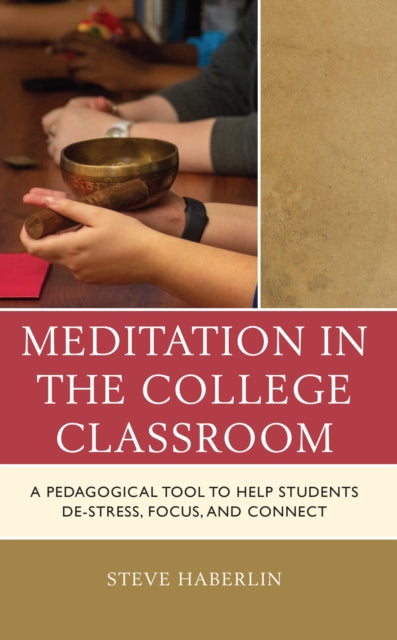
Steve Haberlin
Meditation in the College Classroom: A Pedagogical Tool to Help Students De-Stress, Focus, and Connect
Meditation in the College Classroom: A Pedagogical Tool to Help Students De-Stress, Focus, and Connect
💎 Earn 141 Points (£1.41) on this item.
We can order this item for you. Delivery usually takes about 4 to 6 weeks.
This item is not held in our immediate stock. We will order it for you after checkout.
Estimated delivery: About 4 to 6 weeks
YOU SAVE £3.68
- Condition: Brand new
- UK Delivery times: Usually arrives within 2 - 3 working days
- UK Shipping: Fee starts at £3.89. Subject to product weight & dimension
Bulk ordering. Want 15 or more copies? Get a personalised quote and bigger discounts. Learn more about bulk orders.
Couldn't load pickup availability
- More about Meditation in the College Classroom: A Pedagogical Tool to Help Students De-Stress, Focus, and Connect
The book offers guidance for incorporating meditation into higher education classrooms, including developing a practice, setting the stage, creating ideal conditions, using specific methods, advancing practice, and spreading the culture. A script is included.
Format: Paperback / softback
Length: 156 pages
Publication date: 03 February 2023
Publisher: Bloomsbury Publishing Plc
This book offers valuable insights and practical guidance for higher education faculty and instructors who are interested in incorporating meditation into their teaching practices. Drawing on extensive research and experience, it provides a comprehensive framework for introducing meditation to college students and offers a step-by-step guide for developing one's own meditation practice as an academic. The book covers various aspects of meditation, including its benefits, strategies for setting up a meditation practice in the classroom, and specific techniques that can be used to engage students in meditation. It also discusses ways to advance meditation practice with students and maintain their interest, as well as strategies for spreading the culture of meditation across campus. The book includes a detailed script that can be used to guide meditation sessions in the classroom. By incorporating meditation into their teaching practices, faculty and instructors can help students develop mindfulness, reduce stress, and improve their overall well-being. Meditation has been shown to have numerous benefits for both physical and mental health, and it can be a powerful tool for promoting student success. This book provides a valuable resource for anyone who is interested in exploring the potential of meditation in higher education.
Meditation in Higher Education: A Guide for Faculty and Instructors
This book provides background, strategies, and tips for higher education faculty and instructors interested in incorporating meditation in their classrooms. The work is based on research involving introducing brief meditation practices to college students and developing a detailed guide. Readers will learn how to develop their own meditation practice as an academic, to set the stage of introducing practice to students, to create ideal conditions for meditation in the classroom, specific, classroom-friendly meditation methods, ways to advance meditation practice with students and keep it interesting, and how to spread the culture of meditation across campus. A detailed script is provided.
Introduction
Meditation has been practiced for thousands of years and has been shown to have numerous benefits for both physical and mental health. It can help reduce stress, improve concentration, and enhance overall well-being. Meditation has also been shown to be effective in promoting student success. However, many higher education faculty and instructors may not be familiar with meditation or may not know how to incorporate it into their teaching practices. This book aims to address these issues and provide a comprehensive guide for incorporating meditation into higher education.
Benefits of Meditation
Meditation has numerous benefits for both physical and mental health. Physical benefits include reduced blood pressure, improved cardiovascular health, and increased flexibility. Mental benefits include reduced stress, improved concentration, and enhanced creativity. Meditation can also help improve sleep quality and reduce the risk of chronic diseases such as heart disease, diabetes, and cancer. Meditation has also been shown to be effective in promoting student success. Studies have shown that meditation can help improve academic performance, reduce anxiety, and increase motivation. Meditation can also help students develop a sense of mindfulness and self-awareness, which can be valuable in all aspects of life.
Strategies for Setting Up a Meditation Practice in the Classroom
Setting up a meditation practice in the classroom can be a challenging task. However, there are several strategies that can help make it easier. One of the most important strategies is to create a quiet and comfortable environment. This can be done by turning off the lights, closing the windows, and playing soft music. It is also important to ensure that the students are comfortable and relaxed. Another strategy is to provide a clear and concise introduction to meditation. This can be done by explaining the benefits of meditation and how to practice it. It is also important to provide a variety of meditation techniques that can be used by the students. This can include guided meditation, mindfulness meditation, and body scan meditation. It is also important to provide feedback to the students on their meditation practice. This can be done by asking them to report on their experiences and to provide feedback on their progress. It is also important to encourage the students to continue practicing meditation on their own time. This can be done by providing resources such as books, websites, and apps that can help them practice meditation. It is also important to recognize that meditation is not for everyone. Some students may not be interested in practicing meditation, and it is important to respect their decision. It is also important to provide alternative activities for the students who are not interested in practicing meditation. This can include group discussions, group activities, and physical exercise.
Specific Meditation Methods for the Classroom
There are several specific meditation methods that can be used in the classroom. Guided meditation is a popular method that involves a teacher guiding the students through a meditation practice. Mindfulness meditation is a method that involves focusing on the present moment and being aware of one's thoughts and feelings. Body scan meditation is a method that involves scanning the body from head to toe and focusing on each area of the body. These methods can be used in a variety of settings, including the classroom, the office, and the home. It is important to choose the method that is best suited for the students and the setting. It is also important to provide feedback to the students on their meditation practice. This can be done by asking them to report on their experiences and to provide feedback on their progress. It is also important to encourage the students to continue practicing meditation on their own time. This can be done by providing resources such as books, websites, and apps that can help them practice meditation. It is also important to recognize that meditation is not for everyone. Some students may not be interested in practicing meditation, and it is important to respect their decision. It is also important to provide alternative activities for the students who are not interested in practicing meditation. This can include group discussions, group activities, and physical exercise.
Creating Ideal Conditions for Meditation in the Classroom
Creating ideal conditions for meditation in the classroom is important for the success of the practice. The classroom should be quiet and comfortable, with minimal distractions. The students should be seated in a comfortable position, with their backs straight and their eyes closed. The teacher should be seated in a comfortable position, with their eyes closed. The teacher should also be aware of the students' needs and should provide support and guidance as needed. It is also important to provide a variety of meditation techniques that can be used by the students. This can include guided meditation, mindfulness meditation, and body scan meditation. It is also important to provide feedback to the students on their meditation practice. This can be done by asking them to report on their experiences and to provide feedback on their progress. It is also important to encourage the students to continue practicing meditation on their own time. This can be done by providing resources such as books, websites, and apps that can help them practice meditation. It is also important to recognize that meditation is not for everyone. Some students may not be interested in practicing meditation, and it is important to respect their decision. It is also important to provide alternative activities for the students who are not interested in practicing meditation. This can include group discussions, group activities, and physical exercise.
Advancing Meditation Practice with Students
Advancing meditation practice with students can be a challenging task. However, there are several strategies that can help make it easier. One of the most important strategies is to provide feedback to the students on their meditation practice. This can be done by asking them to report on their experiences and to provide feedback on their progress. It is also important to encourage the students to continue practicing meditation on their own time. This can be done by providing resources such as books, websites, and apps that can help them practice meditation. It is also important to recognize that meditation is not for everyone. Some students may not be interested in practicing meditation, and it is important to respect their decision. It is also important to provide alternative activities for the students who are not interested in practicing meditation. This can include group discussions, group activities, and physical exercise.
Spreading the Culture of Meditation Across Campus
Spreading the culture of meditation across campus can be a challenging task. However, there are several strategies that can help make it easier. One of the most important strategies is to provide resources to the students. This can include books, websites, and apps that can help them practice meditation. It is also important to provide opportunities for the students to practice meditation together. This can include group meditation sessions, meditation retreats, and meditation clubs. It is also important to recognize that meditation is not for everyone. Some students may not be interested in practicing meditation, and it is important to respect their decision. It is also important to provide alternative activities for the students who are not interested in practicing meditation. This can include group discussions, group activities, and physical exercise.
Conclusion
In conclusion, meditation has numerous benefits for both physical and mental health. It can help reduce stress, improve concentration, and enhance overall well-being. Meditation has also been shown to be effective in promoting student success. However, many higher education faculty and instructors may not be familiar with meditation or may not know how to incorporate it into their teaching practices. This book aims to address these issues and provide a comprehensive guide for incorporating meditation into higher education. By incorporating meditation into their teaching practices, faculty and instructors can help students develop mindfulness, reduce stress, and improve their overall well-being. Meditation has been shown to have numerous benefits for both physical and mental health, and it can be a powerful tool for promoting student success. This book provides a valuable resource for anyone who is interested in exploring the potential of meditation in higher education.
Weight: 250g
Dimension: 152 x 229 x 12 (mm)
ISBN-13: 9781475870121
UK and International shipping information
UK and International shipping information
We deliver throughout the United Kingdom and to 128 countries and territories worldwide, including the United States, Australia, Canada, Germany, Spain and France.