Shulph Ink
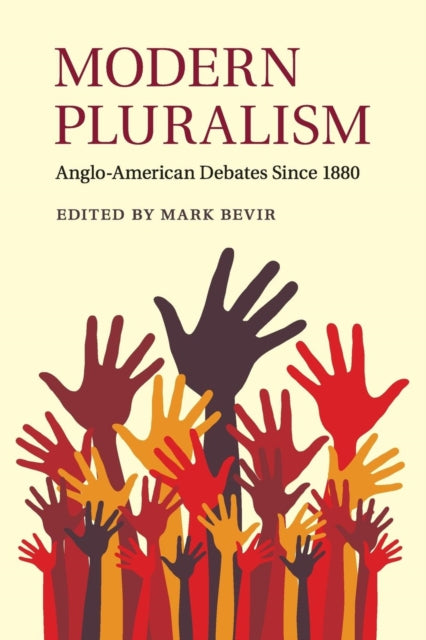
Modern Pluralism: Anglo-American Debates since 1880
Modern Pluralism: Anglo-American Debates since 1880
💎 Earn 160 Points (£1.60) on this item.
We can order this item for you. Delivery usually takes about 4 to 6 weeks.
This item is not held in our immediate stock. We will order it for you after checkout.
Estimated delivery: About 4 to 6 weeks
YOU SAVE £1.90
- Condition: Brand new
- UK Delivery times: Usually arrives within 2 - 3 working days
- UK Shipping: Fee starts at £3.89. Subject to product weight & dimension
Bulk ordering. Want 15 or more copies? Get a personalised quote and bigger discounts. Learn more about bulk orders.
Couldn't load pickup availability
- More about Modern Pluralism: Anglo-American Debates since 1880
Modern Pluralism is an essential intellectual movement that explores diverse ideas about diversity in Britain and the United States, challenging homogenous nations and sovereign states and promoting sub-national groups as potential sites of self-government.
Format: Paperback / softback
Length: 263 pages
Publication date: 15 March 2018
Publisher: Cambridge University Press
Pluralism is one of the most significant intellectual movements of the modern era, playing a pivotal role in shaping the world we live in today. It encompasses a range of perspectives and ideologies that seek to understand and appreciate the diversity of human experiences and cultures.
Liberal pluralism, for instance, has been instrumental in reinforcing and promoting the separation of political and religious spheres. It advocates for a system of checks and balances that ensures that different branches of government are independent and accountable to each other. This approach has helped to prevent the abuse of power and promote a more democratic and inclusive society.
Socialist pluralism, on the other hand, has focused on the political role of trade unions and the rise of corporatism. It advocates for a more equitable distribution of wealth and resources and the empowerment of workers through collective bargaining and labor movements. This approach has contributed to the improvement of working conditions and the reduction of social inequality.
Empirical pluralism has also played a significant role in legitimizing the role of interest groups in democratic government. It argues that diverse groups with different interests and perspectives should have a voice in the decision-making process, as it can lead to more informed and effective policies. This approach has been particularly important in the development of civil rights movements and environmental advocacy groups.
Today, pluralism continues to inspire thinking about key issues such as multiculturalism and network governance. It challenges the notion of homogenous nations and sovereign states and promotes the idea that sub-national groups can be potential sites of self-government.
Despite the importance of pluralism, there has been a lack of comprehensive histories of twentieth-century pluralist thinking. Modern Pluralism fills this gap by exploring liberal, socialist, and empirical ideas about diversity in Britain and the United States. The book brings together intellectual historians, political theorists, and social scientists to collectively explore the historical background to present institutions and debates.
Through its comprehensive analysis, Modern Pluralism serves to enrich our understanding of the history of pluralism and its continuing relevance. It provides a valuable resource for students, scholars, and policymakers alike, as it offers insights into the complex dynamics of diversity, power, and governance in modern societies.
In conclusion, pluralism is a vital intellectual movement that has played a significant role in shaping the modern world. It encompasses a range of perspectives and ideologies that seek to understand and appreciate the diversity of human experiences and cultures. Liberal pluralism, socialist pluralism, and empirical pluralism have all contributed to the development of a more democratic, inclusive, and equitable society. Today, pluralism continues to inspire thinking about key issues such as multiculturalism and network governance, and Modern Pluralism provides a valuable resource for those seeking to understand the historical background and ongoing relevance of this movement.
Weight: 406g
Dimension: 155 x 229 x 15 (mm)
ISBN-13: 9781108454087
UK and International shipping information
UK and International shipping information
We deliver throughout the United Kingdom and to 128 countries and territories worldwide, including the United States, Australia, Canada, Germany, Spain and France.