Shulph Ink
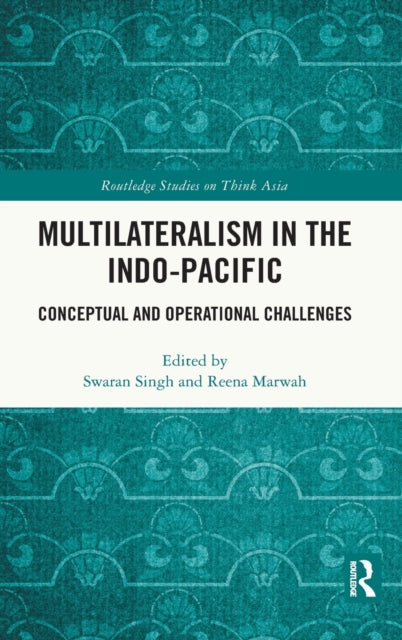
Multilateralism in the Indo-Pacific: Conceptual and Operational Challenges
Multilateralism in the Indo-Pacific: Conceptual and Operational Challenges
💎 Earn 811 Points (£8.11) on this item.
We can order this item for you. Delivery usually takes about 4 to 6 weeks.
This item is not held in our immediate stock. We will order it for you after checkout.
Estimated delivery: About 4 to 6 weeks
YOU SAVE £9.63
- Condition: Brand new
- UK Delivery times: Usually arrives within 2 - 3 working days
- UK Shipping: Fee starts at £2.39. Subject to product weight & dimension
Bulk ordering. Want 15 or more copies? Get a personalised quote and bigger discounts. Learn more about bulk orders.
Couldn't load pickup availability
- More about Multilateralism in the Indo-Pacific: Conceptual and Operational Challenges
A comprehensive study focusing on emerging new multilateralism in the Indo-Pacific is needed to address regional challenges and promote stability.
Format: Hardback
Length: 192 pages
Publication date: 05 August 2022
Publisher: Taylor & Francis Ltd
A comprehensive study examining the emergence of new multilateralism in the Indo-Pacific region, encompassing its historical context, geopolitical implications, and potential challenges and opportunities.
The Indo-Pacific region is witnessing a significant shift towards a more complex and interconnected geopolitical landscape, characterized by the rise of new multilateralism. This trend is driven by a range of factors, including the increasing importance of regional security, the need for economic cooperation, and the desire to address global challenges such as climate change and pandemics.
One of the key features of new multilateralism in the Indo-Pacific is the increased emphasis on collaboration and cooperation among countries in the region. This is evident in the formation of various regional institutions, such as the Association of Southeast Asian Nations (ASEAN) and the Pacific Alliance (PA). These organizations aim to promote economic growth, security, and stability in the Indo-Pacific by fostering dialogue, cooperation, and mutual respect among their members.
However, the emergence of new multilateralism in the Indo-Pacific also presents several challenges. One of the biggest challenges is the rise of authoritarianism and nationalism in the region. This has led to tensions and conflicts, particularly in countries such as China and India. Another challenge is the issue of regional security, particularly in the South China Sea, where China's claims to territorial sovereignty have led to tensions with other countries in the region.
Despite these challenges, new multilateralism in the Indo-Pacific has the potential to bring about positive change in the region. By promoting collaboration and cooperation among countries, new multilateralism can help to address regional challenges such as poverty, climate change, and pandemics. It can also help to promote stability and security in the region, which is essential for economic growth and development.
In conclusion, the emergence of new multilateralism in the Indo-Pacific is a significant development that has the potential to bring about positive change in the region. While there are challenges to be addressed, such as the rise of authoritarianism and nationalism and the issue of regional security, new multilateralism offers a framework for countries in the region to work together to address these challenges and build a more prosperous and stable future.
The Indo-Pacific region is undergoing a profound transformation towards a more complex and interconnected geopolitical landscape, driven by the emergence of new multilateralism. This trend is characterized by a heightened emphasis on collaboration and cooperation among countries in the region, aimed at addressing a range of global challenges such as security, economic development, and climate change.One of the defining features of new multilateralism in the Indo-Pacific is the formation of regional institutions such as the Association of Southeast Asian Nations (ASEAN) and the Pacific Alliance (PA). These organizations serve as platforms for countries to engage in dialogue, cooperation, and mutual respect, fostering economic growth, security, and stability in the Indo-Pacific.
However, the emergence of new multilateralism in the Indo-Pacific also presents several challenges. One of the most significant is the rise of authoritarianism and nationalism in the region, which has led to tensions and conflicts, particularly in countries such as China and India. Another challenge is the issue of regional security, particularly in the South China Sea, where China's claims to territorial sovereignty have led to tensions with other countries in the region.
Despite these challenges, new multilateralism in the Indo-Pacific has the potential to bring about positive change in the region. By promoting collaboration and cooperation among countries, new multilateralism can help to address regional challenges such as poverty, climate change, and pandemics. It can also help to promote stability and security in the region, which is essential for economic growth and development.
In conclusion, the emergence of new multilateralism in the Indo-Pacific is a significant development that has the potential to shape the region's future in profound ways. While there are challenges to be addressed, such as the rise of authoritarianism and nationalism and the issue of regional security, new multilateralism offers a framework for countries in the region to work together to build a more prosperous and stable future.
Weight: 540g
Dimension: 234 x 156 (mm)
ISBN-13: 9781032244693
UK and International shipping information
UK and International shipping information
UK Delivery and returns information:
- Delivery within 2 - 3 days when ordering in the UK.
- Shipping fee for UK customers from £2.39. Fully tracked shipping service available.
- Returns policy: Return within 30 days of receipt for full refund.
International deliveries:
Shulph Ink now ships to Australia, Belgium, Canada, France, Germany, Ireland, Italy, India, Luxembourg Saudi Arabia, Singapore, Spain, Netherlands, New Zealand, United Arab Emirates, United States of America.
- Delivery times: within 5 - 10 days for international orders.
- Shipping fee: charges vary for overseas orders. Only tracked services are available for most international orders. Some countries have untracked shipping options.
- Customs charges: If ordering to addresses outside the United Kingdom, you may or may not incur additional customs and duties fees during local delivery.