Shulph Ink
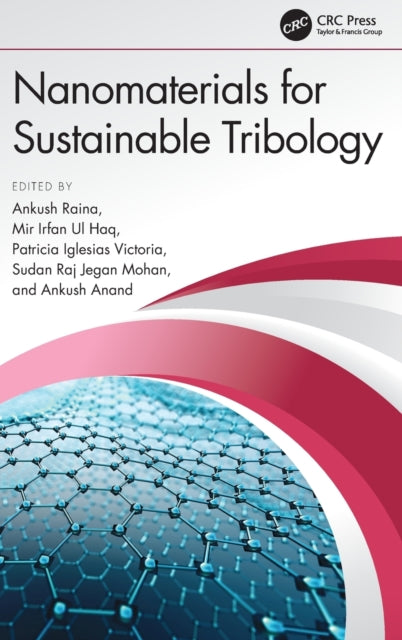
Nanomaterials for Sustainable Tribology
Nanomaterials for Sustainable Tribology
We can order this item for you. Delivery usually takes about 4 to 6 weeks.
This item is not held in our immediate stock. We will order it for you after checkout.
Estimated delivery: About 4 to 6 weeks
YOU SAVE £12.84
- Condition: Brand new
- UK Delivery times: Usually arrives within 2 - 3 working days
- UK Shipping: Fee starts at £3.89. Subject to product weight & dimension
Bulk ordering. Want 15 or more copies? Get a personalised quote and bigger discounts. Learn more about bulk orders.
Couldn't load pickup availability
- More about Nanomaterials for Sustainable Tribology
Nanomaterials have gained significant attention in tribology due to their unique properties that can enhance the performance of materials and devices. However, the sustainability of nanomaterials is a major concern, and their economic aspects are also important to consider. Tribology of green lubricants, green additives, and lightweight materials is gaining importance as we strive to reduce our environmental impact. Orthopedic implants, dental tribology, and biocompatible nanomaterials are some of the special topics covered in this research field. Interdisciplinary aspects such as sustainability, tribology of biological systems, and chemical aspects of nanomaterials are also discussed. Research advancements and recent trends in nanomaterials include green additives, nano greases, nanocomposite tribology, and the concept of green tribology with respect to nanotechnology.
Format: Hardback
Length: 288 pages
Publication date: 24 March 2023
Publisher: Taylor & Francis Ltd
Nanomaterials have gained significant attention in various fields, including tribology, due to their unique properties and potential applications. In this comprehensive review, we will explore the sustainability of nanomaterials in tribology, the economic aspects of nanomaterials, the mechanisms involved, and the mathematical models employed. We will also highlight the importance of tribology in green lubricants, green additives, and lightweight materials. Additionally, we will cover special topics such as orthopedic implants, dental tribology, and biocompatible nanomaterials related to bio tribology.
Sustainability is a crucial aspect of nanomaterials in tribology. While nanomaterials offer numerous advantages, such as enhanced performance and improved durability, their production and disposal can have environmental and health implications. Therefore, it is essential to consider the sustainability of nanomaterials throughout their lifecycle, from synthesis to disposal.
One of the key challenges in the sustainability of nanomaterials in tribology is the potential for nanoparticles to accumulate in the environment. Nanoparticles can be released into the environment during the production, use, and disposal of nanomaterials. These nanoparticles can then enter the food chain, posing risks to human health and the environment. Therefore, it is important to develop effective waste management strategies for nanomaterials to minimize their environmental impact.
Another challenge in the sustainability of nanomaterials in tribology is the potential for nanoparticles to interact with other materials in the environment. Nanoparticles can have unique properties that can alter the properties of other materials, leading to unintended consequences. For example, nanoparticles can interact with soil particles, leading to the formation of new compounds that can be toxic to plants and animals. Therefore, it is important to conduct thorough testing of nanomaterials before their use in tribology to ensure their compatibility with other materials in the environment.
The economic aspects of nanomaterials are also important to consider. Nanomaterials can offer significant cost savings and performance improvements in various industries, such as manufacturing, transportation, and energy. However, the development and production of nanomaterials can also be expensive, and the costs can be passed on to consumers. Therefore, it is important to evaluate the economic benefits of nanomaterials against their costs to ensure that they are sustainable in the long term.
Mechanisms involved in nanomaterials in tribology are diverse and complex. Nanomaterials can enhance tribological properties by modifying the surface properties of materials, such as friction and wear. For example, nanoparticles can be used to improve the lubricity of surfaces, reducing friction and wear. Nanomaterials can also be used to enhance the strength and stiffness of materials, leading to improved durability.
Mathematical models are also important in understanding the behavior of nanomaterials in tribology. Mathematical models can help predict the performance of nanomaterials in various tribological environments, such as lubrication, wear, and friction. These models can also help optimize the design of nanomaterials to improve their performance and reduce their costs.
In addition to their use in tribology, nanomaterials have potential applications in other fields, such as medicine, agriculture, and environmental science. For example, nanomaterials can be used to develop new drugs and vaccines, improve crop yields, and clean up contaminated environments. However, the development and use of nanomaterials in these fields also raise concerns about their safety and environmental impact.
Tribology of green lubricants, green additives, and lightweight materials is also important. Green lubricants and additives are designed to be environmentally friendly and have a low impact on the environment. Lightweight materials, such as carbon fiber, can reduce the weight of vehicles, leading to improved fuel efficiency and reduced emissions.
Orthopedic implants, dental tribology, and biocompatible nanomaterials related to bio tribology are also important areas of research. Orthopedic implants are designed to replace damaged or diseased bones and joints. Dental tribology is the study of the interactions between teeth and other oral structures. Biocompatible nanomaterials can be used to improve the healing and regeneration of tissues.
Interdisciplinary aspects of nanomaterials, such as sustainability, tribology of biological systems, and chemical aspects of nanomaterials, are also important to consider. Sustainability is the study of the relationship between human activity and the environment. Tribology of biological systems is the study of the interactions between biological structures and materials. Chemical aspects of nanomaterials are the study of the interactions between nanomaterials and other chemicals in the environment.
Research advancement and recent trends in nanomaterials in tribology include the development of green additives, nano greases, nanocomposite tribology, and the concept of green tribology with respect to nanotechnology. Green additives are designed to improve the performance of traditional lubricants while reducing their environmental impact. Nano greases are designed to have a low coefficient of friction and a high viscosity, making them suitable for use in high-temperature applications. Nanocomposite tribology is the study of the interactions between nanoparticles and other materials in tribological environments. The concept of green tribology with respect to nanotechnology is the study of the interactions between nanomaterials and the environment in tribological applications.
In conclusion, nanomaterials have gained significant attention in various fields, including tribology, due to their unique properties and potential applications. While nanomaterials offer numerous advantages, such as enhanced performance and improved durability, their production and disposal can have environmental and health implications. Therefore, it is essential to consider the sustainability of nanomaterials throughout their lifecycle, from synthesis to disposal. The economic aspects of nanomaterials are also important to consider, as they can offer significant cost savings and performance improvements in various industries. Mechanisms involved in nanomaterials in tribology are diverse and complex, and mathematical models are important in understanding their behavior. In addition to their use in tribology, nanomaterials have potential applications in other fields, such as medicine, agriculture, and environmental science. Tribology of green lubricants, green additives, and lightweight materials is also important, as it can help reduce the environmental impact of traditional lubricants and improve the performance of vehicles. Orthopedic implants, dental tribology, and biocompatible nanomaterials related to bio tribology are also important areas of research, as they can improve the healing and regeneration of tissues. Interdisciplinary aspects of nanomaterials, such as sustainability, tribology of biological systems, and chemical aspects of nanomaterials, are also important to consider. Research advancement and recent trends in nanomaterials in tribology include the development of green additives, nano greases, nanocomposite tribology, and the concept of green tribology with respect to nanotechnology.
Weight: 590g
Dimension: 162 x 241 x 24 (mm)
ISBN-13: 9781032306902
UK and International shipping information
UK and International shipping information
We deliver throughout the United Kingdom and to 128 countries and territories worldwide, including the United States, Australia, Canada, Germany, Spain and France.