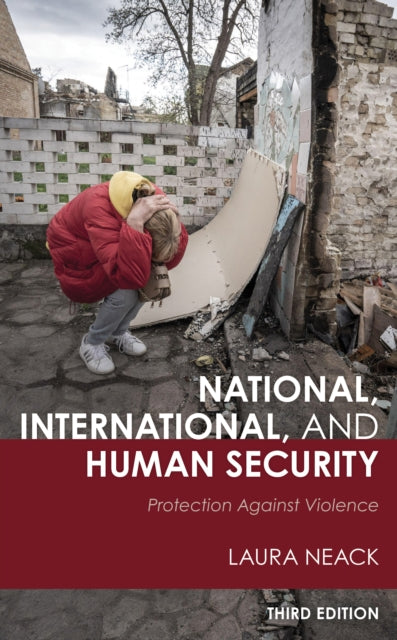

Laura Neack
National, International, and Human Security: Protection against Violence
National, International, and Human Security: Protection against Violence
We can order this item for you. Delivery usually takes about 4 to 6 weeks.
This item is not held in our immediate stock. We will order it for you after checkout.
Estimated delivery: About 4 to 6 weeks
YOU SAVE £4.64
- Condition: Brand new
- UK Delivery times: Usually arrives within 2 - 3 working days
- UK Shipping: Fee starts at £3.89. Subject to product weight & dimension
Bulk ordering. Want 15 or more copies? Get a personalised quote and bigger discounts. Learn more about bulk orders.
Couldn't load pickup availability
- More about National, International, and Human Security: Protection against Violence
Neack offers a comprehensive analysis of state security practices, their implications for international relations, and the impact on human victims of violence.
Format: Paperback / softback
Length: 240 pages
Publication date: 15 April 2023
Publisher: Rowman & Littlefield
Neack's comprehensive analysis delves into the intricate dynamics of state efforts to ensure security against violence, highlighting the inherent risks that these endeavors pose to both the states themselves and the broader international system. It sheds light on the perpetual vulnerability of states and other actors within the international arena to the threat of violence. Furthermore, Neack's work explores the profound implications of state-security practices on the lives of individuals who, invariably, remain the victims of this violence.
The pursuit of security against violence is a complex and multifaceted endeavor that involves a range of strategies and measures employed by states to protect their citizens and territories from external threats. These efforts range from traditional military defense to non-military measures such as diplomacy, intelligence, and law enforcement. However, the pursuit of security often comes at a significant cost, both in terms of economic resources and human lives.
One of the primary concerns associated with state-security practices is the risk of escalation and the potential for violence to spread beyond the borders of individual states. The pursuit of security by one state can lead to tensions and conflicts with other states, which can in turn escalate into full-scale wars or regional conflicts. This risk is particularly evident in regions where there are ongoing conflicts, such as the Middle East, Africa, and Asia.
Another concern associated with state-security practices is the impact on human rights and the rule of law. States often use security measures to suppress dissent and maintain control over their populations, which can lead to violations of human rights and the abuse of power. For example, states may use surveillance, detention, and torture to suppress political opposition or to prevent terrorist attacks.
Furthermore, state-security practices can have a significant impact on the lives of individuals who are caught up in the conflict. Civilians may be forced to flee their homes, become refugees, or suffer the consequences of violence and war. Women and children are particularly vulnerable to the effects of conflict, as they are often targeted for sexual violence and exploitation.
Despite these concerns, state-security practices are essential for maintaining stability and order in the international system. States must be able to protect their citizens from external threats and ensure that their interests are safeguarded. However, it is important to ensure that these practices are conducted in a manner that respects human rights and the rule of law and that they do not exacerbate the conflicts that they seek to prevent.
To address these challenges, there are a range of measures that states can take. One of the most important is to promote dialogue and diplomacy as a means of resolving conflicts and preventing violence. States can work together to address shared concerns and find common ground, which can help to reduce tensions and prevent conflicts from escalating.
Another important measure is to invest in human rights and the rule of law. States must ensure that their laws and policies respect human rights and that they are implemented in a fair and impartial manner. This can involve investing in education and training for law enforcement and security personnel, as well as promoting the independence of the judiciary.
Furthermore, states can work to address the root causes of conflict, such as poverty, inequality, and political instability. This can involve investing in social and economic development programs, as well as promoting political stability and democracy.
In conclusion, state-security practices are a complex and multifaceted issue that requires careful consideration and management. While they are essential for maintaining stability and order in the international system, they must be conducted in a manner that respects human rights and the rule of law and that does not exacerbate the conflicts that they seek to prevent. By promoting dialogue and diplomacy, investing in human rights and the rule of law, and addressing the root causes of conflict, states can work towards a more secure and peaceful world.
Dimension: 229 x 152 (mm)
ISBN-13: 9781538168028
Edition number: Third Edition
UK and International shipping information
UK and International shipping information
We deliver throughout the United Kingdom and to 128 countries and territories worldwide, including the United States, Australia, Canada, Germany, Spain and France.