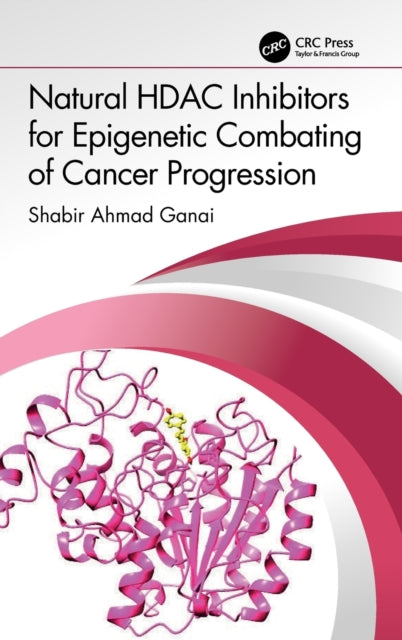

Shabir Ahmad Ganai
Natural HDAC Inhibitors for Epigenetic Combating of Cancer Progression
Natural HDAC Inhibitors for Epigenetic Combating of Cancer Progression
We can order this item for you. Delivery usually takes about 4 to 6 weeks.
This item is not held in our immediate stock. We will order it for you after checkout.
Estimated delivery: About 4 to 6 weeks
YOU SAVE £9.15
- Condition: Brand new
- UK Delivery times: Usually arrives within 2 - 3 working days
- UK Shipping: Fee starts at £3.89. Subject to product weight & dimension
Bulk ordering. Want 15 or more copies? Get a personalised quote and bigger discounts. Learn more about bulk orders.
Couldn't load pickup availability
- More about Natural HDAC Inhibitors for Epigenetic Combating of Cancer Progression
Natural HDAC inhibitors are a promising class of drugs for cancer therapy, with various groups of inhibitors derived from natural sources. These inhibitors have shown promising anticancer activity and can be used in combination with other anticancer molecules or conventional drugs for synergistic effects. Nanotechnology-based delivery of natural HDAC inhibitors can enhance their therapeutic efficacy.
Format: Hardback
Length: 154 pages
Publication date: 21 March 2023
Publisher: Taylor & Francis Ltd
Numerous studies have been conducted to investigate the potential of HDAC inhibitors as therapeutic agents in cancer treatment. HDAC inhibitors are a class of drugs that can modulate the activity of histone deacetylases (HDACs), enzymes that play a crucial role in regulating the expression of genes involved in cell growth, differentiation, and apoptosis.
Natural HDAC inhibitors are derived from various sources, including plants, microorganisms, and natural compounds. These inhibitors have shown promising results in preclinical studies, and some have even progressed to clinical trials for the treatment of cancer.
One group of natural HDAC inhibitors is cyclic tetrapeptides. These peptides are derived from amino acids and have been shown to have potent HDAC inhibitory activity. Several cyclic tetrapeptides have been tested in cancer cells, and some have shown promising results in terms of inhibiting cancer cell growth and promoting apoptosis.
Another class of natural HDAC inhibitors is hydroxamates and depsipeptides. These compounds are derived from natural substances such as plants and microorganisms. Hydroxamates and depsipeptides have been shown to have anti-cancer properties by inhibiting HDACs and promoting the expression of tumor suppressor genes.
Natural flavonoids are also important natural HDAC inhibitors. Flavonoids are a class of compounds found in plants that have been shown to have anti-inflammatory, antioxidant, and anti-cancer properties. Several flavonoids have been tested in cancer cells, and some have shown promising results in terms of inhibiting cancer cell growth and promoting apoptosis.
In addition to natural HDAC inhibitors, non-flavonoid natural HDAC inhibitors have also been discovered. These inhibitors are derived from natural substances such as herbs and spices. Non-flavonoid natural HDAC inhibitors have shown promising results in terms of inhibiting cancer cell growth and promoting apoptosis.
Combined therapy involving natural flavonoids with other anticancer molecules has been shown to have synergistic and additive benefits against cancer models. For example, combining natural flavonoids with chemotherapy drugs has been shown to improve the efficacy of chemotherapy and reduce side effects.
Non-flavonoid HDAC inhibitors have also been shown to have pleasing cytotoxic effects towards cancer models. These inhibitors have been tested in combination with conventional drugs such as chemotherapy and radiation therapy, and have shown promising results in terms of improving treatment outcomes.
Nanotechnology-based delivery of natural HDAC inhibitors has been shown to have greater therapeutic efficacy over traditional combinatorial therapy. Nanotechnology-based delivery systems can improve the targeting of HDAC inhibitors to cancer cells and increase their potency.
In conclusion, HDAC inhibitors have shown promising results in cancer treatment, and natural HDAC inhibitors are a promising class of drugs. Natural HDAC inhibitors are derived from various sources, including plants, microorganisms, and natural compounds. These inhibitors have shown promising results in terms of inhibiting cancer cell growth and promoting apoptosis. Combined therapy involving natural flavonoids with other anticancer molecules has been shown to have synergistic and additive benefits against cancer models. Nanotechnology-based delivery of natural HDAC inhibitors has been shown to have greater therapeutic efficacy over traditional combinatorial therapy. Further research is needed to explore the potential of natural HDAC inhibitors as therapeutic agents in cancer treatment.
Weight: 374g
Dimension: 162 x 241 x 15 (mm)
ISBN-13: 9781032279862
UK and International shipping information
UK and International shipping information
We deliver throughout the United Kingdom and to 128 countries and territories worldwide, including the United States, Australia, Canada, Germany, Spain and France.