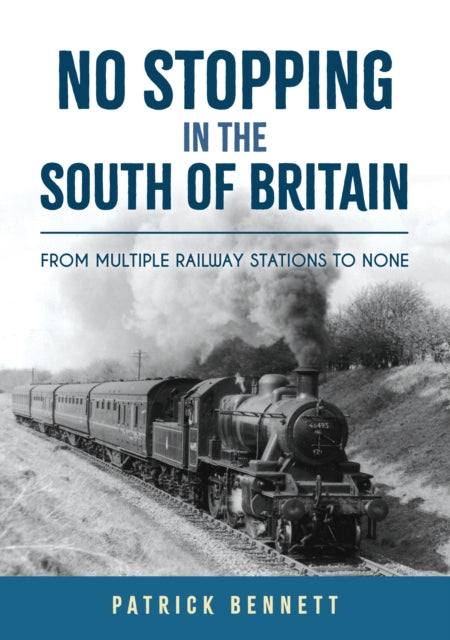
Patrick Bennett
No Stopping in the South of Britain: From Multiple Railway Stations to None
No Stopping in the South of Britain: From Multiple Railway Stations to None
YOU SAVE £5.05
- Condition: Brand new
- UK Delivery times: Usually arrives within 2 - 3 working days
- UK Shipping: Fee starts at £3.89. Subject to product weight & dimension
Bulk ordering. Want 15 or more copies? Get a personalised quote and bigger discounts. Learn more about bulk orders.
Couldn't load pickup availability
- More about No Stopping in the South of Britain: From Multiple Railway Stations to None
Many places in the nineteenth century gained multiple stations due to competition among railway companies, but many ended up with no stations at all as the network grew. This is the story of these unfortunate places in the southern part of Britain.
Format: Paperback / softback
Length: 96 pages
Publication date: 15 September 2024
Publisher: Amberley Publishing
During the railway mania of the nineteenth century, many places gained more than one station, not just in the big cities. Many small settlements ended up with two or even three stations. This was almost always as the result of competition between the railway companies, anxious to secure more business for themselves, though there were exceptions. As the railway network continued to grow and develop, many of these locations ended up with no stations at all. This is the lavishly illustrated story of these unfortunate places in the southern part of Britain that were once so well provided for, and are now bereft.
The Railway Mania of the Nineteenth Century
During the railway mania of the nineteenth century, many places gained more than one station, not just in the big cities. Many small settlements ended up with two or even three stations. This was almost always as the result of competition between the railway companies, anxious to secure more business for themselves, though there were exceptions. As the railway network continued to grow and develop, many of these locations ended up with no stations at all. This is the lavishly illustrated story of these unfortunate places in the southern part of Britain that were once so well provided for, and are now bereft.
The Competition Between Railway Companies
The competition between railway companies was fierce during the railway mania of the nineteenth century. Railway companies were eager to secure more business for themselves, and this led to a race to build more stations. In many cases, this competition resulted in two or even three stations being built in the same location. However, there were exceptions to this trend, with some locations receiving only one station.
The Growth and Development of the Railway Network
As the railway network continued to grow and develop, many of these locations ended up with no stations at all. This was due to a variety of factors, including the introduction of new technologies, the decline of certain industries, and the changing needs of the population. For example, the rise of the automobile led to a decline in the use of railways for long-distance travel, and this resulted in the closure of many stations in rural areas.
The Impact of the Railway Network on Unfortunate Places
The impact of the railway network on unfortunate places in the southern part of Britain was significant. These places were once well provided for, with multiple stations serving their communities. However, as the railway network grew and developed, many of these stations were closed, leaving these communities with no access to rail travel. This had a significant impact on the economy of these areas, as it made it difficult for businesses to transport their goods and for people to travel for work or leisure.
The Legacy of the Railway Mania
The legacy of the railway mania of the nineteenth century is still felt today. Many of these unfortunate places have been left abandoned and derelict, with their buildings and infrastructure falling into disrepair. However, there are also efforts being made to preserve these historic sites and to bring them back to life. This includes the restoration of some stations and the development of new rail services in these areas.
Conclusion
During the railway mania of the nineteenth century, many places gained more than one station, not just in the big cities. This was almost always as the result of competition between the railway companies, anxious to secure more business for themselves. As the railway network continued to grow and develop, many of these locations ended up with no stations at all. This had a significant impact on the economy of these areas, as it made it difficult for businesses to transport their goods and for people to travel for work or leisure. However, there are also efforts being made to preserve these historic sites and to bring them back to life.
Weight: 298g
Dimension: 234 x 165 x 10 (mm)
ISBN-13: 9781398115118
UK and International shipping information
UK and International shipping information
We deliver throughout the United Kingdom and to 128 countries and territories worldwide, including the United States, Australia, Canada, Germany, Spain and France.