Curtis E.Margo
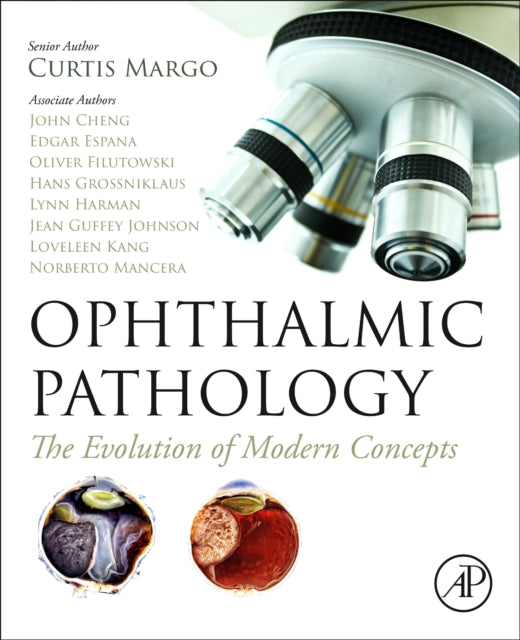
Ophthalmic Pathology: The Evolution of Modern Concepts
Ophthalmic Pathology: The Evolution of Modern Concepts
💎 Earn 567 Points (£5.67) on this item.
YOU SAVE £9.53
- Condition: Brand new
- UK Delivery times: Usually arrives within 2 - 3 working days
- UK Shipping: Fee starts at £2.39. Subject to product weight & dimension
Bulk ordering. Want 15 or more copies? Get a personalised quote and bigger discounts. Learn more about bulk orders.
Couldn't load pickup availability
- More about Ophthalmic Pathology: The Evolution of Modern Concepts
Ophthalmic Pathology: The Evolution of Current Concepts explores the historical context and modern trends of ocular nosology, emphasizing the science of disease classification. It highlights major studies and developments surrounding approximately 50 disorders, providing a unique perspective on current views on the morphology of eye disease.
Format: Paperback / softback
Length: 400 pages
Publication date: 07 April 2023
Publisher: Elsevier Science & Technology
Ophthalmic Pathology: The Evolution of Current Concepts delves into the intricate journey of how our current understanding of morphologic disease, nomenclature, and classification has evolved over the past century. This comprehensive book explores the historical context and contemporary trends in ocular nosology, emphasizing the science of disease classification. Within its chapters, significant studies and advancements related to approximately 50 disorders are highlighted, serving as a historical road map for current nomenclature, methods of disease classification, and the pivotal role of diagnostic morphology. Presented in a streamlined and visually captivating format, this book offers a unique historical and evolutionary perspective into the current perspectives on the morphology of eye disease.
The field of ophthalmic pathology has witnessed a remarkable transformation over the past century, driven by advancements in medical science and technology. This evolution has led to a deeper understanding of morphologic disease, nomenclature, and classification, which are essential components of diagnosing and treating eye disorders. In this essay, we will explore the historical context and modern trends in ocular nosology, emphasizing the science of disease classification.
Historical Context:
The study of ophthalmic pathology can be traced back to ancient times, with the earliest records dating back to the Egyptian and Greek civilizations. These early societies recognized the importance of the eye and its role in vision, and they began to document eye diseases and their treatments. Over the centuries, ophthalmic pathology continued to evolve, with significant contributions from various medical pioneers and researchers.
One of the most significant advancements in ophthalmic pathology came in the 19th century with the development of the microscope. This instrument allowed for a detailed examination of the eye, enabling researchers to identify and classify eye diseases more accurately. In the early 20th century, ophthalmic pathology saw further developments with the introduction of new imaging techniques, such as ultrasound and computed tomography (CT), which provided more detailed information about the structure and function of the eye.
Modern Trends in Ocular Nosology:
Today, ocular nosology is a rapidly evolving field, with new discoveries and advancements shaping our understanding of eye diseases. One of the key trends in ocular nosology is the increasing use of molecular and genetic techniques to diagnose and classify eye diseases. These techniques allow researchers to identify specific genetic mutations or abnormalities that are associated with certain eye disorders, providing a more precise and accurate diagnosis.
Another trend in ocular nosology is the development of personalized medicine. With the advent of genetic testing and other advanced technologies, doctors can now tailor treatment plans to individual patients based on their genetic makeup and disease characteristics. This approach has the potential to improve patient outcomes and reduce the risk of complications.
In addition to these trends, ocular nosology is also focusing on the development of new treatments and therapies for eye diseases. For example, researchers are exploring the use of stem cells and gene therapy to regenerate damaged eye tissues and restore vision. These innovative approaches have the potential to revolutionize the treatment of eye disorders and improve the quality of life for patients.
Conclusion:
Ophthalmic pathology has come a long way since its ancient origins, and it continues to evolve at a rapid pace. The historical context and modern trends in ocular nosology emphasize the science of disease classification, which is essential for diagnosing and treating eye disorders. With the increasing use of molecular and genetic techniques, personalized medicine, and innovative treatments and therapies, ophthalmic pathology is poised to make significant contributions to the field of medicine in the years to come.
Weight: 1078g
Dimension: 214 x 277 x 28 (mm)
ISBN-13: 9780323957885
This item can be found in:
UK and International shipping information
UK and International shipping information
UK Delivery and returns information:
- Delivery within 2 - 3 days when ordering in the UK.
- Shipping fee for UK customers from £2.39. Fully tracked shipping service available.
- Returns policy: Return within 30 days of receipt for full refund.
International deliveries:
Shulph Ink now ships to Australia, Belgium, Canada, France, Germany, Ireland, Italy, India, Luxembourg Saudi Arabia, Singapore, Spain, Netherlands, New Zealand, United Arab Emirates, United States of America.
- Delivery times: within 5 - 10 days for international orders.
- Shipping fee: charges vary for overseas orders. Only tracked services are available for most international orders. Some countries have untracked shipping options.
- Customs charges: If ordering to addresses outside the United Kingdom, you may or may not incur additional customs and duties fees during local delivery.