Shulph Ink
Paradigm Shift in E-waste Management: Vision for the Future
Paradigm Shift in E-waste Management: Vision for the Future
💎 Earn 689 Points (£6.89) on this item.
We can order this item for you. Delivery usually takes about 4 to 6 weeks.
This item is not held in our immediate stock. We will order it for you after checkout.
Estimated delivery: About 4 to 6 weeks
YOU SAVE £8.18
- Condition: Brand new
- UK Delivery times: Usually arrives within 2 - 3 working days
- UK Shipping: Fee starts at £3.89. Subject to product weight & dimension
Bulk ordering. Want 15 or more copies? Get a personalised quote and bigger discounts. Learn more about bulk orders.
Couldn't load pickup availability
- More about Paradigm Shift in E-waste Management: Vision for the Future
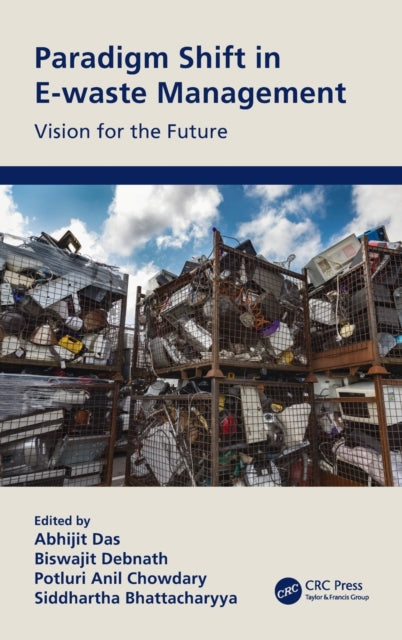
E-waste management is a complex issue that requires a sustainable approach. The global status of e-waste recycling and management is discussed, with country-specific contributions. Policy tools such as EPR, ARF, and policy gaps are explored. Advanced green and smart technologies for e-waste valorization and management are presented. Urban mining, sustainability, and circular economic approaches are also explored.
Format: Hardback
Length: 254 pages
Publication date: 03 May 2022
Publisher: Taylor & Francis Ltd
E-waste management is a complex issue that requires careful consideration to ensure sustainable development goals (SDGs) are met by 2025. The global status of e-waste recycling and management is a concern, with many countries struggling to effectively manage the growing amount of electronic waste generated. This article will provide an overview of the current global status of e-waste recycling and management, with a focus on country-specific contributions.
E-waste recycling and management is a complex issue that requires careful consideration to ensure sustainable development goals (SDGs) are met by 2025. The global status of e-waste recycling and management is a concern, with many countries struggling to effectively manage the growing amount of electronic waste generated. This article will provide an overview of the current global status of e-waste recycling and management, with a focus on country-specific contributions.
The global e-waste generation rate is estimated to be 20-50 million tonnes per year, with the majority of this waste being generated in developed countries. However, developing countries are also experiencing a rapid increase in e-waste generation, due to the growth of the technology industry and the increasing availability of affordable electronic devices.
E-waste recycling and management is a complex issue that requires a multi-faceted approach. Policy tools such as extended producer responsibility (EPR), anti-refurbishment policies (ARF), and policy gaps are being used to address the issue of e-waste. However, there are still challenges in implementing these policies, particularly in the informal sector, where e-waste is often disposed of in unsafe and environmentally harmful ways.
Advanced green and smart technologies are being developed to valorise and manage e-waste. These technologies include recycling, reuse, and refurbishment, as well as waste-to-energy conversion and waste minimisation. These technologies can help reduce the environmental impact of e-waste and improve the economic value of electronic devices.
Urban mining is a sustainability approach that involves the extraction of valuable materials from electronic waste. This approach can help reduce the amount of e-waste that ends up in landfills and improve the economic value of electronic devices.
Circular economic approaches are being adopted to address the issue of e-waste. This approach involves the reuse, recycling, and refurbishment of electronic devices, as well as the development of new business models that promote the circular economy.
In conclusion, e-waste management is a complex issue that requires a multi-faceted approach to ensure sustainable development goals are met by 2025. The global status of e-waste recycling and management is a concern, with many countries struggling to effectively manage the growing amount of electronic waste generated. Advanced green and smart technologies are being developed to valorise and manage e-waste, and urban mining and circular economic approaches are being adopted to address the issue of e-waste.
Weight: 670g
Dimension: 234 x 156 (mm)
ISBN-13: 9780367559854
UK and International shipping information
UK and International shipping information
We deliver throughout the United Kingdom and to 128 countries and territories worldwide, including the United States, Australia, Canada, Germany, Spain and France.