Shulph Ink
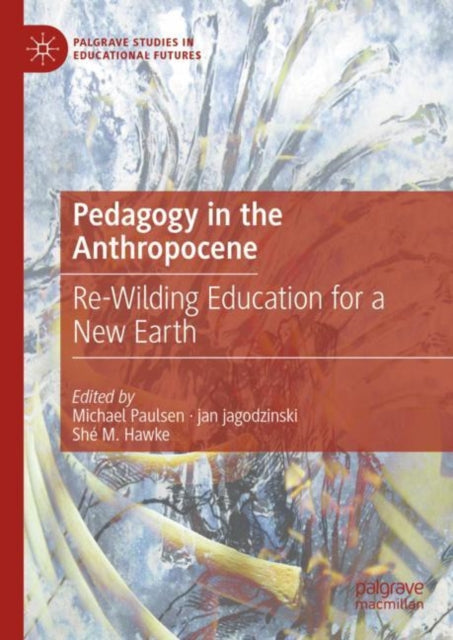
Pedagogy in the Anthropocene: Re-Wilding Education for a New Earth
Pedagogy in the Anthropocene: Re-Wilding Education for a New Earth
💎 Earn 660 Points (£6.60) on this item.
We can order this item for you. Delivery usually takes about 4 to 6 weeks.
This item is not held in our immediate stock. We will order it for you after checkout.
Estimated delivery: About 4 to 6 weeks
YOU SAVE £27.84
- Condition: Brand new
- UK Delivery times: Usually arrives within 2 - 3 working days
- UK Shipping: Fee starts at £3.89. Subject to product weight & dimension
Bulk ordering. Want 15 or more copies? Get a personalised quote and bigger discounts. Learn more about bulk orders.
Couldn't load pickup availability
- More about Pedagogy in the Anthropocene: Re-Wilding Education for a New Earth
The book explores new pedagogical challenges and potentials of the Anthropocene era, emphasizing a re-imagining of education to deepen our understanding of life's capacities and values.
Format: Hardback
Length: 379 pages
Publication date: 13 March 2022
Publisher: Springer Nature Switzerland AG
The book delves into the fascinating realm of new pedagogical challenges and possibilities that arise in the Anthropocene era. The authors passionately contend that this transformative period, characterized by an unstable climate, the emergence of novel global viruses, and the acquisition of groundbreaking knowledge, demands a fresh approach to education. They urge educators and scholars to be vigilant and open-minded to new philosophies of education and pedagogical imaginations, thoughts, and practices. By exploring the intricate connections between the Anthropocene and pedagogy across a diverse spectrum of formal and informal learning environments, the editors and their contributors highlight the urgent need for a re-imagining of education. This re-imagining aims to deepen our understanding of the incredible capacities and values that exist within life.
The book begins by setting the stage for the discussion by providing a comprehensive overview of the Anthropocene era. The authors explain that the term "Anthropocene" was coined by scientists in the late 20th century to describe the current period in Earth's history, marked by significant human impact on the environment. They highlight the unprecedented rate of climate change, the depletion of natural resources, and the proliferation of harmful technologies that have shaped the world we live in today.
In the subsequent chapters, the authors delve into the pedagogical implications of the Anthropocene era. They argue that the challenges posed by this new era require a re-thinking of traditional educational approaches. They emphasize the importance of fostering a sense of global responsibility and promoting environmental awareness and sustainability. The editors and their contributors suggest that education should be designed to empower students to become agents of change and to contribute to the betterment of society.
One of the key themes explored in the book is the role of technology in shaping education. The authors argue that technology can be both a tool for learning and a source of distraction. They suggest that educators should harness the potential of technology to create interactive and engaging learning experiences that promote critical thinking and problem-solving skills. However, they also emphasize the need to be cautious about the potential negative effects of technology, such as the spread of misinformation and the erosion of personal privacy.
Another important aspect of the book is the exploration of the relationship between the Anthropocene and pedagogy in different cultural contexts. The authors recognize that education systems vary widely across the world, and they argue that the challenges and opportunities presented by the Anthropocene era are not universal. They suggest that educators should be sensitive to the cultural nuances and values of their students and should strive to create learning environments that are inclusive and equitable.
The book also addresses the role of education in promoting social justice and equity. The authors argue that education has the power to create a more just and equitable society by providing students with the knowledge and skills they need to navigate the complex social and economic systems of the 21st century. They suggest that education should be designed to promote social mobility and to empower students to become agents of change in their communities.
In conclusion, this book is a valuable resource for educators, scholars, and anyone interested in the field of education. It provides a comprehensive and thought-provoking exploration of the new pedagogical challenges and possibilities that arise in the Anthropocene era. The authors offer insightful perspectives and practical strategies for re-imagining education in order to prepare students for the challenges and opportunities of the 21st century.
Weight: 652g
Dimension: 210 x 148 (mm)
ISBN-13: 9783030909796
Edition number: 1st ed. 2022
UK and International shipping information
UK and International shipping information
We deliver throughout the United Kingdom and to 128 countries and territories worldwide, including the United States, Australia, Canada, Germany, Spain and France.