Shulph Ink
Peroxiporins: Redox Signal Mediators In and Between Cells
Peroxiporins: Redox Signal Mediators In and Between Cells
💎 Earn 811 Points (£8.11) on this item.
We can order this item for you. Delivery usually takes about 4 to 6 weeks.
This item is not held in our immediate stock. We will order it for you after checkout.
Estimated delivery: About 4 to 6 weeks
YOU SAVE £9.63
- Condition: Brand new
- UK Delivery times: Usually arrives within 2 - 3 working days
- UK Shipping: Fee starts at £3.89. Subject to product weight & dimension
Bulk ordering. Want 15 or more copies? Get a personalised quote and bigger discounts. Learn more about bulk orders.
Couldn't load pickup availability
- More about Peroxiporins: Redox Signal Mediators In and Between Cells
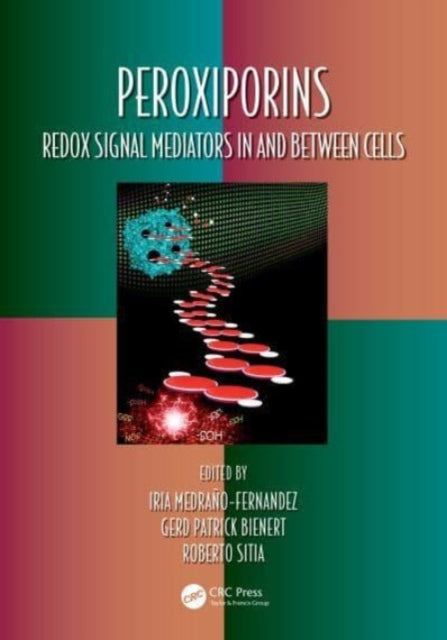
Aerobic organisms produce energy by transforming oxygen molecules into water, which produces toxic radical intermediates (ROS). Evolution has turned this disadvantage into an opportunity for transmitting information, and peroxiporins are strategically situated in the thin line between life and death to guarantee adequate but safe signaling.
Format: Hardback
Length: 228 pages
Publication date: 11 October 2023
Publisher: Taylor & Francis Ltd
Aerobic organisms employ a remarkable process to generate energy, transforming oxygen molecules into water. However, this seemingly beneficial mechanism also yields toxic radical intermediates, collectively referred to as reactive oxygen species (ROS). Paradoxically, these physiological processes result in the production of potentially harmful species. Yet, through the course of evolution, this apparent disadvantage has been transformed into a remarkable opportunity for transmitting information. As a result, redox signaling within the cell has evolved into an efficient and exquisitely organized process. A fundamental aspect of its regulation involves the physical separation of sources and targets into distinct cell compartments. Peroxiporins, H2O2-transporting proteins that span biological membranes, play a crucial role in distributing the signal from emitters to receptors. These channels are strategically positioned in the delicate balance between life and death, ensuring adequate but safe signaling.
Peroxiporins, H2O2-transporting proteins that span biological membranes, play a crucial role in distributing the signal from emitters to receptors. These channels are strategically positioned in the delicate balance between life and death, ensuring adequate but safe signaling.
Aerobic organisms employ a remarkable process to generate energy, transforming oxygen molecules into water. However, this seemingly beneficial mechanism also yields toxic radical intermediates, collectively referred to as reactive oxygen species (ROS). Paradoxically, these physiological processes result in the production of potentially harmful species. Yet, through the course of evolution, this apparent disadvantage has been transformed into a remarkable opportunity for transmitting information. As a result, redox signaling within the cell has evolved into an efficient and exquisitely organized process. A fundamental aspect of its regulation involves the physical separation of sources and targets into distinct cell compartments. Peroxiporins, H2O2-transporting proteins that span biological membranes, play a crucial role in distributing the signal from emitters to receptors. These channels are strategically positioned in the delicate balance between life and death, ensuring adequate but safe signaling.
Peroxiporins, H2O2-transporting proteins that span biological membranes, play a crucial role in distributing the signal from emitters to receptors. These channels are strategically positioned in the delicate balance between life and death, ensuring adequate but safe signaling.
Aerobic organisms employ a remarkable process to generate energy, transforming oxygen molecules into water. However, this seemingly beneficial mechanism also yields toxic radical intermediates, collectively referred to as reactive oxygen species (ROS). Paradoxically, these physiological processes result in the production of potentially harmful species. Yet, through the course of evolution, this apparent disadvantage has been transformed into a remarkable opportunity for transmitting information. As a result, redox signaling within the cell has evolved into an efficient and exquisitely organized process. A fundamental aspect of its regulation involves the physical separation of sources and targets into distinct cell compartments. Peroxiporins, H2O2-transporting proteins that span biological membranes, play a crucial role in distributing the signal from emitters to receptors. These channels are strategically positioned in the delicate balance between life and death, ensuring adequate but safe signaling.
Peroxiporins, H2O2-transporting proteins that span biological membranes, play a crucial role in distributing the signal from emitters to receptors. These channels are strategically positioned in the delicate balance between life and death, ensuring adequate but safe signaling.
Aerobic organisms employ a remarkable process to generate energy, transforming oxygen molecules into water. However, this seemingly beneficial mechanism also yields toxic radical intermediates, collectively referred to as reactive oxygen species (ROS). Paradoxically, these physiological processes result in the production of potentially harmful species. Yet, through the course of evolution, this apparent disadvantage has been transformed into a remarkable opportunity for transmitting information. As a result, redox signaling within the cell has evolved into an efficient and exquisitely organized process. A fundamental aspect of its regulation involves the physical separation of sources and targets into distinct cell compartments. Peroxiporins, H2O2-transporting proteins that span biological membranes, play a crucial role in distributing the signal from emitters to receptors. These channels are strategically positioned in the delicate balance between life and death, ensuring adequate but safe signaling.
Peroxiporins, H2O2-transporting proteins that span biological membranes, play a crucial role in distributing the signal from emitters to receptors. These channels are strategically positioned in the delicate balance between life and death, ensuring adequate but safe signaling.
Aerobic organisms employ a remarkable process to generate energy, transforming oxygen molecules into water. However, this seemingly beneficial mechanism also yields toxic radical intermediates, collectively referred to as reactive oxygen species (ROS). Paradoxically, these physiological processes result in the production of potentially harmful species. Yet, through the course of evolution, this apparent disadvantage has been transformed into a remarkable opportunity for transmitting information. As a result, redox signaling within the cell has evolved into an efficient and exquisitely organized process. A fundamental aspect of its regulation involves the physical separation of sources and targets into distinct cell compartments. Peroxiporins, H2O2-transporting proteins that span biological membranes, play a crucial role in distributing the signal from emitters to receptors. These channels are strategically positioned in the delicate balance between life and death, ensuring adequate but safe signaling.
Peroxiporins, H2O2-transporting proteins that span biological membranes, play a crucial role in distributing the signal from emitters to receptors. These channels are strategically positioned in the delicate balance between life and death, ensuring adequate but safe signaling.
Weight: 610g
Dimension: 254 x 178 (mm)
ISBN-13: 9780367745899
UK and International shipping information
UK and International shipping information
We deliver throughout the United Kingdom and to 128 countries and territories worldwide, including the United States, Australia, Canada, Germany, Spain and France.