Brian P.Copenhaver
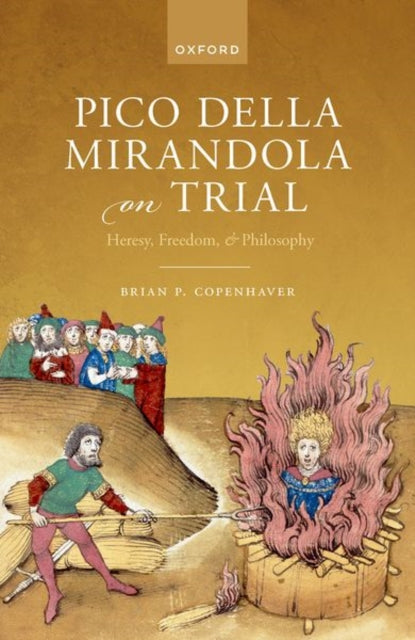
Pico della Mirandola on Trial: Heresy, Freedom, and Philosophy
Pico della Mirandola on Trial: Heresy, Freedom, and Philosophy
💎 Earn 472 Points (£4.72) on this item.
- Condition: Brand new
- UK Delivery times: Usually arrives within 2 - 3 working days
- UK Shipping: Fee starts at £3.89. Subject to product weight & dimension
Bulk ordering. Want 15 or more copies? Get a personalised quote and bigger discounts. Learn more about bulk orders.
Couldn't load pickup availability
- More about Pico della Mirandola on Trial: Heresy, Freedom, and Philosophy
Giovanni Pico della Mirandola's Oration on the Dignity of Man has been the engine of his fame, but he never wrote a speech about the dignity of man. Pico della Mirandola On Trial: Heresy, Freedom, and Philosophy shows that his work was in no way progressive and that his main authorities were medieval clerics and theologians, not secular Renaissance intellectuals. His Apology, based on lessons learned from medieval teachers, is the best guide to understanding his universe of dismal expectations.
Format: Hardback
Length: 288 pages
Publication date: 30 June 2022
Publisher: Oxford University Press
Giovanni Pico della Mirandola, a prominent figure in modern times, has left an indelible mark on the world through his influential Oration on the Dignity of Man. However, it is important to note that he never authored a speech specifically dedicated to the dignity of man. Instead, the prince's speech unveiled distinct and controversial projects. He aimed to persuade Christians to embrace Kabbalism, a mystical tradition, with the ultimate goal of annihilating themselves in God. At the same time, he sought to convince philosophers that their path to wisdom lay in concord, rather than through contentious debates.
In his book, Pico della Mirandola on Trial: Heresy, Freedom, and Philosophy, author Michael J. Birkner challenges the notion that Pico's work was progressive or humanist. He argues that Pico's primary sources of authority were medieval clerics and theologians, rather than secular Renaissance intellectuals. The evidence supporting this claim can be found in Pico's Apology, a self-defense against heresy charges that provides a deeper insight into his thoughts and beliefs.
The orator's method in the Oration was esoteric, employing intricate language and symbolism to convey his message. In contrast, the defendant in the Apology made his case openly, using an academic and belligerent tone, rather than prophetic or poetic language. Since the mid-20th century, textbooks used in college classrooms have presented a one-dimensional portrayal of Pico as a hero of progressive humanism. However, it is essential to recognize that his Conclusions and Apology, products of late medieval culture, were not progressive in their outlook.
The Apology, in particular, offers a grim portrayal of Pico's universe of dismal expectations. It depicts a battle for life and honor, reflecting the medieval past where human history was viewed as the annals of sin. By studying Pico's Apology, based on the lessons learned from medieval teachers, we gain a deeper understanding of his world and the pessimistic outlook that shaped his thoughts and beliefs.
In conclusion, Giovanni Pico della Mirandola's Oration on the Dignity of Man has been a source of fame and inspiration for many. However, his work should be evaluated in its historical context, and his primary sources of authority should be recognized. Pico's Apology provides a valuable insight into his thoughts and beliefs, challenging the notion that he was a progressive or humanist figure. By studying this text, we can gain a deeper understanding of his universe of dismal expectations and the pessimistic outlook that shaped his ideas.
Weight: 566g
Dimension: 242 x 163 x 21 (mm)
ISBN-13: 9780192858375
UK and International shipping information
UK and International shipping information
We deliver throughout the United Kingdom and to 128 countries and territories worldwide, including the United States, Australia, Canada, Germany, Spain and France.