Shulph Ink
Post-Truth, Philosophy and Law
Post-Truth, Philosophy and Law
We can order this item for you. Delivery usually takes about 4 to 6 weeks.
This item is not held in our immediate stock. We will order it for you after checkout.
Estimated delivery: About 4 to 6 weeks
YOU SAVE £15.13
- Condition: Brand new
- UK Delivery times: Usually arrives within 2 - 3 working days
- UK Shipping: Fee starts at £3.89. Subject to product weight & dimension
Bulk ordering. Want 15 or more copies? Get a personalised quote and bigger discounts. Learn more about bulk orders.
Couldn't load pickup availability
- More about Post-Truth, Philosophy and Law
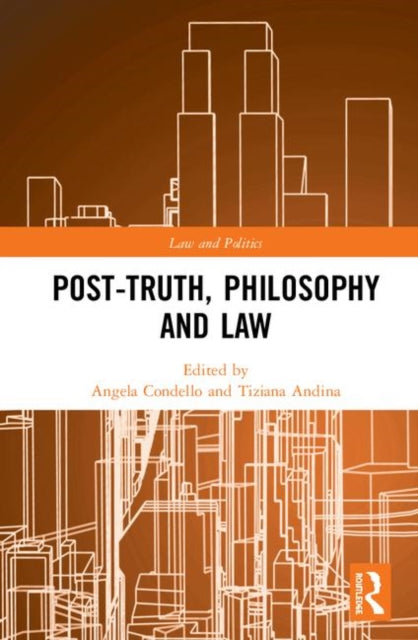
Post-truth is a contemporary degeneration of the legitimacy of democratic institutions and the rule of law, challenging perceptions of law, institutions, and political power. It has ideological premises, technical conditions, and the potential to teach lovers of the truth. This book explores the relationship between truth and law from an interdisciplinary perspective.
Format: Hardback
Length: 172 pages
Publication date: 28 May 2019
Publisher: Taylor & Francis Ltd
In the aftermath of Brexit and Trump, the debate surrounding post-truth has surged to the forefront of public discourse, captivating newspaper headlines and dominating the public conversation. Democratic institutions and the rule of law have traditionally been built and justified through discourses of truth, and thus, the emergence of post-truth or fake truth can be seen as a contemporary decline in the legitimacy of these frameworks. However, what exactly constitutes post-truth from a theoretical standpoint? Can it truly alter our perceptions of law, institutions, and political power? And how does it impact our understanding of society and social relations? What are the ideological foundations of post-truth? What technical conditions foster its proliferation? And most importantly, does it hold any lessons for those who cherish the truth? This book takes an interdisciplinary approach, bringing together renowned and emerging scholars from diverse fields to engage in a philosophical exploration of the intricate relationship between truth and law.
Truth has long been a cornerstone of democratic societies, serving as the foundation for legal systems, institutions, and political power. However, the rise of post-truth has challenged the very foundations of these systems, casting doubt on the reliability and validity of information. Post-truth is characterized by the dissemination of false or misleading information, often with the intention of influencing public opinion or political outcomes. It is often characterized by the use of rhetorical techniques such as deception, manipulation, and exaggeration, which can be difficult to detect and challenge.
One of the most significant consequences of post-truth is its impact on the rule of law. The rule of law relies on the accuracy and reliability of information, and the spread of false or misleading information can undermine the legitimacy of legal systems and institutions. This can lead to a breakdown of trust in the legal system, as well as a decline in public confidence in the ability of the legal system to uphold the law and protect individual rights.
Post-truth also has significant implications for democratic institutions. The ability of citizens to engage in informed and meaningful political discourse is essential for the functioning of a democratic society. However, the spread of post-truth can hinder this process by creating a climate of confusion and misinformation, which can make it difficult for citizens to make informed decisions and hold their elected representatives accountable.
Furthermore, post-truth has the potential to impact our understanding of society and social relations. The spread of false or misleading information can create divisions and tensions within society, as people may come to believe that their own perspectives are the only valid ones. This can lead to a lack of empathy and understanding, as well as a decline in social cohesion and community.
The ideological foundations of post-truth are complex and multifaceted. One of the key drivers of post-truth is the rise of populism, which emphasizes the importance of "the people" and the belief that traditional institutions and elites are corrupt and out of touch with the needs of the ordinary people. Populists often use post-truth tactics to appeal to the emotions and fears of their supporters, rather than relying on facts and evidence to support their arguments.
Another factor contributing to the rise of post-truth is the increasing availability of information and the ease with which it can be disseminated. The internet has made it possible for anyone to create and distribute information, regardless of its accuracy or reliability. This has led to a proliferation of fake news and misinformation, which can be difficult to distinguish from legitimate news sources.
Technical conditions also play a role in the spread of post-truth. The use of algorithms and social media platforms to filter and display information can create echo chambers, where people are exposed to only information that confirms their own beliefs and biases. This can lead to a polarization of political discourse and a decline in the ability to engage in meaningful dialogue and compromise.
Despite the challenges posed by post-truth, there are also opportunities for positive change. One of the most important strategies for combating post-truth is education and awareness-raising. By teaching citizens how to identify and challenge false or misleading information, we can help to create a more informed and engaged electorate. This can also help to strengthen the resilience of democratic institutions and the rule of law, as citizens are more likely to trust and support institutions that are transparent and accountable.
Another strategy for combating post-truth is the promotion of independent journalism and media literacy. By supporting independent journalists and media outlets that prioritize accuracy and reliability, we can help to counter the spread of fake news and misinformation. This can also help to promote a more diverse and inclusive media landscape, as different perspectives and voices can be heard and valued.
In conclusion, the debate surrounding post-truth has significant implications for democratic societies, the rule of law, and social relations. The spread of false or misleading information can undermine the legitimacy of legal systems and institutions, hinder democratic discourse, and create divisions and tensions within society. However, by promoting education and awareness-raising, supporting independent journalism and media literacy, and promoting a more diverse and inclusive media landscape, we can work to combat the rise of post-truth and create a more informed and engaged electorate.
Weight: 418g
Dimension: 161 x 240 x 16 (mm)
ISBN-13: 9781138324664
UK and International shipping information
UK and International shipping information
We deliver throughout the United Kingdom and to 128 countries and territories worldwide, including the United States, Australia, Canada, Germany, Spain and France.