Anouk, Lecturer in Cultural Studies at the University of Potsdam, Germany Madoerin
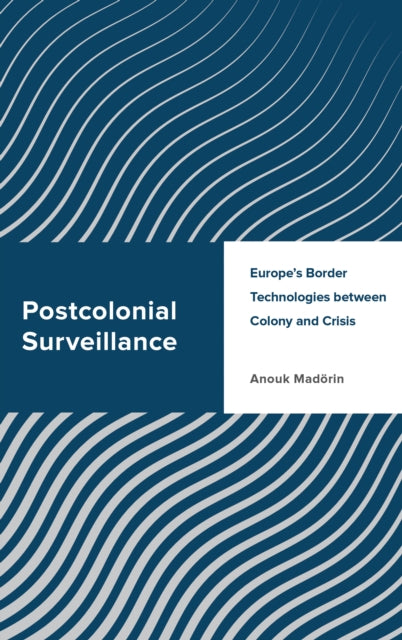
Postcolonial Surveillance: Europe's Border Technologies between Colony and Crisis
Postcolonial Surveillance: Europe's Border Technologies between Colony and Crisis
💎 Earn 477 Points (£4.77) on this item.
We can order this item for you. Delivery usually takes about 4 to 6 weeks.
This item is not held in our immediate stock. We will order it for you after checkout.
Estimated delivery: About 4 to 6 weeks
- Condition: Brand new
- UK Delivery times: Usually arrives within 2 - 3 working days
- UK Shipping: Fee starts at £3.89. Subject to product weight & dimension
Bulk ordering. Want 15 or more copies? Get a personalised quote and bigger discounts. Learn more about bulk orders.
Couldn't load pickup availability
- More about Postcolonial Surveillance: Europe's Border Technologies between Colony and Crisis
Postcolonial Surveillance explores the long history of the European border regime, highlighting how its colonial forerunners have shaped EU border migration policies, security, and surveillance apparatuses. It exposes racial hierarchies and power relations and reveals the unacknowledged histories that led to the development of seemingly unbiased technologies.
Format: Hardback
Length: 188 pages
Publication date: 24 September 2022
Publisher: Rowman & Littlefield
Postcolonial Surveillance delves into the extensive history of the European border regime, tracing its roots back to the colonial forerunners of today's border technologies. Through a longue durée perspective, the book uncovers how Europes colonial past continues to shape the high-tech political present and has given rise to EU border migration policies, border security, and surveillance apparatuses. It exposes the racial hierarchies and power relations that underpin these systems and highlights pivotal moments when the past and present intersect and clash, such as in panoptic surveillance, biopolitical registers, biometric sorting, and deterrent media infrastructure. The technological genealogies assembled in this book reveal the hidden histories that had to be suppressed for seemingly unbiased and neutral technologies to emerge as such.
Postcolonial Surveillance: Unveiling the Long History of the European Border Regime
Postcolonial Surveillance is a groundbreaking book that explores the long history of the European border regime, focusing on the colonial forerunners of today's border technologies. The book takes a longue durée perspective to uncover how Europes colonial history continues to shape the high-tech political present and has morphed into EU border migration policies, border security, and surveillance apparatuses. It exposes the racial hierarchies and power relations that form these systems and highlights key moments when the past and present interact and collide, such as in panoptic surveillance, biopolitical registers, biometric sorting, and deterrent media infrastructure. The technological genealogies assembled in this book reveal the unacknowledged histories that had to be rejected for the seemingly clean, unbiased, and neutral technologies to emerge as such.
The Colonial Forerunners of Today's Border Technologies
Postcolonial Surveillance begins by tracing the origins of the European border regime back to the colonial era. It highlights how the colonial powers established and maintained control over their territories through a system of surveillance, control, and exclusion. The book explores the various technologies and practices used by the colonial authorities to enforce their rule, including the use of surveillance cameras, border patrols, and detention centers. It also examines the ways in which these technologies were adapted and repurposed by subsequent governments and institutions, leading to the development of modern border technologies.
The Long-Term Impact of Europes Colonial History
Postcolonial Surveillance argues that Europes colonial history has had a profound and long-term impact on the development of the European border regime. It highlights how the colonial powers' desire for control and exploitation led to the establishment of a hierarchical and discriminatory system of governance that continues to shape the political and social landscape of Europe today. The book explores how the colonial past has been used to justify and reinforce existing power structures, including the European Union's border migration policies, border security, and surveillance apparatuses. It also highlights how the colonial past has been erased or suppressed in official narratives and historical accounts, leading to a lack of awareness and understanding of the ongoing impact of Europes colonial history on the present.
The Racial Hierarchies and Power Relations that Shape Border Technologies
Postcolonial Surveillance exposes the racial hierarchies and power relations that underpin the European border regime. It highlights how the colonial powers used surveillance and control to maintain their dominance over marginalized communities, including immigrants, refugees, and indigenous peoples. The book explores the ways in which these technologies were used to enforce racial segregation, discrimination, and exclusion, and how they continue to shape the experiences of these communities today. It also highlights how the colonial past has been used to justify and reinforce existing power structures, including the European Union's border migration policies, border security, and surveillance apparatuses.
Key Moments of Interaction and Collision between the Past and Present
Postcolonial Surveillance highlights key moments of interaction and collision between the past and present. It explores how the colonial past has been used to justify and reinforce existing power structures, including the European Union's border migration policies, border security, and surveillance apparatuses. It also highlights how the colonial past has been erased or suppressed in official narratives and historical accounts, leading to a lack of awareness and understanding of the ongoing impact of Europes colonial history on the present. The book also explores how the colonial past has been used to justify and reinforce existing power structures, including the European Union's border migration policies, border security, and surveillance apparatuses.
Technological Genealogies Reveal Unacknowledged Histories
Postcolonial Surveillance assembles a series of technological genealogies that reveal the unacknowledged histories that had to be rejected for the seemingly clean, unbiased, and neutral technologies to emerge as such. It highlights how the colonial powers used surveillance and control to maintain their dominance over marginalized communities, including immigrants, refugees, and indigenous peoples. The book explores the ways in which these technologies were used to enforce racial segregation, discrimination, and exclusion, and how they continue to shape the experiences of these communities today. It also highlights how the colonial past has been used to justify and reinforce existing power structures, including the European Union's border migration policies, border security, and surveillance apparatuses.
Conclusion
Postcolonial Surveillance is a groundbreaking book that sheds light on the long history of the European border regime and its impact on the development of the European border regime. It highlights the racial hierarchies and power relations that underpin the European border regime and exposes the unacknowledged histories that had to be rejected for the seemingly clean, unbiased, and neutral technologies to emerge as such. The book offers a critical analysis of the current border policies and practices and calls for a more just and equitable approach to border management that takes into account the historical and ongoing impact of Europes colonial history.
Weight: 440g
Dimension: 238 x 157 x 17 (mm)
ISBN-13: 9781538165034
UK and International shipping information
UK and International shipping information
We deliver throughout the United Kingdom and to 128 countries and territories worldwide, including the United States, Australia, Canada, Germany, Spain and France.