Shulph Ink
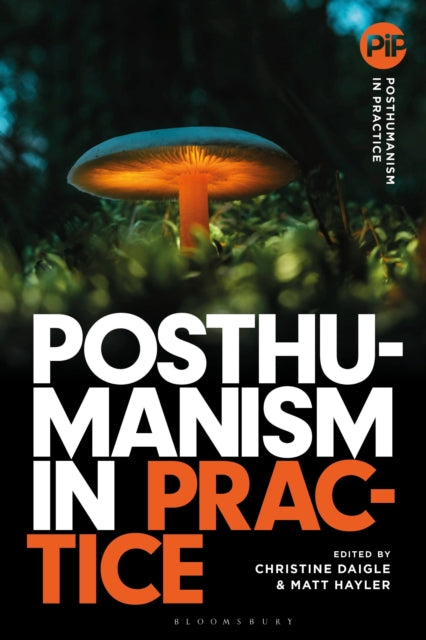
Posthumanism in Practice
Posthumanism in Practice
💎 Earn 159 Points (£1.59) on this item.
We can order this item for you. Delivery usually takes about 4 to 6 weeks.
This item is not held in our immediate stock. We will order it for you after checkout.
Estimated delivery: About 4 to 6 weeks
- Condition: Brand new
- UK Delivery times: Usually arrives within 2 - 3 working days
- UK Shipping: Fee starts at £2.39. Subject to product weight & dimension
Bulk ordering. Want 15 or more copies? Get a personalised quote and bigger discounts. Learn more about bulk orders.
Couldn't load pickup availability
- More about Posthumanism in Practice
Posthumanism challenges traditional humanist outlooks and interrogates their profound shaping of how we see ourselves, our place in the world, and our role in its protection, providing examples and insights to support the exploration of posthumanism in how we can think, create, and live. It shows how posthumanist thought can move beyond theory, inform action, and produce new artefacts, effects, and methods that are more relevant and useful for the incoming realities for all life in the 21st century.
Format: Paperback / softback
Length: 264 pages
Publication date: 22 August 2024
Publisher: Bloomsbury Publishing PLC
Posthumanism challenges traditional humanist perspectives and examines their profound impact on our understanding of ourselves, our place in the world, and our role in its protection. It disrupts the notion of humans as special and distinct from animals, plants, and microbiota, and encourages a more inclusive and interconnected view of the natural world. This perspective has gained prominence in recent years, particularly in traditions emerging from European and Enlightenment philosophies.
Posthumanism in Practice explores how artists, researchers, educators, and curators have embraced and responded to posthumanist ideas in their work across the arts, sciences, and humanities. It provides examples and insights to support the exploration of posthumanism and its potential to shape our thinking, creativity, and way of life in the 21st century. By capturing these ideas, Posthumanism in Practice demonstrates how posthumanist thought can transcend theory and become a practical force that informs action and produces new artefacts, effects, and methods that are more relevant and useful for the emerging realities of all life.
One of the key themes of Posthumanism in Practice is the idea of the "posthuman" as a conceptual framework that challenges the boundaries of what it means to be human. It suggests that humans are not fixed entities but rather dynamic and evolving beings who are constantly shaped by their interactions with the world around them. This perspective recognizes the role of technology, science, and artificial intelligence in shaping our lives and the potential for these technologies to enhance our abilities and expand our horizons.
Posthumanism in Practice also explores the ethical implications of posthumanism. It raises questions about the responsibilities of humans towards other living beings and the environment. It challenges the notion of human exceptionalism and suggests that we are all part of a larger ecosystem that is interconnected and interdependent. This perspective encourages us to consider our actions and their impact on the world and to work towards a more sustainable and equitable future.
In the arts, posthumanism has led to a range of innovative and experimental practices. Artists have explored the boundaries of human form and identity, using technology and artificial intelligence to create new forms of expression. For example, some artists have used 3D printing to create sculptures that are impossible to create using traditional methods, while others have used virtual reality to create immersive experiences that blur the lines between reality and fantasy.
In the sciences, posthumanism has led to a deeper understanding of the natural world. Scientists have used advanced technologies to study the behavior of animals, plants, and microorganisms, and have discovered new insights into the processes of life. For example, researchers have used gene editing to create genetically modified organisms that can be used to improve food production, while others have used artificial intelligence to analyze large datasets and identify patterns that were previously hidden.
In the humanities, posthumanism has led to a re-evaluation of the humanist tradition. Scholars have questioned the assumptions that underpin humanist thought and have explored the potential for a more inclusive and diverse approach to the study of human culture and society. For example, some scholars have argued that the humanist tradition has been too focused on the individual and has ignored the role of social structures and institutions in shaping our lives.
Posthumanism in Practice also highlights the importance of interdisciplinary collaboration. It recognizes that the challenges facing our world are complex and require a multidisciplinary approach. By bringing together artists, researchers, educators, and curators, we can create new solutions to these problems and develop a more holistic understanding of the world.
However, Posthumanism in Practice also raises some challenges. One of the main challenges is the potential for posthumanism to be used to justify harmful practices. For example, some technologies have been used to enhance human abilities at the expense of others, and some scientists have used their research to justify policies that harm the environment.
To address these challenges, Posthumanism in Practice emphasizes the importance of ethical and responsible practice. It encourages artists, researchers, educators, and curators to consider the ethical implications of their work and to work towards a more sustainable and equitable future. It also encourages us to be critical of our assumptions and to challenge the status quo.
In conclusion, Posthumanism in Practice is a valuable resource for anyone interested in exploring the potential of posthumanism to shape our thinking, creativity, and way of life in the 21st century. It challenges traditional humanist perspectives and examines their profound impact on our understanding of ourselves, our place in the world, and our role in its protection. By capturing these ideas, Posthumanism in Practice demonstrates how posthumanist thought can transcend theory and become a practical force that informs action and produces new artefacts, effects, and methods that are more relevant and useful for the emerging realities of all life.
Dimension: 234 x 156 (mm)
ISBN-13: 9781350293847
This item can be found in:
UK and International shipping information
UK and International shipping information
UK Delivery and returns information:
- Delivery within 2 - 3 days when ordering in the UK.
- Shipping fee for UK customers from £2.39. Fully tracked shipping service available.
- Returns policy: Return within 30 days of receipt for full refund.
International deliveries:
Shulph Ink now ships to Australia, Belgium, Canada, France, Germany, Ireland, Italy, India, Luxembourg Saudi Arabia, Singapore, Spain, Netherlands, New Zealand, United Arab Emirates, United States of America.
- Delivery times: within 5 - 10 days for international orders.
- Shipping fee: charges vary for overseas orders. Only tracked services are available for most international orders. Some countries have untracked shipping options.
- Customs charges: If ordering to addresses outside the United Kingdom, you may or may not incur additional customs and duties fees during local delivery.