FlorianUrban
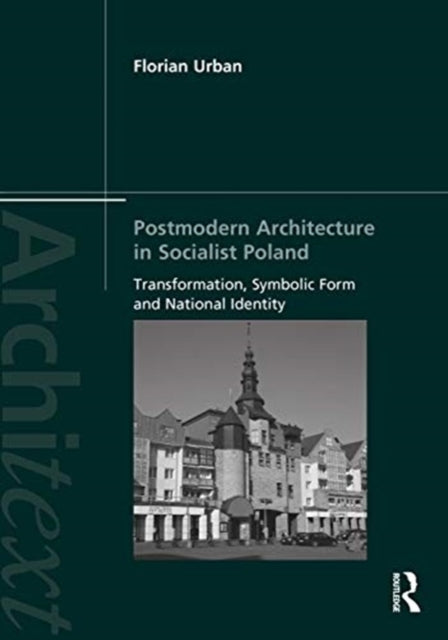
Postmodern Architecture in Socialist Poland: Transformation, Symbolic Form and National Identity
Postmodern Architecture in Socialist Poland: Transformation, Symbolic Form and National Identity
💎 Earn 198 Points (£1.98) on this item.
We can order this item for you. Delivery usually takes about 4 to 6 weeks.
This item is not held in our immediate stock. We will order it for you after checkout.
Estimated delivery: About 4 to 6 weeks
YOU SAVE £2.35
- Condition: Brand new
- UK Delivery times: Usually arrives within 2 - 3 working days
- UK Shipping: Fee starts at £3.89. Subject to product weight & dimension
Bulk ordering. Want 15 or more copies? Get a personalised quote and bigger discounts. Learn more about bulk orders.
Couldn't load pickup availability
- More about Postmodern Architecture in Socialist Poland: Transformation, Symbolic Form and National Identity
Garish churches, gabled slab blocks, neo-historical tenements – this book is about these and other architectural oddities that one would not expect under an authoritarian socialist regime. The book will be of great interest to students and scholars in architectural history, postmodernism, and socialist history.
Garish churches, gabled panel blocks, neo-historical tenements—this book is about these and other architectural oddities that emerged in Poland between 1975 and 1989, a period characterised by the decline of the authoritarian socialist regime and waves of political protest. During that period, committed architects defied repressive politics and persistent shortages, and designed houses and churches which adapted eclectic historical forms and geometric volumes, and were based on traditional typologies.
These buildings show a very different background of postmodernism, far removed from the debates over Robert Venturi, Philip Johnson, or Prince Charles in Western Europe and North America—a context in which postmodern architecture stood not for world-weary irony in an economically saturated society, but for individualised counter-propositions to a collectivist ideology, for a yearning for truth and spiritual values, and for a discourse on distinctiveness and national identity.
Postmodern Architecture in Socialist Poland argues that this new architecture marked the beginning of socio-political transformation and at the same time showed postmodernism's reconciliatory potential. In light of massive historical ruptures and wartime destruction, these buildings successfully responded to the contradictory desires for historical continuity and acknowledgment of rupture and loss. Next to international ideas, the architects took up domestic traditions, such as the ideas of the Polish school of historic conservation and long-standing national-patriotic narratives. They thus contributed to the creation of a built environment and intellectual climate that have been influential to date.
This book will be of great interest to students and scholars interested in postmodern architecture and urban design, as well as in the socio-cultural background and transformative potential of architecture under socialism.
Weight: 528g
Dimension: 175 x 245 x 17 (mm)
ISBN-13: 9780367860738
UK and International shipping information
UK and International shipping information
We deliver throughout the United Kingdom and to 128 countries and territories worldwide, including the United States, Australia, Canada, Germany, Spain and France.