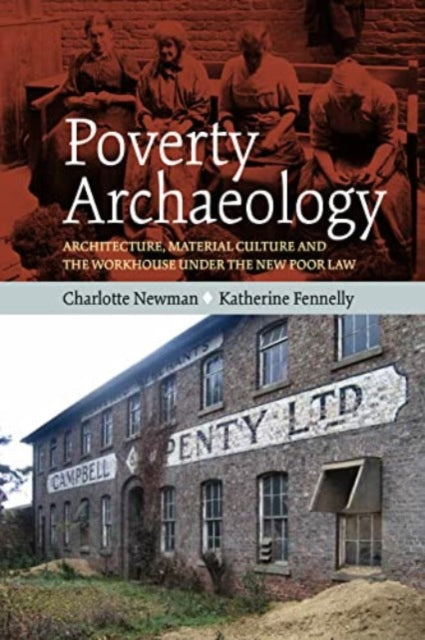

Charlotte Newman,Katherine Fennelly
Poverty Archaeology: Architecture, Material Culture and the Workhouse under the New Poor Law
Poverty Archaeology: Architecture, Material Culture and the Workhouse under the New Poor Law
We can order this item for you. Delivery usually takes about 4 to 6 weeks.
This item is not held in our immediate stock. We will order it for you after checkout.
Estimated delivery: About 4 to 6 weeks
YOU SAVE £3.06
- Condition: Brand new
- UK Delivery times: Usually arrives within 2 - 3 working days
- UK Shipping: Fee starts at £3.89. Subject to product weight & dimension
Bulk ordering. Want 15 or more copies? Get a personalised quote and bigger discounts. Learn more about bulk orders.
Couldn't load pickup availability
- More about Poverty Archaeology: Architecture, Material Culture and the Workhouse under the New Poor Law
The Poor Laws in the UK left a lasting legacy of welfare provision, with workhouses being the first centralized system. Archaeological research reveals the heterogeneity of the Poor Law system and its impact on the lived experience of poverty and health in the 19th century.
Format: Hardback
Length: 174 pages
Publication date: 13 October 2023
Publisher: Berghahn Books
The Poor Laws in the United Kingdom left a lasting and significant impact on society, spanning over two centuries of legislative provisions for the poor and infirm. Workhouses, as the first centralized and state-organized welfare system, have a controversial historical reputation. Initially designed as specialized institutions, workhouses were divided into subdivisions to manage different categories of inmates. This volume presents a social archaeology of the lived experience of poverty and health in the nineteenth century, highlighting the heterogeneity of the Poor Law system from a built heritage perspective.
Dimension: 229 x 152 (mm)
ISBN-13: 9781805391098
UK and International shipping information
UK and International shipping information
We deliver throughout the United Kingdom and to 128 countries and territories worldwide, including the United States, Australia, Canada, Germany, Spain and France.