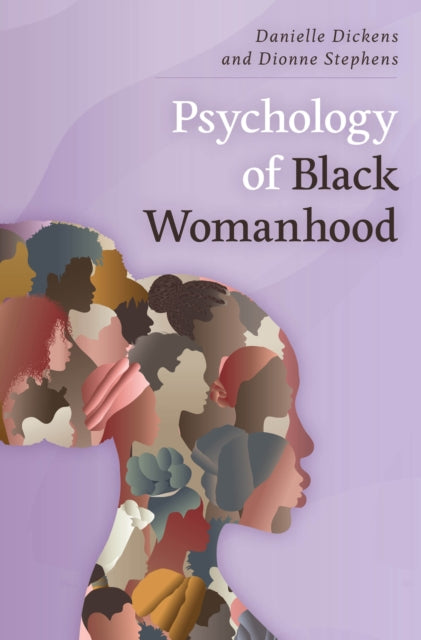
Danielle Dickens,Dionne Stephens
Psychology of Black Womanhood
Psychology of Black Womanhood
💎 Earn 376 Points (£3.76) on this item.
We can order this item for you. Delivery usually takes about 4 to 6 weeks.
This item is not held in our immediate stock. We will order it for you after checkout.
Estimated delivery: About 4 to 6 weeks
YOU SAVE £9.77
- Condition: Brand new
- UK Delivery times: Usually arrives within 2 - 3 working days
- UK Shipping: Fee starts at £3.89. Subject to product weight & dimension
Bulk ordering. Want 15 or more copies? Get a personalised quote and bigger discounts. Learn more about bulk orders.
Couldn't load pickup availability
- More about Psychology of Black Womanhood
Psychology of Black Womanhood is a comprehensive textbook that explores the sociohistorical and psychological experiences of Black girls and women in the US, addressing intersectionality and incorporating Black feminist, womanist, and psychological frameworks. It provides valuable insights for practice in counseling, social work, health care, education, advocacy, and policy.
Format: Hardback
Length: 622 pages
Publication date: 14 June 2024
Publisher: Bloomsbury Publishing Plc
Psychology of Black Womanhood is a groundbreaking textbook that offers a comprehensive and authoritative exploration of the sociohistorical and psychological experiences of Black girls and women in the United States. It is written in a jargon-free and affordable style, making it accessible to a wide range of readers. The book covers a wide range of topics, including young, middle-aged, and maturing women, LGBTQ+ women and non-binary individuals, women with disabilities, and women across social classes. It is firmly rooted in Black feminist, womanist, and psychological frameworks, incorporating literature from related disciplines such as sociology, Black/African American studies, women's studies, and public health.
One of the key strengths of Psychology of Black Womanhood is its emphasis on intersectionality. The authors recognize that Black women's experiences are shaped by a complex web of factors, including race, gender, class, sexuality, and disability. They provide a nuanced and insightful analysis of how these factors interact and impact their lives. For example, they discuss the impact of racialized gendered violence on Black women's mental health, the challenges faced by LGBTQ+ women in the workplace, and the barriers faced by women with disabilities in accessing healthcare.
Another important aspect of Psychology of Black Womanhood is its focus on the psychological development of Black girls and women. The authors provide a detailed overview of the various stages of development, including childhood, adolescence, and adulthood, and discuss the unique challenges and opportunities that each stage presents. They also explore the impact of socialization, cultural norms, and gender roles on Black women's self-esteem, body image, and sexual behavior.
The book also includes a range of practical tools and strategies for addressing the challenges faced by Black women. These include counseling, social work, health care, education, advocacy, and policy. The authors provide examples of successful interventions and programs that have been implemented to address these issues, and offer guidance on how to develop and implement similar programs in other communities.
One of the challenges faced by Psychology of Black Womanhood is the lack of diversity in the field of psychology. While there has been a significant increase in the number of Black psychologists in recent years, there is still a significant gap in the representation of Black women in the field. This can have a negative impact on the quality of care that Black women receive, as they may not be able to access the same level of expertise and support as their white counterparts.
To address this issue, Psychology of Black Womanhood includes a chapter on diversity and inclusion in psychology. The authors discuss the importance of creating a more inclusive and equitable field, and provide strategies for promoting diversity in the classroom, the workplace, and the community. They also highlight the importance of addressing the historical and systemic racism that has contributed to the marginalization of Black women in psychology.
Another challenge faced by Psychology of Black Womanhood is the stigma associated with mental health. Many Black women are reluctant to seek mental health care due to the stigma associated with mental illness, and this can have a negative impact on their physical and mental health. The authors provide a detailed overview of the stigma associated with mental health, and offer strategies for addressing it. They also highlight the importance of promoting mental health literacy and reducing the stigma associated with mental illness.
In addition to its academic content, Psychology of Black Womanhood is also a powerful tool for social change. The authors provide a clear and compelling argument for the need to address the systemic and structural inequalities that exist in society. They offer a range of strategies for promoting social justice and equality, and provide examples of successful campaigns and initiatives that have been implemented to address these issues.
One of the most significant contributions of Psychology of Black Womanhood is its ability to challenge dominant narratives and stereotypes about Black women. The authors provide a nuanced and insightful analysis of the ways in which Black women are portrayed in the media, and how these portrayals can impact their self-esteem and body image. They also highlight the importance of challenging these stereotypes and promoting a more positive and accurate representation of Black women in the media.
Psychology of Black Womanhood is a must-read for anyone interested in the psychological study of Black girls and women in the United States. It provides a comprehensive and authoritative exploration of the sociohistorical and psychological experiences of these women, and offers practical tools and strategies for addressing the challenges faced by Black women. Despite its challenges, Psychology of Black Womanhood is a powerful tool for social change, and it has the potential to make a significant impact on the lives of Black women and their communities.
In conclusion, Psychology of Black Womanhood is a groundbreaking textbook that offers a comprehensive and authoritative exploration of the sociohistorical and psychological experiences of Black girls and women in the United States. It is written in a jargon-free and affordable style, making it accessible to a wide range of readers. The book covers a wide range of topics, including young, middle-aged, and maturing women, LGBTQ+ women and non-binary individuals, women with disabilities, and women across social classes. It is firmly rooted in Black feminist, womanist, and psychological frameworks, incorporating literature from related disciplines such as sociology, Black/African American studies, women's studies, and public health. Psychology of Black Womanhood has implications for practice in counseling, social work, health care, education, advocacy, and policy, and it has the potential to make a significant impact on the lives of Black women and their communities.
Weight: 1270g
Dimension: 261 x 185 x 37 (mm)
ISBN-13: 9781538162798
UK and International shipping information
UK and International shipping information
We deliver throughout the United Kingdom and to 128 countries and territories worldwide, including the United States, Australia, Canada, Germany, Spain and France.