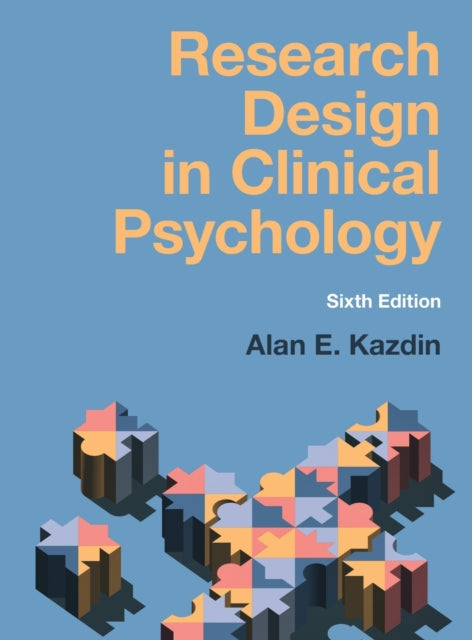
Alan E.Kazdin
Research Design in Clinical Psychology
Research Design in Clinical Psychology
💎 Earn 594 Points (£5.94) on this item.
We can order this item for you. Delivery usually takes about 4 to 6 weeks.
This item is not held in our immediate stock. We will order it for you after checkout.
Estimated delivery: About 4 to 6 weeks
YOU SAVE £7.06
- Condition: Brand new
- UK Delivery times: Usually arrives within 2 - 3 working days
- UK Shipping: Fee starts at £2.39. Subject to product weight & dimension
Bulk ordering. Want 15 or more copies? Get a personalised quote and bigger discounts. Learn more about bulk orders.
Couldn't load pickup availability
- More about Research Design in Clinical Psychology
This textbook provides a comprehensive guide to the research process in clinical psychology, covering topics such as developing ideas, selecting methods, analyzing data, and communicating results. It includes the latest developments in the field, such as the use of technology and web-based methods, robots and artificial intelligence, and diversity in research. It is designed to inspire the development of future research processes and is ideal for graduate students and professionals.
Format: Hardback
Length: 800 pages
Publication date: 07 September 2023
Publisher: Cambridge University Press
This comprehensive textbook offers a thorough exploration of the entire research process, encompassing the development of ideas, selection of methods, analysis, and communication of results. In its sixth edition, the book incorporates the latest advancements in the field, such as the utilization of technology and web-based approaches for conducting studies, the integration of robots and artificial intelligence in designing and evaluating research, and the significance of diversity in research to yield outcomes that accurately reflect the society we inhabit. With a focus on inspiring the creation of future research processes, this textbook is an invaluable resource for graduate students and professionals seeking to excel in research methods and research design within the field of clinical psychology.
Introduction:
The research process is a critical component of any scientific or academic endeavor, as it allows individuals to gather and analyze data to gain insights into a particular topic or problem. This process involves a series of steps, including developing ideas, selecting methods, analyzing and interpreting data, and communicating results. In this comprehensive textbook, we will delve into each of these steps in detail, providing you with the knowledge and skills necessary to conduct effective and ethical research.
Developing Ideas:
The first step in the research process is developing ideas. This involves identifying a research question or hypothesis and brainstorming potential solutions or approaches to investigate. It is important to choose a research question that is relevant, interesting, and manageable within the constraints of your study. Once you have developed your ideas, you need to refine them and develop a clear research plan that outlines the objectives, methods, and timeline of your study.
Selecting Methods:
The selection of methods is a critical step in the research process, as it determines the type of data that will be collected and the analysis techniques that will be used. There are many different types of research methods, including qualitative and quantitative research, experimental and observational research, and case studies. Each method has its advantages and disadvantages, and the choice of method should be based on the research question, the available data, and the research objectives.
Analyzing and Interpreting Data:
Once data has been collected, it needs to be analyzed and interpreted. This involves using statistical tools and other analytical techniques to identify patterns, relationships, and trends in the data. It is important to use appropriate statistical methods and to interpret the results in a meaningful and relevant way. In addition to statistical analysis, qualitative analysis, such as content analysis, can also be used to gain insights into the meaning and significance of the data.
Communicating Results:
The final step in the research process is communicating results. This involves presenting your findings in a clear and concise manner, using appropriate visual aids and language to convey your message effectively. It is important to communicate your results in a way that is accessible to a wide audience, including researchers, policymakers, and the general public. In addition to written communication, presentations, and posters can also be used to communicate results.
Conclusion:
In conclusion, the research process is a complex and multifaceted process that requires careful planning, execution, and analysis. This textbook offers a comprehensive exploration of the entire research process, providing you with the knowledge and skills necessary to conduct effective and ethical research. By following the steps outlined in this textbook the research process, individuals can gather and analyze data to gain insights into a particular topic or problem. This process involves a series of steps, including developing ideas, selecting methods, analyzing and interpreting research, and communicating results. In this comprehensive textbook, we will delve into each of these steps in detail, providing you with the knowledge and skills necessary to conduct effective and ethical research.
Developing Ideas:
The first step in the research process is developing ideas. This involves identifying a research question or hypothesis and brainstorming potential solutions or approaches to investigate. It is important to choose a research question that is relevant, interesting, and manageable within the constraints of your study. Once you have developed your ideas, you need to refine them and develop a clear research plan that outlines the objectives, methods, and timeline of your study.
Selecting Methods:
The selection of methods is a critical step in the research process, as it determines the type of data that will be collected and the analysis techniques that will be used. There are many different types of research methods, including qualitative and quantitative research, experimental and observational research, and case studies. Each method has its advantages and disadvantages, and the choice of method should be based on the research question, the available data, and the research objectives.
Analyzing and Interpreting Data:
Once data has been collected, it needs to be analyzed and interpreted. This involves using statistical tools and other analytical techniques to identify patterns, relationships, and trends in the data. It is important to use appropriate statistical methods and to interpret the results in a meaningful and relevant way. In addition to statistical analysis, qualitative analysis, such as content analysis, can also be used to gain insights into the meaning the meaning and significance of the data.
Communicating Results:
The final step in the research process is communicating results. This involves presenting your findings in a clear and concise manner, using appropriate visual aids and language to convey your message effectively. It is important to communicate your results in a way that is accessible to a wide audience, including researchers, policymakers, and the general public. In addition to written communication, presentations, and posters can also be used to communicate results.
Conclusion:
In conclusion, the research process is a complex and multifaceted process that requires careful planning, execution, and analysis. This textbook offers a comprehensive exploration of the entire research process, providing you with the knowledge and skills necessary to conduct effective and ethical research. By following steps in this comprehensive textbook, individuals can gather and analyze data to gain insights into a particular topic or problem. This process involves a series of steps, including developing ideas, selecting methods, analyzing and interpreting research, and communicating results. In this comprehensive textbook, we will delve into each of these steps in detail, providing you with the knowledge and skills necessary to conduct effective and ethical research.
Weight: 2310g
Dimension: 285 x 221 x 41 (mm)
ISBN-13: 9781108838788
Edition number: 6 Revised edition
This item can be found in:
UK and International shipping information
UK and International shipping information
UK Delivery and returns information:
- Delivery within 2 - 3 days when ordering in the UK.
- Shipping fee for UK customers from £2.39. Fully tracked shipping service available.
- Returns policy: Return within 30 days of receipt for full refund.
International deliveries:
Shulph Ink now ships to Australia, Belgium, Canada, France, Germany, Ireland, Italy, India, Luxembourg Saudi Arabia, Singapore, Spain, Netherlands, New Zealand, United Arab Emirates, United States of America.
- Delivery times: within 5 - 10 days for international orders.
- Shipping fee: charges vary for overseas orders. Only tracked services are available for most international orders. Some countries have untracked shipping options.
- Customs charges: If ordering to addresses outside the United Kingdom, you may or may not incur additional customs and duties fees during local delivery.