Fujan Fahmi
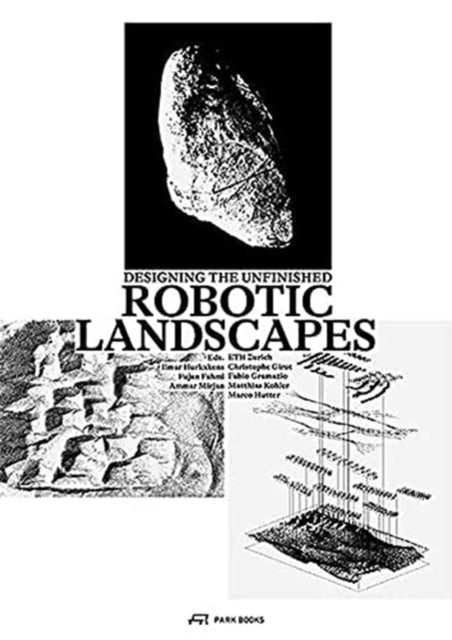
Robotic Landscapes: Designing the Unfinished
Robotic Landscapes: Designing the Unfinished
💎 Earn 134 Points (£1.34) on this item.
YOU SAVE £8.15
- Condition: Brand new
- UK Delivery times: Usually arrives within 2 - 3 working days
- UK Shipping: Fee starts at £2.39. Subject to product weight & dimension
Bulk ordering. Want 15 or more copies? Get a personalised quote and bigger discounts. Learn more about bulk orders.
Couldn't load pickup availability
- More about Robotic Landscapes: Designing the Unfinished
The Department of Architecture at ETH Zurich has researched the integration of robots into architectural practice for some time. This book investigates the use of robot-based construction equipment for large-scale soil grading in landscape architecture, focusing on autonomous systems that respond to the environment.
Format: Hardback
Length: 192 pages
Publication date: 28 February 2022
Publisher: Park Books
The Department of Architecture at ETH Zurich has been conducting extensive research into the integration of robots into architectural practice, encompassing both design and fabrication processes. In collaboration with the chair of Christophe Girot, Gramazio Kohler Research, and Marco Hutter at ETH Zurich's Robotic Systems Lab, this book marks the inaugural exploration of the utilization of robot-based construction equipment for large-scale soil grading in landscape architecture. Given the dynamic nature of landscapes influenced by constantly evolving environmental factors, the application of autonomous systems that adapt to the environment rather than executing predefined and static earthwork holds significant appeal in this field.
Robotic Landscapes unveils a captivating series of groundbreaking experiments conducted in a collaborative endeavor between landscape design, environmental engineering, and robotics. This interdisciplinary approach seeks to establish landscape architecture as a sustainable and ecologically responsible discipline for the long term. By delving into innovative techniques and technologies, the book offers valuable insights into the future of landscape design and construction.
The integration of robots into architectural practice holds immense potential for enhancing efficiency, precision, and sustainability. By automating repetitive tasks and reducing human labor, robots can help architects and builders streamline their processes, resulting in cost savings and improved quality control. Moreover, the use of robots in landscape architecture enables the creation of complex and intricate designs that were previously impossible to achieve.
One of the key areas of exploration in Robotic Landscapes is the use of robot-based construction equipment for large-scale soil grading. This approach involves the deployment of robots equipped with specialized tools and sensors to perform precise earthwork operations, such as excavating, leveling, and shaping the terrain. By leveraging the power and precision of robots, architects and builders can achieve accurate and efficient grading, which is essential for creating harmonious and functional landscapes.
Another groundbreaking experiment featured in the book is the integration of autonomous systems into landscape architecture. These systems are designed to respond to the environment and adapt to changing conditions, allowing them to optimize the performance of landscapes over time. For example, autonomous irrigation systems can adjust water distribution based on weather patterns, reducing water waste and promoting healthy plant growth.
Robotic Landscapes also highlights the importance of interdisciplinary collaboration in the development of sustainable and ecological landscape architecture. By bringing together experts from different fields, architects and builders can create holistic solutions that consider both aesthetic and environmental aspects. This approach ensures that landscapes are not only visually appealing but also contribute to the well-being of ecosystems and the broader community.
In conclusion, Robotic Landscapes serves as a groundbreaking exploration of the integration of robots into architectural practice, particularly in the realm of landscape architecture. Through a series of innovative experiments and interdisciplinary collaborations, the book offers valuable insights into the future of landscape design and construction. By leveraging the power and precision of robots, architects and builders can create sustainable and ecologically responsible landscapes that enhance the beauty and functionality of our environment.
Weight: 562g
Dimension: 176 x 372 x 22 (mm)
ISBN-13: 9783038602545
This item can be found in:
UK and International shipping information
UK and International shipping information
UK Delivery and returns information:
- Delivery within 2 - 3 days when ordering in the UK.
- Shipping fee for UK customers from £2.39. Fully tracked shipping service available.
- Returns policy: Return within 30 days of receipt for full refund.
International deliveries:
Shulph Ink now ships to Australia, Belgium, Canada, France, Germany, Ireland, Italy, India, Luxembourg Saudi Arabia, Singapore, Spain, Netherlands, New Zealand, United Arab Emirates, United States of America.
- Delivery times: within 5 - 10 days for international orders.
- Shipping fee: charges vary for overseas orders. Only tracked services are available for most international orders. Some countries have untracked shipping options.
- Customs charges: If ordering to addresses outside the United Kingdom, you may or may not incur additional customs and duties fees during local delivery.