FotiniKondyli
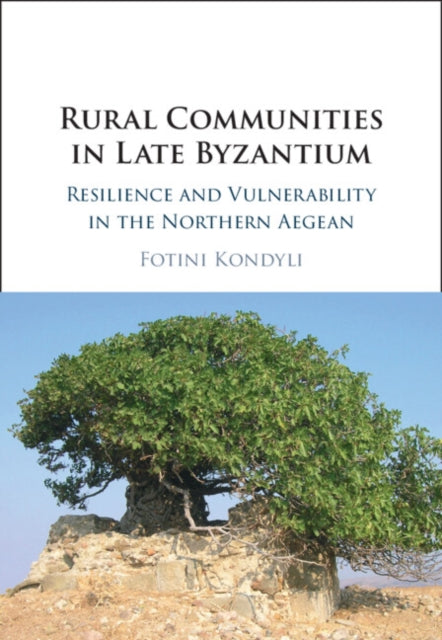
Rural Communities in Late Byzantium: Resilience and Vulnerability in the Northern Aegean
Rural Communities in Late Byzantium: Resilience and Vulnerability in the Northern Aegean
YOU SAVE £8.71
- Condition: Brand new
- UK Delivery times: Usually arrives within 2 - 3 working days
- UK Shipping: Fee starts at £3.89. Subject to product weight & dimension
Bulk ordering. Want 15 or more copies? Get a personalised quote and bigger discounts. Learn more about bulk orders.
Couldn't load pickup availability
- More about Rural Communities in Late Byzantium: Resilience and Vulnerability in the Northern Aegean
Late Byzantium faced economic, political, and demographic crises, and this book argues that rural communities had the ability to transform their socioeconomic strategies and maintain resilience. It provides concrete examples of Byzantine socio-economic strategies that successfully mitigated these crises and contributes to a diachronic perspective on crisis management.
Format: Hardback
Length: 302 pages
Publication date: 17 March 2022
Publisher: Cambridge University Press
Late Byzantium grappled with a series of profound economic, political, and demographic challenges. This book makes a compelling case for the remarkable resilience of rural communities in navigating these adversities, particularly in the context of islands. It aims to re-center ordinary people in the historical narrative, recognizing their agency and ability to shape events of the period. By combining fresh archaeological discoveries with archival materials from the islands of Lemnos and Thasos in the Northern Aegean, the book offers concrete examples of Byzantine socio-economic strategies that effectively weathered various crises, contributing to a holistic understanding of crisis management across time. The ultimate goal is to reexamine the nature of the Late Byzantine period and challenge the conventional divisions between "good" and "bad" historical periods.
Economic Crisis:
Late Byzantium faced a severe economic downturn, marked by declining trade, inflation, and agricultural productivity. The empire's vast territories and limited resources made it difficult to maintain stability and prosperity. Rural communities, however, exhibited remarkable adaptability and resilience. They developed innovative agricultural practices, such as crop rotation and irrigation, to maximize yield and reduce vulnerability to natural disasters. Additionally, they diversified their economic activities, engaging in crafts, trade, and fishing to supplement their income and create employment opportunities.
Political Crisis:
The Late Byzantine period was characterized by political instability and fragmentation. The empire was plagued by internal conflicts, power struggles, and external threats from neighboring empires and barbarian invasions. Rural communities, however, often found ways to navigate these challenges by forming alliances and cooperatives, promoting social cohesion, and maintaining a strong sense of community identity. They also played a crucial role in the empire's defense, providing manpower and resources to the military.
Demographic Crisis:
Late Byzantium faced a significant population decline due to factors such as low birth rates, high mortality rates, and migration. This demographic shift had a profound impact on the economy, as it reduced the workforce and led to increased poverty and social unrest. Rural communities, however, responded to this crisis by implementing family planning programs, promoting education, and encouraging intergenerational cooperation. They also developed strategies to attract and retain immigrants, ensuring the sustainability of their communities.
Rural Resilience:
The key to rural communities' resilience lies in their ability to adapt and innovate. They recognized the importance of community and collective action, and they worked together to address their challenges. They also had a deep understanding of their environment and resources, which enabled them to make informed decisions and take proactive measures. Moreover, rural communities were often less susceptible to external shocks and disruptions, as they had developed strong social networks and a sense of self-sufficiency.
Re-Centering Ordinary People:
The book seeks to re-center ordinary people in the historical narrative, recognizing their agency and ability to shape events of the period. It challenges the notion that history is solely driven by powerful individuals and institutions, and it emphasizes the importance of the contributions of ordinary people. By highlighting the experiences and perspectives of rural communities, the book provides a more nuanced and comprehensive understanding of the Late Byzantine period.
Archaeological Evidence:
The book combines new archaeological evidence with archival material pertaining to the islands of Lemnos and Thasos in the Northern Aegean. These islands were particularly vulnerable to economic, political, and demographic crises, as they were located at the crossroads of trade routes and were often contested by neighboring empires. By studying the archaeological evidence, the book sheds light on the strategies and practices employed by rural communities to mitigate these crises and maintain their resilience.
Re-Thinking the Late Byzantine Period:
The book's findings have significant implications for our understanding of the Late Byzantine period. It challenges the traditional narratives that portray the period as a time of decline and collapse. Instead, it presents a more nuanced and complex picture, highlighting the remarkable resilience and adaptability of rural communities in the face of adversity. It also prompts us to question the ways in which we have come to divide historical periods into "good" or "bad."
Conclusion:
In conclusion, this book offers a fresh perspective on the Late Byzantine period, challenging our assumptions and illuminating the remarkable resilience of rural communities. It provides valuable insights into the strategies and practices employed by these communities to navigate economic, political, and demographic crises, and it contributes to a more holistic understanding of crisis management across time. By re-centering ordinary people in the historical narrative and recognizing their agency, we can gain a deeper appreciation for the complexities and challenges of the Late Byzantine period and its place in the broader historical context.
Weight: 726g
Dimension: 177 x 250 x 20 (mm)
ISBN-13: 9781108845496
Edition number: New ed
UK and International shipping information
UK and International shipping information
We deliver throughout the United Kingdom and to 128 countries and territories worldwide, including the United States, Australia, Canada, Germany, Spain and France.