Martha London
Saving Animals: Saving Jaguars
Saving Animals: Saving Jaguars
💎 Earn 113 Points (£1.13) on this item.
YOU SAVE £9.35
- Condition: Brand new
- UK Delivery times: Usually arrives within 2 - 3 working days
- UK Shipping: Fee starts at £3.89. Subject to product weight & dimension
Bulk ordering. Want 15 or more copies? Get a personalised quote and bigger discounts. Learn more about bulk orders.
Couldn't load pickup availability
- More about Saving Animals: Saving Jaguars
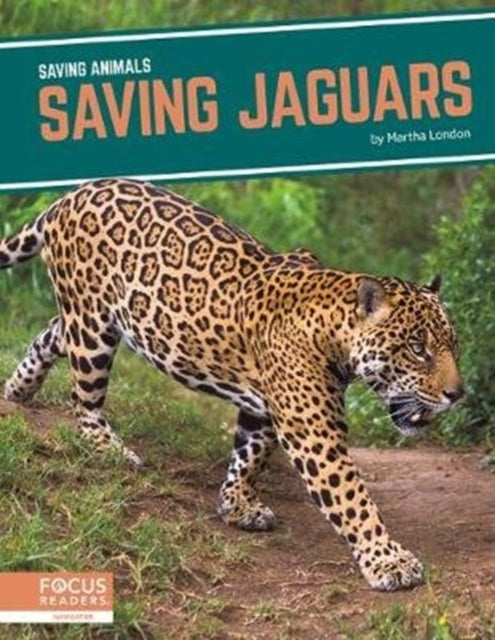
The book explores the role of jaguars in their habitats, how humans have threatened their existence, and efforts being taken to protect them. It is written in a clear and engaging style, with vibrant photos and helpful infographics.
Format: Hardback
Length: 32 pages
Publication date: 01 March 2021
Publisher: North Star Editions
The captivating story of Jaguars in their natural habitats, the threats posed to their existence by human activities, and the ongoing efforts to safeguard these magnificent creatures is explored in this comprehensive title. Through a combination of clear text, vibrant photos, and helpful infographics, this book offers an accessible and engaging read for anyone interested in learning more about these iconic animals.
Jaguars are apex predators that play a vital role in maintaining the balance of their ecosystems. They are known for their strength, agility, and incredible hunting skills, making them formidable opponents to any animal that dares to challenge them. However, human activities have posed significant threats to the survival of Jaguars.
One of the primary threats to Jaguars is habitat loss. As human populations continue to expand and develop, they encroach on the natural habitats of Jaguars, destroying their homes and food sources. This fragmentation of their habitat has led to increased competition for resources and decreased genetic diversity, which can have long-term consequences for the survival of the species.
Another threat to Jaguars is poaching. Jaguars are sought after by illegal wildlife traders for their fur, bones, and other body parts, which are used in traditional medicine and as ornaments. This illegal trade has led to a significant decline in Jaguar populations, with some species facing extinction.
To protect Jaguars, various efforts are being undertaken by governments, conservation organizations, and local communities. One of the most effective strategies is the creation of protected areas and national parks, where Jaguars can roam and thrive in their natural habitats. These protected areas provide a buffer against habitat loss and poaching, allowing Jaguars to reproduce and grow their populations.
In addition to protected areas, conservation efforts also focus on monitoring and managing Jaguar populations. This includes the use of technology such as GPS collars and camera traps to track Jaguar movements and identify areas where poaching is occurring. By understanding the behavior and habitat preferences of Jaguars, conservationists can develop targeted conservation strategies that are more effective in protecting these animals.
Education and awareness are also crucial in protecting Jaguars. Many people are unaware of the threats posed to Jaguars and the importance of their conservation. By raising awareness about the importance of Jaguars and their role in ecosystems, we can encourage individuals to take action to protect these animals.
Furthermore, sustainable development practices are essential in protecting Jaguars. This includes reducing deforestation, promoting responsible tourism, and implementing sustainable agriculture practices that do not harm Jaguars or their habitats. By working towards sustainable development, we can ensure that Jaguars and other wildlife can thrive in their natural environments for generations to come.
In conclusion, Jaguars are a magnificent and iconic species that play a vital role in their ecosystems. However, human activities have posed significant threats to their survival. By creating protected areas, monitoring and managing Jaguar populations, educating and raising awareness, and implementing sustainable development practices, we can work towards protecting these incredible animals and ensuring their long-term survival.
The Role of Jaguars in Their Habitats:
Jaguars are apex predators that play a vital role in maintaining the balance of their ecosystems. They are known for their strength, agility, and incredible hunting skills, making them formidable opponents to any animal that dares to challenge them. Jaguars are found in a variety of habitats, including rainforests, savannas, and wetlands, and they have adapted to survive in these diverse environments.
One of the key adaptations that Jaguars have developed is their ability to adapt to different prey species. Jaguars are carnivores, and they have a wide range of prey species that they consume. They primarily prey on large mammals such as deer, boar, and wild pigs, but they also consume smaller prey such as birds, reptiles, and insects. Jaguars are skilled hunters, and they use a variety of hunting techniques to capture their prey. They are known to stalk their prey, using their camouflage and stealth to approach their target unnoticed. They are also skilled at pouncing on their prey, using their powerful jaws and claws to kill their target quickly.
In addition to their hunting skills, Jaguars are also important for their role in seed dispersal. Jaguars are known to consume fruits and seeds, and they disperse these seeds throughout their habitat. This helps to promote the growth of new plants and trees, which in turn helps to maintain the health of the ecosystem. Jaguars also play a role in regulating the populations of prey species. By preying on larger animals, Jaguars help to control the populations of smaller animals, which can help to prevent overgrazing and other environmental problems.
Threats Posed to the Existence of Jaguars:
Despite their incredible adaptations and importance to their ecosystems, Jaguars face a number of threats to their existence. One of the primary threats is habitat loss. As human populations continue to expand and develop, they encroach on the natural habitats of Jaguars, destroying their homes and food sources. This fragmentation of their habitat has led to increased competition for resources and decreased genetic diversity, which can have long-term consequences for the survival of the species.
Another threat to Jaguars is poaching. Jaguars are sought after by illegal wildlife traders for their fur, bones, and other body parts, which are used in traditional medicine and as ornaments. This illegal trade has led to a significant decline in Jaguar populations, with some species facing extinction. Poaching is often driven by the demand for Jaguar products in countries such as China and Vietnam, where they are considered a symbol of wealth and status.
In addition to habitat loss and poaching, Jaguars are also threatened by climate change. Climate change is causing changes in the distribution of prey. Jaguars are known to be sensitive to changes in temperature and precipitation, and they are particularly vulnerable to changes in their habitat. Climate change is causing changes in the distribution of prey species, which in turn can lead to increased competition for resources and decreased genetic diversity.
Efforts Being Taken to Protect Jaguars:
To protect Jaguars, various efforts are being undertaken by governments, conservation organizations, and local communities. One of the most effective strategies is the creation of protected areas and national parks, where Jaguars can roam and thrive in their natural habitats. These protected areas provide a buffer against habitat loss and poaching, allowing Jaguars to reproduce and grow their populations.
In addition to protected areas, conservation efforts also focus on monitoring and managing Jaguar populations. This includes the use of technology such as GPS collars and camera traps to track Jaguar movements and identify areas where poaching is occurring. By understanding the behavior and habitat preferences of Jaguars, conservationists can develop targeted conservation strategies that are more effective in protecting these animals.
Education and awareness are also crucial in protecting Jaguars. Many people are unaware of the threats posed to Jaguars and the importance of their conservation. By raising awareness about the importance of Jaguars and their role in ecosystems, we can encourage individuals to take action to protect these animals.
Furthermore, sustainable development practices are essential in protecting Jaguars. This includes reducing deforestation, promoting responsible tourism, and implementing sustainable agriculture practices that do not harm Jaguars or their habitats. By working towards sustainable development, we can ensure that Jaguars and other wildlife can thrive in their natural environments for generations to come.
In conclusion, Jaguars are a magnificent and iconic species that play a vital role in their ecosystems. However, human activities have posed significant threats to their survival. By creating protected areas, monitoring and managing Jaguar populations, educating and raising awareness, and implementing sustainable development practices, we can work towards protecting these incredible animals and ensuring their long-term survival.
Weight: 242g
Dimension: 183 x 235 x 10 (mm)
ISBN-13: 9781644933879
UK and International shipping information
UK and International shipping information
We deliver throughout the United Kingdom and to 128 countries and territories worldwide, including the United States, Australia, Canada, Germany, Spain and France.