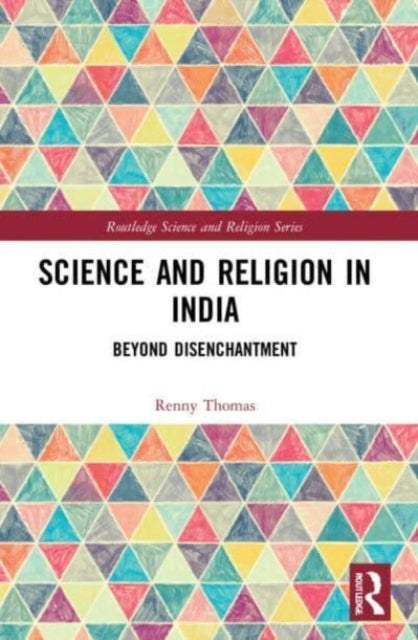
Renny Thomas
Science and Religion in India: Beyond Disenchantment
Science and Religion in India: Beyond Disenchantment
YOU SAVE £3.87
- Condition: Brand new
- UK Delivery times: Usually arrives within 2 - 3 working days
- UK Shipping: Fee starts at £3.89. Subject to product weight & dimension
Bulk ordering. Want 15 or more copies? Get a personalised quote and bigger discounts. Learn more about bulk orders.
Couldn't load pickup availability
- More about Science and Religion in India: Beyond Disenchantment
This book provides an in-depth ethnographic study of science and religion in South Asia, challenging binary models and engaging with new ways of looking at these categories.
Format: Paperback / softback
Length: 204 pages
Publication date: 25 September 2023
Publisher: Taylor & Francis Ltd
This captivating book delves into an in-depth ethnographic exploration of the intricate relationship between science and religion in the vibrant tapestry of South Asia. Through the voices of Indian scientists, it offers a profound and enlightening perspective, shedding valuable light on their engaging interactions with religion. Drawing upon a rich array of biographical, autobiographical, historical, and ethnographic materials, the volume meticulously examines the religious lives and practices of these remarkable individuals, showcasing the diverse ways in which they express their faith.
Renny Thomas takes a bold stance by challenging the notion that science and religion in India are inherently intertwined, advocating for a more nuanced and complex understanding of their relationship. He encourages us to move beyond simplistic binary models of conflict and complementarity, urging us to explore new avenues of inquiry. By intricately complicating our understanding of science and religion in India, this book engages us in a thought-provoking exploration of these categories, offering fresh insights and perspectives.
The book's exploration is organized into several compelling chapters, each shedding light on different aspects of the interplay between science and religion in South Asia. From the personal accounts of scientists who have navigated the challenges and rewards of integrating their faith with their scientific pursuits to the historical and cultural contexts that shape their interactions, the book provides a comprehensive and nuanced account of this complex relationship.
One of the key themes that emerges throughout the book is the notion of pluralism and the diverse ways in which scientists and religious communities engage with each other. The authors highlight the importance of recognizing and respecting the different beliefs and practices of these communities, fostering a sense of mutual understanding and respect. They also emphasize the need for dialogue and collaboration, as these interactions can lead to innovative solutions to societal challenges and the advancement of knowledge.
Another notable aspect of the book is its focus on the role of science in addressing social and environmental issues in South Asia. The authors argue that science can play a vital role in promoting sustainable development, improving healthcare, and addressing the pressing challenges of poverty, inequality, and climate change. They showcase the work of scientists who are using their expertise to address these issues, highlighting the importance of interdisciplinary collaboration and the need for a holistic approach to problem-solving.
Furthermore, the book delves into the complex relationship between science and religion in the context of religious pluralism and the challenges posed by modernity. The authors explore the ways in which religious traditions adapt to changing scientific paradigms and the impact of scientific advancements on religious beliefs and practices. They also examine the role of religious institutions in promoting scientific literacy and the importance of engaging with science in a responsible and ethical manner.
In conclusion, this book is a must-read for anyone interested in the intersection of science and religion in South Asia. It offers a rich and nuanced perspective, shedding valuable light on the complex and multifaceted relationship between these two realms. Through the voices of Indian scientists and the broader sociocultural context, the book provides a comprehensive and insightful exploration of the ways in which science and religion intersect, shaping the lives and beliefs of individuals and communities in this vibrant region.
Weight: 338g
Dimension: 157 x 234 x 16 (mm)
ISBN-13: 9781032100616
UK and International shipping information
UK and International shipping information
We deliver throughout the United Kingdom and to 128 countries and territories worldwide, including the United States, Australia, Canada, Germany, Spain and France.