Shulph Ink
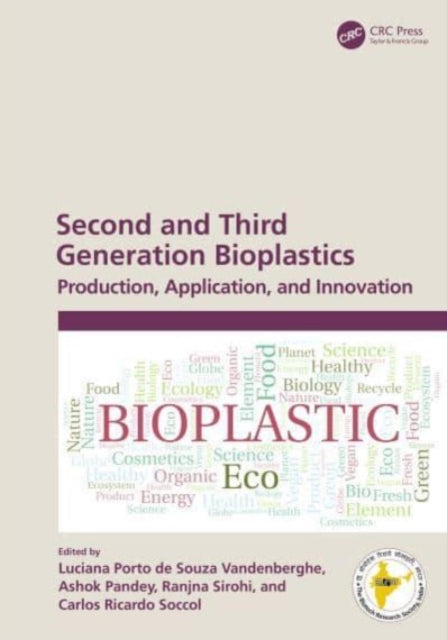
Second and Third Generation Bioplastics: Production, Application, and Innovation
Second and Third Generation Bioplastics: Production, Application, and Innovation
We can order this item for you. Delivery usually takes about 4 to 6 weeks.
This item is not held in our immediate stock. We will order it for you after checkout.
Estimated delivery: About 4 to 6 weeks
YOU SAVE £15.13
- Condition: Brand new
- UK Delivery times: Usually arrives within 2 - 3 working days
- UK Shipping: Fee starts at £3.89. Subject to product weight & dimension
Bulk ordering. Want 15 or more copies? Get a personalised quote and bigger discounts. Learn more about bulk orders.
Couldn't load pickup availability
- More about Second and Third Generation Bioplastics: Production, Application, and Innovation
Second-generation bioplastics are a type of biodegradable plastic made from renewable resources like cornstarch, sugarcane, and vegetable oils. They are classified and applied differently than first-generation bioplastics, and have different production processes and formulations. Second-generation bioplastics are more expensive than first-generation bioplastics, but have better environmental and economic benefits. They are also being developed to improve their performance and reduce their cost.
Format: Hardback
Length: 212 pages
Publication date: 05 July 2023
Publisher: Taylor & Francis Ltd
Here is the rephrased text:
Second-Generation Bioplastics: Classification, Applications, and Production
Second-generation bioplastics, also known as bio-based plastics, have gained significant attention in recent years due to their potential to reduce environmental impact compared to traditional petroleum-based plastics. These bioplastics are derived from renewable and biodegradable sources, such as plant-based materials, corn starch, and cellulose, offering a more sustainable alternative to traditional plastics.
One of the key advantages of second-generation bioplastics is their classification. Bioplastics can be categorized based on their source materials, degradation rates, and properties. For example, polylactic acid (PLA) is derived from corn starch, while polyhydroxyalkanoates (PHA) are produced from renewable oils such as coconut or soybean. PLA bioplastics are known for their biodegradability and flexibility, while PHA bioplastics have high strength and durability.
Another important aspect of second-generation bioplastics is their applications. These bioplastics are used in various industries, including packaging, agriculture, automotive, and medical devices. PLA bioplastics, for instance, are commonly used in food packaging, while PHA bioplastics are used in medical implants and packaging.
The production of second-generation bioplastics involves several steps. The first step is the extraction of the raw materials from renewable sources. These materials are then processed to obtain the desired polymer, which can be used to form bioplastics. The production process can vary depending on the type of bioplastic and the source materials used.
Formulation of bioplastics is another critical step in their production. The polymer obtained from the raw materials is mixed with additives, such as plasticizers, stabilizers, and biodegradability enhancers, to improve its properties and make it suitable for specific applications. The formulation process is crucial in determining the final properties of the bioplastic, such as its strength, flexibility, and biodegradability.
Techno-economic aspects and life cycle assessment of second and third-generation bioplastics are also important considerations. These assessments evaluate the environmental impact, economic benefits, and social benefits of using bioplastics compared to traditional plastics. Life cycle assessments consider the entire life cycle of a product, from its production to its disposal, and assess its environmental impact in each stage.
In recent years, there have been significant innovations, trends, and patents in the field of second-generation bioplastics. One of the most notable innovations is the development of bioplastics that are biodegradable and compostable. These bioplastics can be broken down naturally by microorganisms in soil or composting facilities, reducing their environmental impact and providing a more sustainable solution for waste management.
Another trend in the field is the use of hybrid bioplastics, which combine two or more different types of bioplastics to achieve specific properties. For example, hybrid bioplastics can be designed to have the strength and durability of traditional plastics while being biodegradable and compostable.
In conclusion, second-generation bioplastics have emerged as a promising alternative to traditional petroleum-based plastics. These bioplastics are derived from renewable and biodegradable sources, offer a more sustainable solution to waste management, and have a wide range of applications. The production process, formulation, techno-economic aspects, and life cycle assessment of second and third-generation bioplastics are important considerations in their development and adoption. With ongoing innovations and advancements, second-generation bioplastics are expected to play a significant role in reducing environmental impact and promoting a more sustainable future.
Weight: 576g
Dimension: 254 x 178 (mm)
ISBN-13: 9781032365985
UK and International shipping information
UK and International shipping information
We deliver throughout the United Kingdom and to 128 countries and territories worldwide, including the United States, Australia, Canada, Germany, Spain and France.