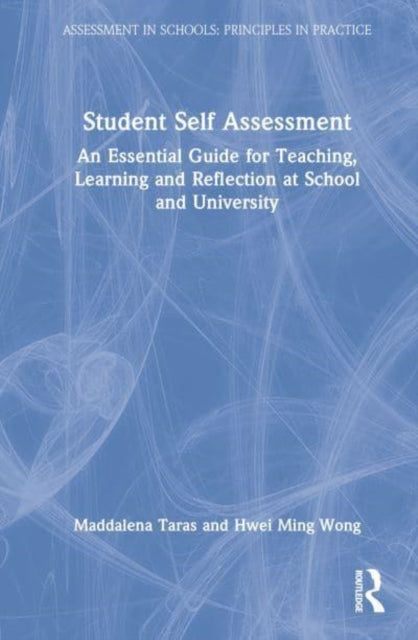
MaddalenaTaras,Hwei MingWong
Student Self-Assessment: An Essential Guide for Teaching, Learning and Reflection at School and University
Student Self-Assessment: An Essential Guide for Teaching, Learning and Reflection at School and University
💎 Earn 689 Points (£6.89) on this item.
We can order this item for you. Delivery usually takes about 4 to 6 weeks.
This item is not held in our immediate stock. We will order it for you after checkout.
Estimated delivery: About 4 to 6 weeks
YOU SAVE £8.18
- Condition: Brand new
- UK Delivery times: Usually arrives within 2 - 3 working days
- UK Shipping: Fee starts at £3.89. Subject to product weight & dimension
Bulk ordering. Want 15 or more copies? Get a personalised quote and bigger discounts. Learn more about bulk orders.
Couldn't load pickup availability
- More about Student Self-Assessment: An Essential Guide for Teaching, Learning and Reflection at School and University
This book provides practical solutions and examples for navigating the use of student self-assessment in primary, secondary, and higher education. It offers an informed approach for educators to understand the complexities and subtleties involved in implementing self-assessment, and how it can impact teachers and students.
Format: Hardback
Length: 184 pages
Publication date: 30 December 2022
Publisher: Taylor & Francis Ltd
This comprehensive book offers a valuable guide for educators seeking to implement student self-assessment effectively in their classrooms. It provides a thorough exploration of the basics of student self-assessment, including its benefits, challenges, and practical strategies for implementation.
The book begins by introducing the concept of student self-assessment and its importance in promoting student learning and development. It explains how self-assessment can help students develop critical thinking skills, self-awareness, and a sense of ownership over their learning.
The author then delves into the challenges of implementing student self-assessment, such as ensuring its validity, reliability, and fairness. It offers practical solutions for overcoming these challenges, such as using rubrics, providing feedback, and promoting self-reflection.
Throughout the book, the author provides numerous examples and case studies from primary, secondary, and higher education settings to illustrate the practical application of student self-assessment. These examples showcase how self-assessment can be used to assess a wide range of skills and competencies, including academic knowledge, problem-solving abilities, and interpersonal skills.
In addition to its practical guidance, the book also offers insights into the theoretical foundations of student self-assessment. It discusses the role of self-assessment in promoting student autonomy, self-directed learning, and metacognition. It also explores the relationship between self-assessment and other assessment strategies, such as peer assessment and teacher assessment.
The book is designed for educators at different levels, including pre-service teachers, in-service teachers, and school leaders. It provides valuable insights and strategies for incorporating student self-assessment into their teaching practices, regardless of the subject area or grade level.
Overall, this book is a must-read for educators who are committed to promoting student learning and development through effective assessment practices. It offers a comprehensive and practical guide that will help educators navigate the complexities of student self-assessment and maximize its potential for enhancing student learning.
Student Self-Assessment: A Comprehensive Guide for Educators
Student self-assessment is a powerful tool that has the potential to enhance student learning and development in a variety of educational settings. It involves students taking ownership of their learning by evaluating their own performance and progress. This comprehensive guide aims to provide educators with a comprehensive understanding of student self-assessment, including its benefits, challenges, and practical strategies for implementation.
One of the primary benefits of student self-assessment is that it promotes student autonomy and self-directed learning. By engaging students in the assessment process, they are encouraged to take responsibility for their own learning and develop critical thinking skills. Self-assessment also allows students to reflect on their strengths and weaknesses, which can help them set goals and develop strategies for improvement.
However, implementing student self-assessment can be challenging. Educators must ensure that self-assessment is valid, reliable, and fair. This requires developing clear rubrics and providing feedback that is meaningful and actionable. Additionally, educators must provide opportunities for self-reflection and self-evaluation, which can help students develop metacognitive skills and a deeper understanding of their learning.
In addition to its benefits, student self-assessment can also have implications for teachers and school leaders. Self-assessment can help teachers identify areas where students may need additional support or intervention, and it can provide valuable data for evaluating the effectiveness of teaching practices. School leaders can use self-assessment data to inform decision-making and develop school-wide policies and practices that support student learning.
To implement student self-assessment effectively, educators must follow a few key steps. First, they must identify the learning goals and objectives that they want students to achieve. Then, they must develop clear rubrics and assessment criteria that align with these goals. Finally, they must provide students with opportunities to self-assess and receive feedback on their performance.
There are several practical strategies that educators can use to promote student self-assessment. One strategy is to use peer assessment, which involves students evaluating each other's work. Peer assessment can promote collaboration, critical thinking, and self-reflection and can help students develop a deeper understanding of their learning.
Another strategy is to use self-reflection prompts, which involve students reflecting on their own learning and progress. Self-reflection prompts can help students develop metacognitive skills and a deeper understanding of their learning.
In conclusion, student self-assessment is a powerful tool that has the potential to enhance student learning and development in a variety of educational settings. By promoting student autonomy and self-directed learning, self-assessment can help students develop critical thinking skills, self-awareness, and a sense of ownership over their learning. Implementing student self-assessment effectively requires educators to develop clear rubrics, provide feedback, and provide opportunities for self-reflection and self-evaluation. With the right strategies and support, educators can maximize the potential of student self-assessment and help students achieve their learning goals.
Weight: 412g
Dimension: 161 x 241 x 19 (mm)
ISBN-13: 9780367691653
UK and International shipping information
UK and International shipping information
We deliver throughout the United Kingdom and to 128 countries and territories worldwide, including the United States, Australia, Canada, Germany, Spain and France.