Shulph Ink
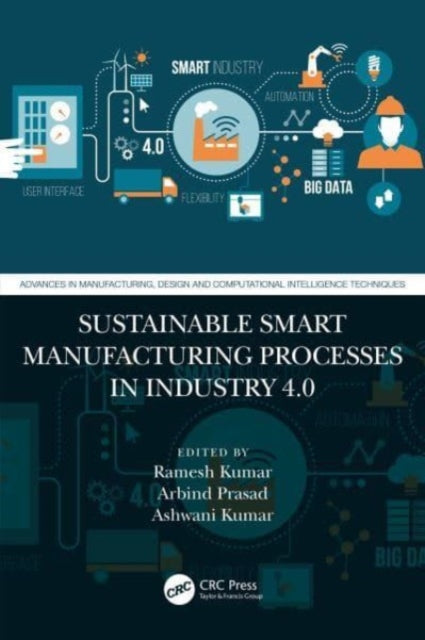
Sustainable Smart Manufacturing Processes in Industry 4.0
Sustainable Smart Manufacturing Processes in Industry 4.0
💎 Earn 811 Points (£8.11) on this item.
We can order this item for you. Delivery usually takes about 4 to 6 weeks.
This item is not held in our immediate stock. We will order it for you after checkout.
Estimated delivery: About 4 to 6 weeks
YOU SAVE £9.63
- Condition: Brand new
- UK Delivery times: Usually arrives within 2 - 3 working days
- UK Shipping: Fee starts at £2.39. Subject to product weight & dimension
Bulk ordering. Want 15 or more copies? Get a personalised quote and bigger discounts. Learn more about bulk orders.
Couldn't load pickup availability
- More about Sustainable Smart Manufacturing Processes in Industry 4.0
The text covers important topics such as additive manufacturing, laser-based manufacturing processes, electromagnetic welding and joining processes, green manufacturing processes, and friction welding processes. It also illustrates sustainable manufacturing aspects in robotics and aerospace industries, showcases additive manufacturing processes with a focus on innovation and automation, and covers environment-friendly manufacturing processes resulting in zero waste and conserves natural resources. It synergizes exploration related to the various properties and functionalities through extensive theoretical and experimental modeling and discusses the impact welding for joining of dissimilar materials. It will serve as an ideal reference text for senior undergraduate, graduate students, and researchers in the fields including mechanical engineering, aerospace engineering, manufacturing engineering, and production engineering.
Format: Hardback
Length: 266 pages
Publication date: 16 October 2023
Publisher: Taylor & Francis Ltd
The manufacturing industry is undergoing a significant transformation with the advent of Industry 4.0, which is characterized by the integration of advanced technologies such as additive manufacturing, laser-based manufacturing processes, electromagnetic welding and joining processes, green manufacturing processes, and friction welding processes. This transformation is driven by the need to increase efficiency, productivity, and sustainability in the manufacturing sector.
One of the key aspects of Industry 4.0 is additive manufacturing, which involves the 3D printing of objects using materials such as plastics, metals, and ceramics. Additive manufacturing has the potential to revolutionize the manufacturing industry by enabling the production of complex shapes and designs that would be difficult or impossible to produce using traditional manufacturing methods. It also allows for the customization of products to meet the specific needs of customers, reducing waste and increasing efficiency.
Laser-based manufacturing processes, such as laser cutting and laser welding, are also important components of Industry 4.0. These processes are highly precise and can be used to create complex shapes and designs with a high degree of accuracy. They are also environmentally friendly, as they do not produce any waste or emissions during the manufacturing process.
Electromagnetic welding and joining processes, such as arc welding and brazing, are also used in Industry 4.0. These processes are fast and efficient, and can be used to join a wide range of materials, including metals, plastics, and ceramics. They are also environmentally friendly, as they do not produce any waste or emissions during the manufacturing process.
Green manufacturing processes are also important in Industry 4.0. These processes involve the use of environmentally friendly materials and technologies that reduce waste and conserve natural resources. For example, sustainable manufacturing practices in the robotics and aerospace industries involve the use of lightweight materials and the development of energy-efficient robots and aircraft.
Friction welding processes are also used in Industry 4.0. These processes involve the use of friction to join materials together, without the need for heat or pressure. They are highly efficient and can be used to join a wide range of materials, including metals, plastics, and ceramics.
In addition to these technological advancements, Industry 4.0 also emphasizes the importance of sustainable manufacturing practices. This involves the use of environmentally friendly materials and technologies that reduce waste and conserve natural resources. It also involves the development of energy-efficient manufacturing processes that reduce the energy consumption of the manufacturing sector.
One of the key challenges facing the manufacturing industry in the transition to Industry 4.0 is the need to integrate these advanced technologies with existing manufacturing systems and processes. This requires a significant investment in research and development, as well as training and education for employees.
Another challenge is the need to address the impact of Industry 4.0 on employment. While advanced technologies such as additive manufacturing and robotics can increase efficiency and productivity, they can also lead to job displacement. It is important for the manufacturing industry to develop strategies to address this issue, such as retraining and upskilling employees to work with new technologies.
In conclusion, the manufacturing industry is undergoing a significant transformation with the advent of Industry 4.0. This transformation is driven by the need to increase efficiency, productivity, and sustainability in the manufacturing sector. Additive manufacturing, laser-based manufacturing processes, electromagnetic welding and joining processes, green manufacturing processes, and friction welding processes are all important components of Industry 4.0. Sustainable manufacturing practices are also important in Industry 4.0, and it is important for the manufacturing industry to develop strategies to address the challenges of the transition to Industry 4.0, such as integrating advanced technologies with existing manufacturing systems and processes and addressing the impact of Industry 4.0 on employment.
Weight: 680g
Dimension: 234 x 156 (mm)
ISBN-13: 9781032392790
This item can be found in:
UK and International shipping information
UK and International shipping information
UK Delivery and returns information:
- Delivery within 2 - 3 days when ordering in the UK.
- Shipping fee for UK customers from £2.39. Fully tracked shipping service available.
- Returns policy: Return within 30 days of receipt for full refund.
International deliveries:
Shulph Ink now ships to Australia, Belgium, Canada, France, Germany, Ireland, Italy, India, Luxembourg Saudi Arabia, Singapore, Spain, Netherlands, New Zealand, United Arab Emirates, United States of America.
- Delivery times: within 5 - 10 days for international orders.
- Shipping fee: charges vary for overseas orders. Only tracked services are available for most international orders. Some countries have untracked shipping options.
- Customs charges: If ordering to addresses outside the United Kingdom, you may or may not incur additional customs and duties fees during local delivery.