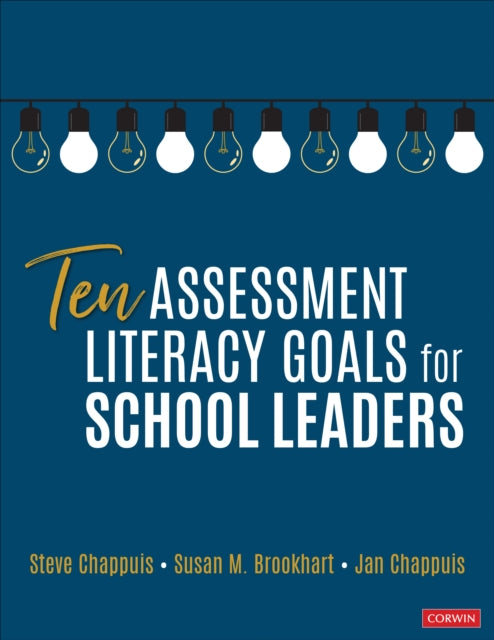
Stephen J. Chappuis,Susan M. Brookhart,Jan Chappuis
Ten Assessment Literacy Goals for School Leaders
Ten Assessment Literacy Goals for School Leaders
YOU SAVE £5.47
- Condition: Brand new
- UK Delivery times: Usually arrives within 2 - 3 working days
- UK Shipping: Fee starts at £3.89. Subject to product weight & dimension
Bulk ordering. Want 15 or more copies? Get a personalised quote and bigger discounts. Learn more about bulk orders.
Couldn't load pickup availability
- More about Ten Assessment Literacy Goals for School Leaders
Assessment literacy leads to improved outcomes for all, and this book provides practical content, how-tos, success indicators, and activities to help teachers use assessment data to improve student learning. It also covers the attributes of comprehensive and balanced assessment systems, clear academic achievement targets, and why assessment quality is essential.
Format: Paperback / softback
Length: 288 pages
Publication date: 13 July 2021
Publisher: SAGE Publications Inc
Assessment literacy is a crucial component in improving educational outcomes for all students. It involves ensuring that teachers have the knowledge and skills to effectively use assessment data to enhance student learning. Student involvement in assessments plays a significant role in motivation and learning, and this book aims to guide educators and school leaders in achieving 10 assessment literacy goals.
Comprehensive and balanced assessment systems are essential for measuring student achievement accurately. Clear academic achievement targets help teachers focus their instruction and provide meaningful feedback to students. The quality of assessments is also paramount, as it ensures that they are fair, valid, and reliable.
This book provides practical content, how-tos, success indicators, and activities to help educators extend and process learning. It covers the attributes of comprehensive and balanced assessment systems, the importance of clear academic achievement targets, and the significance of assessment quality. Additionally, the book offers rubrics, processes, and practical tools that can be used across all grade levels and subject areas.
One of the key aspects of assessment literacy is working with staff to integrate formative assessment and sound grading practices. Formative assessments provide ongoing feedback to students, allowing teachers to identify areas of strength and weakness. Sound grading practices ensure that grades are fair, accurate, and reflective of student learning.
Communicating with all members of the school community about student learning is another important aspect of assessment literacy. This involves sharing assessment data with students, parents, and stakeholders to promote a culture of transparency and accountability. It also involves using student assessment information to improve and inform instruction.
Protecting students and teachers by avoiding unethical and inappropriate assessment use is crucial. This involves adhering to assessment standards, such as those set by educational organizations, and ensuring that assessments are designed to measure student learning rather than test knowledge or skills.
Using student assessment information to improve and inform instruction is a powerful way to enhance student learning. Teachers can use assessment data to identify areas of strength and weakness, tailor instruction to meet individual needs, and provide feedback that is specific to each student. This information can also be used to develop assessment policies that support quality assessment practice.
Advancing understanding of assessment is essential for teachers to accurately measure learning, practice effective formative assessment strategies, and ensure and maintain a comprehensive and balanced assessment system in their school or district. This involves ongoing professional development, collaboration with colleagues, and access to resources and support.
In conclusion, assessment literacy is a critical component in improving educational outcomes for all students. By ensuring that teachers have the knowledge and skills to use assessment data effectively, promoting student involvement in assessments, and protecting the integrity of assessments, educators can create a learning environment that supports student growth and achievement. This book provides practical guidance and resources to help educators achieve assessment literacy goals and promote student success.
Weight: 838g
Dimension: 280 x 216 x 21 (mm)
ISBN-13: 9781071821947
UK and International shipping information
UK and International shipping information
We deliver throughout the United Kingdom and to 128 countries and territories worldwide, including the United States, Australia, Canada, Germany, Spain and France.