Shulph Ink
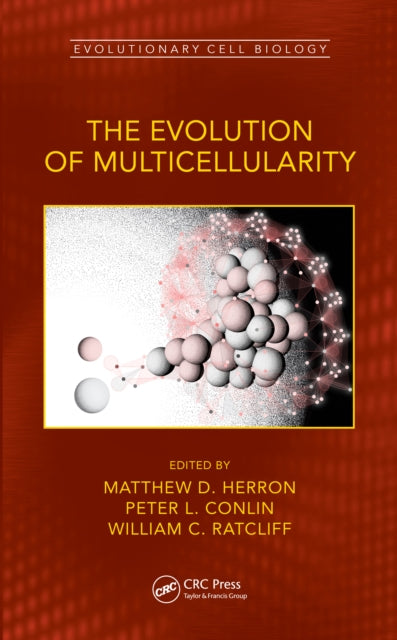
The Evolution of Multicellularity
The Evolution of Multicellularity
💎 Earn 1109 Points (£11.09) on this item.
We can order this item for you. Delivery usually takes about 4 to 6 weeks.
This item is not held in our immediate stock. We will order it for you after checkout.
Estimated delivery: About 4 to 6 weeks
YOU SAVE £13.16
- Condition: Brand new
- UK Delivery times: Usually arrives within 2 - 3 working days
- UK Shipping: Fee starts at £3.89. Subject to product weight & dimension
Bulk ordering. Want 15 or more copies? Get a personalised quote and bigger discounts. Learn more about bulk orders.
Couldn't load pickup availability
- More about The Evolution of Multicellularity
The transition from single-celled to more complex, multicellular organisms is one of the most important innovations in the history of life, resulting in the evolution of new species and the transformation of the biosphere. This volume examines the origins and evolution of multicellularity, reviewing the types of multicellular groups, their evolutionary relationships, and the processes that led to their evolution. It serves as a jumping-off point for further research and highlights future research directions for the field.
Format: Hardback
Length: 382 pages
Publication date: 08 June 2022
Publisher: Taylor & Francis Ltd
The evolution of multicellularity from single-celled organisms is one of the most significant advancements in the history of life. This remarkable transformation has occurred multiple times throughout the tree of life, leading to the emergence of diverse new organisms that collectively contribute significantly to Earth's biodiversity and have profoundly impacted the biosphere. In this comprehensive volume, we delve into the origins and subsequent evolution of multicellularity, exploring the various types of multicellular groups that exist, their evolutionary relationships, the mechanisms that drove their evolution, and the conceptual frameworks that help us understand this process. Our goal is to provide a foundational resource for students and researchers interested in studying the evolution of multicellularity, summarizing the key topics that should be familiar to them and highlighting emerging research directions in the field.
The transition from single-celled organisms to more complex, multicellular organisms is a pivotal milestone in the history of life. This remarkable transformation has occurred multiple times throughout the tree of life, resulting in the emergence of diverse new organisms that collectively contribute significantly to Earth's biodiversity and have profoundly impacted the biosphere. Multicellularity has evolved through various mechanisms, including cell division, differentiation, and specialization, leading to the formation of complex tissues, organs, and systems.
One of the key features of multicellular organisms is their ability to organize themselves into functional units. This organization is achieved through the development of tissues and organs, which are composed of multiple cells that work together to perform specific functions. For example, plants have developed tissues such as roots, stems, and leaves, while animals have developed tissues such as skin, muscles, and organs. Multicellular organisms also exhibit increased metabolic activity, which allows them to grow and reproduce faster than single-celled organisms.
Another important aspect of multicellularity is its impact on the environment. Multicellular organisms are capable of producing large amounts of biomass, which can contribute to the carbon cycle and the nutrient cycle. They can also interact with their environment through the development of symbiotic relationships, such as mutualism and parasitism. These interactions can have significant impacts on the structure and function of ecosystems.
The evolution of multicellularity has had a profound impact on human society as well. Multicellular organisms are the basis of all higher life forms, including humans. They have enabled us to develop complex societies, advance technology, and explore the world around us. However, the evolution of multicellularity has also led to environmental challenges, such as habitat destruction, pollution, and climate change.
In conclusion, the evolution of multicellularity from single-celled organisms is one of the most significant innovations in the history of life. This remarkable transformation has led to the emergence of diverse new organisms that collectively contribute significantly to Earth's biodiversity and have profoundly impacted the biosphere. Multicellularity has evolved through various mechanisms, including cell division, differentiation, and specialization, and has enabled organisms to organize themselves into functional units and exhibit increased metabolic activity. It has also had a profound impact on human society, enabling us to develop complex societies and explore the world around us. However, the evolution of multicellularity has also led to environmental challenges, which require us to take action to address them.
Weight: 898g
Dimension: 234 x 156 (mm)
ISBN-13: 9780367356965
UK and International shipping information
UK and International shipping information
We deliver throughout the United Kingdom and to 128 countries and territories worldwide, including the United States, Australia, Canada, Germany, Spain and France.