Shulph Ink
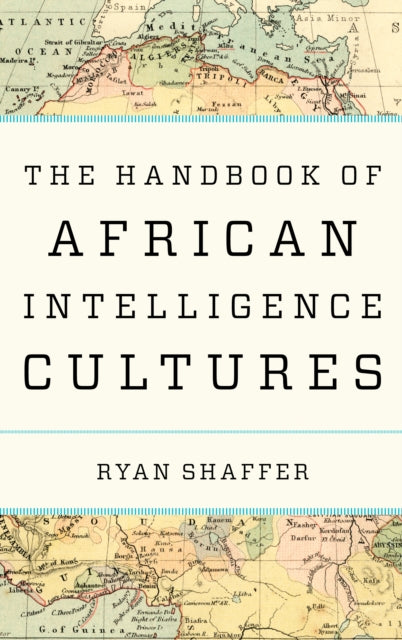
The Handbook of African Intelligence Cultures
The Handbook of African Intelligence Cultures
💎 Earn 584 Points (£5.84) on this item.
We can order this item for you. Delivery usually takes about 4 to 6 weeks.
This item is not held in our immediate stock. We will order it for you after checkout.
Estimated delivery: About 4 to 6 weeks
- Condition: Brand new
- UK Delivery times: Usually arrives within 2 - 3 working days
- UK Shipping: Fee starts at £3.89. Subject to product weight & dimension
Bulk ordering. Want 15 or more copies? Get a personalised quote and bigger discounts. Learn more about bulk orders.
Couldn't load pickup availability
- More about The Handbook of African Intelligence Cultures
The Handbook of African Intelligence Cultures provides a comprehensive review of intelligence cultures in every African country, examining their influence on societal, governmental, and international dynamics, and the role of intelligence services and cultures in government and civil society.
Format: Hardback
Length: 832 pages
Publication date: 15 March 2023
Publisher: Rowman & Littlefield
The Handbook of African Intelligence Cultures is a comprehensive review of intelligence cultures in every African country, exploring their influences and impact on society, government, and international relations. It examines the role of the state, civil society, and foreign relations in shaping African countries' intelligence norms, activities, and oversight, as well as the role of intelligence services and cultures in government and civil society. The book brings together international scholars to provide a comprehensive and up-to-date analysis of the diverse intelligence cultures in Africa.
The Handbook of African Intelligence Cultures: A Comprehensive Review of Intelligence Cultures in Every African Country
The Handbook of African Intelligence Cultures is a groundbreaking work that provides the first review of intelligence cultures in every African country. It explores how intelligence cultures are influenced by a range of factors, including past and present societal, governmental, and international dynamics. In doing so, the book examines the state's role, civil society, and foreign relations in shaping African countries' intelligence norms, activities, and oversight. It also explores the role of intelligence services and cultures in government and civil society.
The book brings together international scholars to provide a comprehensive and up-to-date analysis of the diverse intelligence cultures in Africa. It covers a wide range of topics, including the history of intelligence in Africa, the role of intelligence agencies in shaping political and social outcomes, and the impact of intelligence on human rights and democracy. The Handbook of African Intelligence Cultures is essential reading for anyone interested in understanding the complex and multifaceted nature of intelligence in Africa.
Influences on Intelligence Cultures in Africa
The Handbook of African Intelligence Cultures explores the various factors that influence intelligence cultures in Africa. These factors include past and present societal, governmental, and international dynamics. For example, the book examines the role of colonialism and imperialism in shaping African intelligence cultures, as well as the impact of globalization and technological change on intelligence practices. It also explores the role of civil society in shaping intelligence cultures, including the role of human rights organizations and media outlets.
The book also examines the role of the state in shaping intelligence cultures. It explores the state's role in intelligence gathering, analysis, and dissemination, as well as the state's role in regulating intelligence services. The book also examines the state's relationship with intelligence services, including the use of intelligence for political purposes and the protection of state interests.
The State's Role in Shaping Intelligence Cultures in Africa
The state plays a critical role in shaping intelligence cultures in Africa. It is responsible for intelligence gathering, analysis, and dissemination, as well as for regulating intelligence services. The state's role in intelligence gathering is particularly important, as it can provide valuable information to policymakers and decision-makers. However, the state's role in intelligence gathering can also be problematic, as it can lead to human rights abuses and the suppression of dissent. The state's role in intelligence analysis is also important, as it can help policymakers and decision-makers make informed decisions about national security and foreign policy. However, the state's role in intelligence analysis can also be problematic, as it can lead to the manipulation of information and the suppression of dissent.
The state's role in intelligence dissemination is also important, as it can help policymakers and decision-makers communicate with the public about national security and foreign policy. However, the state's role in intelligence dissemination can also be problematic, as it can lead to the dissemination of misinformation and the manipulation of public opinion. The state's relationship with intelligence services is also important, as it can help ensure that intelligence services are operating in a transparent and accountable manner. However, the state's relationship with intelligence services can also be problematic, as it can lead to the abuse of power and the suppression of dissent.
Civil Society's Role in Shaping Intelligence Cultures in Africa
Civil society plays a critical role in shaping intelligence cultures in Africa. It is responsible for promoting human rights and democracy, as well as for monitoring the activities of intelligence services. Civil society organizations can provide valuable information to policymakers and decision-makers about the activities of intelligence services, as well as about the impact of intelligence on human rights and democracy. Civil society organizations can also play a role in advocating for policy changes that will improve the transparency and accountability of intelligence services.
However, civil society organizations can also be vulnerable to repression and intimidation by intelligence services. This can make it difficult for civil society organizations to carry out their work and to advocate for policy changes. The state's relationship with civil society organizations is also important, as it can help ensure that civil society organizations are operating in a transparent and accountable manner. However, the state's relationship with civil society organizations can also be problematic, as it can lead to the abuse of power and the suppression of dissent.
Foreign Relations' Role in Shaping Intelligence Cultures in Africa
Foreign relations play a critical role in shaping intelligence cultures in Africa. Africa is a region that is characterized by a high level of political instability and conflict, and intelligence services are often used to support political and military objectives. Foreign relations can also impact the activities of intelligence services, as they can provide access to information and resources that can be used to support intelligence operations. However, foreign relations can also be problematic, as they can lead to the abuse of power and the suppression of dissent.
For example, the United States has a long history of using intelligence services to support its political and military objectives in Africa. This has led to the abuse of human rights and the suppression of dissent in many African countries. The United States has also been accused of using intelligence services to support terrorist organizations in Africa, such as Al-Qaeda and ISIS. However, the United States has also been a significant contributor to African intelligence capacity building, providing training and equipment to intelligence services in many African countries.
The Role of Intelligence Services and Cultures in Government and Civil Society
Intelligence services and cultures play a critical role in government and civil society in Africa. Intelligence services are responsible for gathering and analyzing information to support policymakers and decision-makers. Intelligence services can also play a role in protecting national security and foreign policy. However, intelligence services can also be problematic, as they can lead to the abuse of power and the suppression of dissent. Intelligence cultures are also important, as they can help shape the attitudes and behaviors of individuals and groups. Intelligence cultures can also be problematic, as they can lead to the suppression of dissent and the promotion of authoritarianism.
For example, the use of intelligence services to support political repression in Africa has been a significant concern in recent years. Intelligence services have been used to monitor and suppress political opposition, as well as to intimidate and harass journalists and human rights activists. This has led to a decline in political freedom and the suppression of dissent in many African countries. However, intelligence services can also be used to support democratic governance, as they can provide information to policymakers and decision-makers about the activities of political parties and other groups. Intelligence services can also be used to support economic development, as they can provide information about market trends and opportunities.
Conclusion
The Handbook of African Intelligence Cultures is a groundbreaking work that provides the first review of intelligence cultures in every African country. It explores how intelligence cultures are influenced by a range of factors, including past and present societal, governmental, and international dynamics. In doing so, the book examines the state's role, civil society, and foreign relations in shaping African countries' intelligence norms, activities, and oversight. It also explores the role of intelligence services and cultures in government and civil society. The book brings together international scholars to provide a comprehensive and up-to-date analysis of the diverse intelligence cultures in Africa. It is essential reading for anyone interested in understanding the complex and multifaceted nature of intelligence in Africa.
Weight: 1338g
Dimension: 236 x 158 x 52 (mm)
ISBN-13: 9781538159972
UK and International shipping information
UK and International shipping information
We deliver throughout the United Kingdom and to 128 countries and territories worldwide, including the United States, Australia, Canada, Germany, Spain and France.