J. M. Beach
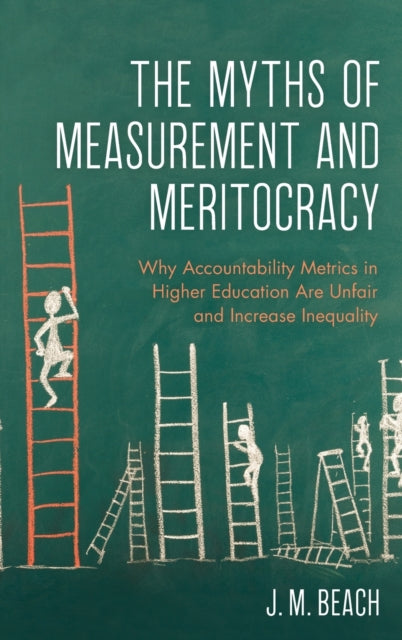
The Myths of Measurement and Meritocracy: Why Accountability Metrics in Higher Education Are Unfair and Increase Inequality
The Myths of Measurement and Meritocracy: Why Accountability Metrics in Higher Education Are Unfair and Increase Inequality
We can order this item for you. Delivery usually takes about 4 to 6 weeks.
This item is not held in our immediate stock. We will order it for you after checkout.
Estimated delivery: About 4 to 6 weeks
YOU SAVE £8.70
- Condition: Brand new
- UK Delivery times: Usually arrives within 2 - 3 working days
- UK Shipping: Fee starts at £3.89. Subject to product weight & dimension
Bulk ordering. Want 15 or more copies? Get a personalised quote and bigger discounts. Learn more about bulk orders.
Couldn't load pickup availability
- More about The Myths of Measurement and Meritocracy: Why Accountability Metrics in Higher Education Are Unfair and Increase Inequality
This book examines the idea of educational accountability in higher education and questions its effectiveness in producing student learning and promoting equity. It raises concerns about the validity and meaning of accountability data and the ability of administrators to use tools correctly.
Format: Hardback
Length: 210 pages
Publication date: 15 September 2021
Publisher: Rowman & Littlefield
Educational accountability in higher education has emerged as a prevailing secular gospel, but the effectiveness of accountability policies in improving college outcomes remains a subject of debate. The question arises: Do accountability tools accurately measure what they intend to assess? Are the data generated by accountability measures valid and meaningful? Do administrators possess the skills to utilize these tools effectively and interpret the problematic data they produce? Moreover, can we truly measure and accurately evaluate what matters most in teaching and student learning? What if students fail to acquire significant knowledge during their college years? Could it be that higher education was never intended to foster student learning? What if college does not benefit most students, both personally and economically? Could it be that higher education perpetuates inequality and exacerbates the challenges faced by disadvantaged students?
To address these critical inquiries, this book delves into a comprehensive and interdisciplinary exploration of the latest scientific research. It seeks to provide answers to these pressing questions and shed light on the complex dynamics surrounding educational accountability in higher education. Through a rigorous analysis of empirical evidence, theoretical frameworks, and case studies, the book offers a comprehensive examination of the potential benefits and drawbacks of accountability policies.
One of the key themes explored in the book is the need for accountability tools to align with the core objectives of education. It emphasizes the importance of measuring what truly matters in teaching and learning, such as student outcomes, academic progress, and the development of critical skills. The book challenges the notion that accountability measures should solely focus on inputs, such as resources and faculty credentials, without considering the impact on student learning.
Furthermore, the book raises concerns about the validity and reliability of accountability data. It points out that data can be influenced by various factors, including biases, sampling errors, and the use of inappropriate metrics. The book emphasizes the importance of robust data collection and analysis processes to ensure the accuracy and reliability of accountability measures.
Administrators play a crucial role in the implementation and interpretation of accountability policies. The book highlights the need for administrators to possess the skills and knowledge to utilize accountability tools effectively and interpret the data they produce. It emphasizes the importance of transparency, communication, and collaboration among administrators, faculty, and stakeholders to ensure that accountability policies are implemented in a fair and equitable manner.
The book also explores the impact of accountability policies on teaching and learning. It examines the ways in which accountability measures can influence the curriculum, pedagogy, and assessment practices of educators
In conclusion, this book offers a comprehensive and interdisciplinary examination of the idea of educational accountability in higher education. It raises critical questions about the effectiveness of accountability policies in improving college outcomes and explores the potential benefits and drawbacks of these policies. Through a rigorous analysis of the latest scientific research, the book provides valuable insights into the complex dynamics surrounding educational accountability and offers practical recommendations for policymakers, educators, and stakeholders. By addressing the need for alignment, validity, reliability, and impact, this book aims to contribute to the ongoing dialogue on the future of higher education and promote the development of effective accountability policies that prioritize student learning and success.
Weight: 176g
Dimension: 228 x 161 x 21 (mm)
ISBN-13: 9781475862249
UK and International shipping information
UK and International shipping information
We deliver throughout the United Kingdom and to 128 countries and territories worldwide, including the United States, Australia, Canada, Germany, Spain and France.