Shulph Ink
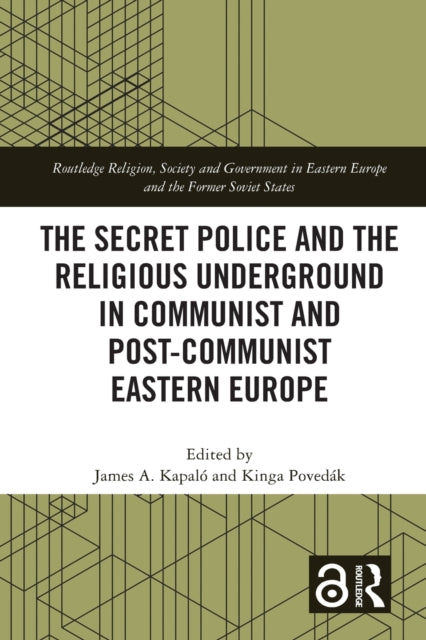
The Secret Police and the Religious Underground in Communist and Post-Communist Eastern Europe
The Secret Police and the Religious Underground in Communist and Post-Communist Eastern Europe
💎 Earn 221 Points (£2.21) on this item.
We can order this item for you. Delivery usually takes about 4 to 6 weeks.
This item is not held in our immediate stock. We will order it for you after checkout.
Estimated delivery: About 4 to 6 weeks
YOU SAVE £2.63
- Condition: Brand new
- UK Delivery times: Usually arrives within 2 - 3 working days
- UK Shipping: Fee starts at £3.89. Subject to product weight & dimension
Bulk ordering. Want 15 or more copies? Get a personalised quote and bigger discounts. Learn more about bulk orders.
Couldn't load pickup availability
- More about The Secret Police and the Religious Underground in Communist and Post-Communist Eastern Europe
This book explores the complex relationship between secret police operations and the religious underground in communist-era Eastern Europe, examining how religious groups were perceived as both dangerous and vulnerable. It provides a rich secret police archival record and explores the historical and legal context, case studies, and ethical and political debates surrounding the archives.
Format: Paperback / softback
Length: 340 pages
Publication date: 31 May 2023
Publisher: Taylor & Francis Ltd
This captivating book delves into the intricate interplay between secret police operations and the emergence of the religious underground in communist-era Eastern Europe. It sheds light on the paradoxical perception of religious groups as both threats to the totalitarian state and vulnerable targets, while also showcasing their remarkable resourcefulness. Through a series of comprehensive studies spanning the region, the book uncovers the historical and legal backdrop of secret police entanglement with religious organizations, presents detailed case studies of specific anti-religious operations, offers methodological insights into analyzing secret police materials related to religions, and engages in thought-provoking ethical and political discussions about the legacy and implications of these archives in the post-communist era.
The book explores the historical and legal context of secret police entanglement with religious groups, presenting case studies on particular anti-religious operations and groups. It offers methodological approaches to the secret police materials for the study of religions, and engages in contemporary ethical and political debates on the legacy and meaning of the archives in post-communism.
The religious underground emerged as a response to the repressive policies of communist regimes, which sought to control and suppress religious expression. Religious groups were perceived as a threat to the stability and control of the state, as they challenged the official ideology and promoted alternative values and beliefs. However, religious groups were also extremely vulnerable, as they were often targeted by secret police operations for surveillance, interrogation, and even persecution.
Despite these challenges, religious groups were able to adapt and survive in the face of repression. They developed networks of secret communication, used covert meeting places, and engaged in covert religious practices to evade detection and persecution. They also sought support from sympathetic individuals and organizations outside of the country, including religious leaders and human rights activists.
The archives created by secret police operations provide a valuable source of information for the study of religions in communist-era Eastern Europe. They contain a wealth of documents, records, and other materials that shed light on the experiences of religious groups, the tactics used by secret police, and the broader political context of the era. However, the use of these archives also raises ethical and political questions, particularly about the responsibility of governments and institutions to preserve and access these materials, and the impact of these materials on the lives of individuals and communities.
In conclusion, this book offers a comprehensive and insightful exploration of the complex intersection of secret police operations and the religious underground in communist-era Eastern Europe. It sheds light on the challenges and resilience of religious groups in the face of repression, and provides valuable insights into the historical and legal context of secret police entanglement with religious organizations. The use of these archives also raises important ethical and political questions about the legacy and meaning of these materials in the post-communist era.
Weight: 453g
Dimension: 234 x 156 (mm)
ISBN-13: 9781032055886
UK and International shipping information
UK and International shipping information
We deliver throughout the United Kingdom and to 128 countries and territories worldwide, including the United States, Australia, Canada, Germany, Spain and France.