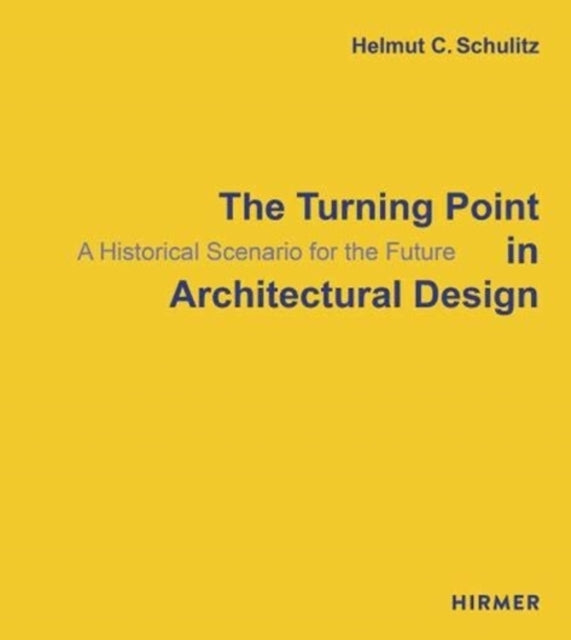
Helmut C. Schulitz
Turning Point in Architectural Design
Turning Point in Architectural Design
We can order this item for you. Delivery usually takes about 4 to 6 weeks.
This item is not held in our immediate stock. We will order it for you after checkout.
Estimated delivery: About 4 to 6 weeks
YOU SAVE £11.06
- Condition: Brand new
- UK Delivery times: Usually arrives within 2 - 3 working days
- UK Shipping: Fee starts at £3.89. Subject to product weight & dimension
Bulk ordering. Want 15 or more copies? Get a personalised quote and bigger discounts. Learn more about bulk orders.
Couldn't load pickup availability
- More about Turning Point in Architectural Design
Architects started to move away from historical styles at the turn of the twentieth century because the design process had been separated from construction. Today, many projects are focusing on how to organize and improve design tools to increase building performance, save resources and energy, and let digital design solve design tasks. This book is a comparative critical analysis of these seemingly incidental design approaches, serving as a historical scenario for the future.
Format: Paperback / softback
Length: 240 pages
Publication date: 22 April 2021
Publisher: Hirmer Verlag
Architects began to recognize in the early 20th century that architecture should no longer be limited to historical styles. They understood that the arbitrary use of predefined historical building forms was a result of the separation between design and construction. Despite the diverse paths taken in architectural design, there is a growing consensus in response to the global challenges of our time. It goes beyond simply deciding what to build or how to build. The question now becomes: How can we organize and enhance our design tools to reach new dimensions of architecture, improving building performance, conserving resources and energy, and leveraging digital design to tackle complex design tasks that were previously impossible? Many projects are already heading in this direction, marking the beginning of a sustainable fourth dimension of architecture.
This book serves as a comparative critical analysis of these seemingly incidental design approaches, aiming to provide a historical backdrop for the future. It explores the potential of these design strategies to shape the built environment and contribute to a more sustainable and resilient future.
Weight: 1214g
Dimension: 240 x 275 x 19 (mm)
ISBN-13: 9783777436760
UK and International shipping information
UK and International shipping information
We deliver throughout the United Kingdom and to 128 countries and territories worldwide, including the United States, Australia, Canada, Germany, Spain and France.