Shulph Ink
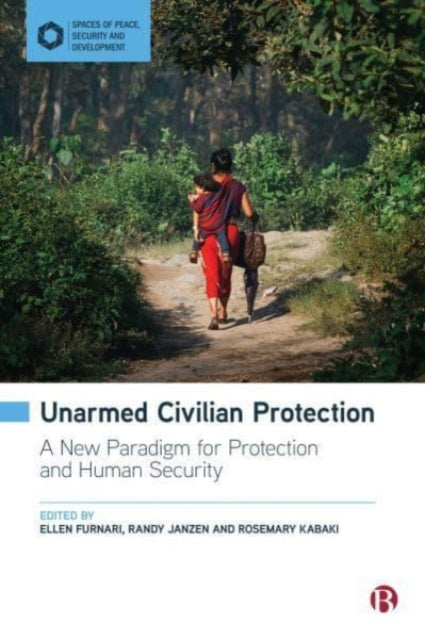
Unarmed Civilian Protection: A New Paradigm for Protection and Human Security
Unarmed Civilian Protection: A New Paradigm for Protection and Human Security
💎 Earn 244 Points (£2.44) on this item.
YOU SAVE £43.14
- Condition: Brand new
- UK Delivery times: Usually arrives within 2 - 3 working days
- UK Shipping: Fee starts at £3.89. Subject to product weight & dimension
Bulk ordering. Want 15 or more copies? Get a personalised quote and bigger discounts. Learn more about bulk orders.
Couldn't load pickup availability
- More about Unarmed Civilian Protection: A New Paradigm for Protection and Human Security
Unarmed civilian protection (UCP) is a different and effective paradigm for protecting civilians, featuring contributions from around the world and examining its underlying theory and interrelated strategies.
Format: Hardback
Length: 220 pages
Publication date: 21 June 2023
Publisher: Bristol University Press
The well-documented failure of military or armed interventions to safeguard civilians is a widely acknowledged phenomenon. In response, this edited collection presents a novel and effective paradigm known as unarmed civilian protection (UCP). UCP has been employed for numerous decades to safeguard individuals and communities facing specific threats. This comprehensive book brings together contributions from diverse regions, showcasing a wide array of UCP practices. By examining their underlying theory and interconnected strategies, the book offers valuable insights into the potential contributions of UCP while also addressing its limitations and shortcomings.
Unarmed civilian protection (UCP) is a paradigm that has been employed for many decades to safeguard individuals and communities from specific threats. It is based on the principles of non-violence, human rights, and the protection of vulnerable populations. UCP involves the deployment of unarmed civilian personnel to protect individuals and communities from harm.
One of the key principles of UCP is the principle of civilian control. This means that the responsibility for protecting civilians rests with the civilian population, rather than with military or armed forces. Civilian personnel are trained to work in teams, to use non-violent methods of conflict resolution, and to prioritize the safety and well-being of civilians.
Another principle of UCP is the principle of impartiality. Civilian personnel are trained to be impartial and to avoid taking sides in conflicts or political disputes. They are responsible for protecting all individuals, regardless of their race, religion, gender, or political affiliation.
UCP has been used in a wide range of contexts, including conflict zones, post-conflict environments, and natural disasters. In conflict zones, UCP personnel are deployed to protect civilians from violence and to provide humanitarian assistance. In post-conflict environments, UCP personnel are deployed to restore peace and security and to assist in the reintegration of ex-combatants into civilian life. In natural disasters, UCP personnel are deployed to provide emergency assistance and to support the recovery of affected communities.
One of the key benefits of UCP is that it is cost-effective. Unlike military or armed interventions, UCP does not require the deployment of large numbers of personnel or the use of expensive equipment. Civilian personnel can be deployed quickly and easily, and they can be trained to work in a wide range of environments and situations.
Another benefit of UCP is that it is less likely to cause harm to civilians. Unlike military or armed interventions, UCP does not involve the use of weapons or the risk of collateral damage. Civilian personnel are trained to use non-violent methods of conflict resolution, and they are responsible for protecting all individuals, regardless of their age, gender, or physical ability.
However, UCP is not without its limitations and failures. One of the challenges of UCP is the lack of international recognition and support. Many countries do not recognize the rights of civilians to protection, and they do not provide sufficient resources or training to support UCP programs. This can make it difficult for UCP programs to be implemented effectively and to reach the populations that need them most.
Another challenge of UCP is the risk of politicization. Civilian personnel can be vulnerable to political pressure and to accusations of taking sides. This can make it difficult for them to carry out their duties impartially and to prioritize the safety and well-being of civilians.
Despite these limitations and failures, UCP remains a promising approach to protecting civilians from harm. It is a cost-effective, non-violent, and impartial method of conflict resolution that can be used in a wide range of contexts. UCP programs can be implemented effectively and can make a significant difference in the lives of individuals and communities that are affected by conflict or disaster.
In conclusion, the frequent failure of military or armed interventions to protect civilians is a well-known phenomenon. In response, unarmed civilian protection (UCP) presents a novel and effective paradigm that has been employed for many decades to safeguard individuals and communities from specific threats. UCP is based on the principles of non-violence, human rights, and the protection of vulnerable populations. It involves the deployment of unarmed civilian personnel to protect individuals and communities from harm. UCP is cost-effective, less likely to cause harm to civilians, and can be implemented quickly and easily. However, UCP is not without its limitations and failures, including the lack of international recognition and support, the risk of politicization, and the need for more resources and training. Despite these challenges, UCP remains a promising approach to protecting civilians from harm and can make a significant difference in the lives of individuals and communities that are affected by conflict or disaster.
Weight: 484g
Dimension: 160 x 242 x 19 (mm)
ISBN-13: 9781529225457
UK and International shipping information
UK and International shipping information
We deliver throughout the United Kingdom and to 128 countries and territories worldwide, including the United States, Australia, Canada, Germany, Spain and France.