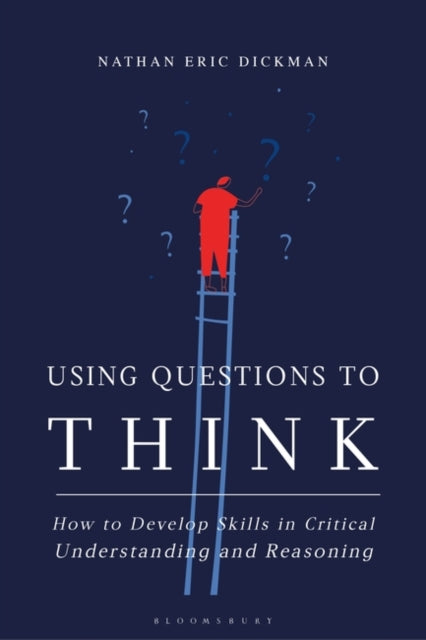
Nathan EricDickman
Using Questions to Think: How to Develop Skills in Critical Understanding and Reasoning
Using Questions to Think: How to Develop Skills in Critical Understanding and Reasoning
💎 Earn 106 Points (£1.06) on this item.
YOU SAVE £2.76
- Condition: Brand new
- UK Delivery times: Usually arrives within 2 - 3 working days
- UK Shipping: Fee starts at £3.89. Subject to product weight & dimension
Bulk ordering. Want 15 or more copies? Get a personalised quote and bigger discounts. Learn more about bulk orders.
Couldn't load pickup availability
- More about Using Questions to Think: How to Develop Skills in Critical Understanding and Reasoning
Our ability to think, argue and reason is determined by our ability to question. Questions are a vital component of critical thinking, yet we underestimate the role they play. Using Questions to Think puts questioning back in the spotlight.Naming the parts of questions at the same time as we name parts of thought, this one-of-a-kind introduction allows us to see how questions relate to the definitions of propositions, premises, conclusions, and the validity of arguments. Why is this important? Making the role of questions visible in thinking reasoning and dialogue, allows us to:- Ask better questions- Improve our capability to understand an argument- Exercise vigilance in the act of questioning- Make explicit what you already know implicitly- Engage with ideas that contradict our own- See ideas in broader contextBreathing new life into our current approach to critical thinking, this practical, much-needed textbook moves us away from the traditional focus on formal argument and fallacy identification, combines the Kantian critique of reason with Hans-Georg Gadamer’s hermeneutics and reminds us why thinking can only be understood as an answer to a question.
Weight: 430g
Dimension: 157 x 234 x 22 (mm)
ISBN-13: 9781350177710
UK and International shipping information
UK and International shipping information
We deliver throughout the United Kingdom and to 128 countries and territories worldwide, including the United States, Australia, Canada, Germany, Spain and France.