Shulph Ink
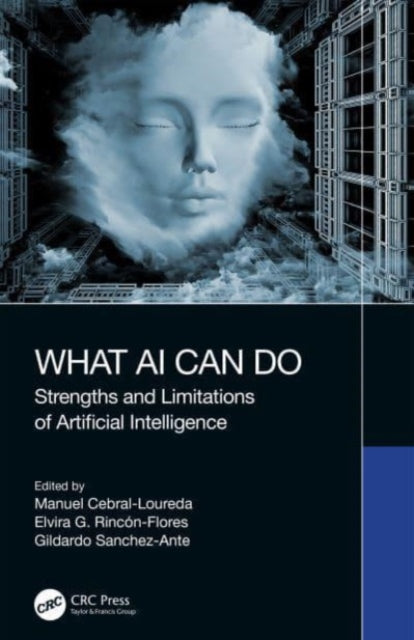
What AI Can Do: Strengths and Limitations of Artificial Intelligence
What AI Can Do: Strengths and Limitations of Artificial Intelligence
💎 Earn 396 Points (£3.96) on this item.
We can order this item for you. Delivery usually takes about 4 to 6 weeks.
This item is not held in our immediate stock. We will order it for you after checkout.
Estimated delivery: About 4 to 6 weeks
YOU SAVE £4.71
- Condition: Brand new
- UK Delivery times: Usually arrives within 2 - 3 working days
- UK Shipping: Fee starts at £3.89. Subject to product weight & dimension
Bulk ordering. Want 15 or more copies? Get a personalised quote and bigger discounts. Learn more about bulk orders.
Couldn't load pickup availability
- More about What AI Can Do: Strengths and Limitations of Artificial Intelligence
AI can do a lot of things, from analyzing data to making decisions. It can also understand and interpret human language, and interact with people in natural ways. AI is constantly evolving and becoming more sophisticated, and it has the potential to revolutionize many industries.
Format: Hardback
Length: 444 pages
Publication date: 01 August 2023
Publisher: Taylor & Francis Ltd
Artificial intelligence (AI) is a rapidly evolving field that has the potential to revolutionize various aspects of our lives, from healthcare to transportation. As AI continues to advance, it is becoming increasingly important to explore its capabilities and limitations from inter-disciplinary perspectives. This paper aims to provide an overview of the current state of AI and its potential applications, while also incorporating both theoretical discussions and case studies.
The theoretical aspects of AI involve understanding the underlying principles and algorithms that enable machines to perform tasks such as image recognition, natural language processing, and decision-making. These theories are based on a range of disciplines, including computer science, mathematics, psychology, and linguistics. By understanding these theoretical foundations, researchers can develop new algorithms and techniques that improve the performance of AI systems.
Case studies are also an important part of understanding the practical applications of AI. These studies involve analyzing real-world situations where AI has been implemented to solve problems or improve efficiency. By examining these case studies, researchers can gain insights into the challenges and limitations of AI, as well as the potential benefits it can provide.
One of the key areas of AI research is healthcare. AI has the potential to improve patient outcomes by analyzing large amounts of medical data and providing personalized treatment recommendations. For example, AI algorithms can be used to diagnose diseases, predict disease progression, and develop new treatments.
Another area of AI research is transportation. AI has the potential to improve traffic flow, reduce accidents, and increase transportation efficiency. For example, self-driving cars can use AI algorithms to navigate roads, detect obstacles, and make decisions in real-time.
However, it is important to note that AI also has limitations and risks. One of the biggest concerns is the potential for AI to be used for malicious purposes, such as cyberattacks or surveillance. Another concern is the potential for AI to replace human jobs, leading to job loss and economic inequality.
To address these concerns, it is important to develop ethical guidelines and regulations for the development and deployment of AI. These guidelines should ensure that AI is developed and used in a way that is transparent, accountable, and beneficial to society.
In conclusion, artificial intelligence is a rapidly evolving field that has the potential to revolutionize various aspects of our lives. By exploring its capabilities and limitations from inter-disciplinary perspectives, we can develop new algorithms and techniques that improve the performance of AI systems, while also addressing the ethical and societal concerns associated with its development and deployment.
Artificial intelligence (AI) is a rapidly evolving field that has the potential to revolutionize various aspects of our lives, from healthcare to transportation. As AI continues to advance, it is becoming increasingly important to explore its capabilities and limitations from inter-disciplinary perspectives. This paper aims to provide an overview of the current state of AI and its potential applications, while also incorporating both theoretical discussions and case studies.
The theoretical aspects of AI involve understanding the underlying principles and algorithms that enable machines to perform tasks such as image recognition, natural language processing, and decision-making. These theories are based on a range of disciplines, including computer science, mathematics, psychology, and linguistics. By understanding these theoretical foundations, researchers can develop new algorithms and techniques that improve the performance of AI systems.
Case studies are also an important part of understanding the practical applications of AI. These studies involve analyzing real-world situations where AI has been implemented to solve problems or improve efficiency. By examining these case studies, researchers can gain insights into the challenges and limitations of AI, as well as the potential benefits it can provide.
One of the key areas of AI research is healthcare. AI has the potential to improve patient outcomes by analyzing large amounts of medical data and providing personalized treatment recommendations. For example, AI algorithms can be used to diagnose diseases, predict disease progression, and develop new treatments.
Another area of AI research is transportation. AI has the potential to improve traffic flow, reduce accidents, and increase transportation efficiency. For example, self-driving cars can use AI algorithms to navigate roads, detect obstacles, and make decisions in real-time.
However, it is important to note that AI also has limitations and risks. One of the biggest concerns is the potential for AI to be used for malicious purposes, such as cyberattacks or surveillance. Another concern is the potential for AI to replace human jobs, leading to job loss and economic inequality.
To address these concerns, it is important to develop ethical guidelines and regulations for the development and deployment of AI. These guidelines should ensure that AI is developed and used in a way that is transparent, accountable, and beneficial to society.
In conclusion, artificial intelligence is a rapidly evolving field that has the potential to revolutionize various aspects of our lives. By exploring its capabilities and limitations from inter-disciplinary perspectives, we can develop new algorithms and techniques that improve the performance of AI systems, while also addressing the ethical and societal concerns associated with its development and deployment.
Weight: 812g
Dimension: 164 x 241 x 33 (mm)
ISBN-13: 9781032396002
UK and International shipping information
UK and International shipping information
We deliver throughout the United Kingdom and to 128 countries and territories worldwide, including the United States, Australia, Canada, Germany, Spain and France.