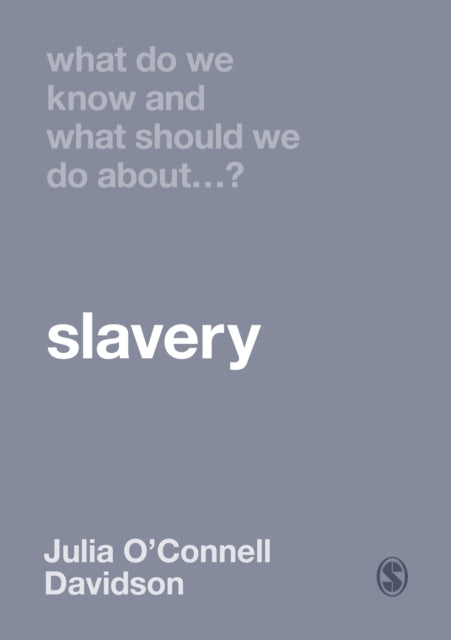
Julia O'Connell Davidson
What Do We Know and What Should We Do About Slavery?
What Do We Know and What Should We Do About Slavery?
We can order this item for you. Delivery usually takes about 4 to 6 weeks.
This item is not held in our immediate stock. We will order it for you after checkout.
Estimated delivery: About 4 to 6 weeks
YOU SAVE £4.92
- Condition: Brand new
- UK Delivery times: Usually arrives within 2 - 3 working days
- UK Shipping: Fee starts at £3.89. Subject to product weight & dimension
Bulk ordering. Want 15 or more copies? Get a personalised quote and bigger discounts. Learn more about bulk orders.
Couldn't load pickup availability
- More about What Do We Know and What Should We Do About Slavery?
Slavery is still a problem today, but there are different perspectives on what we should do about it. This book argues that the concept of afterlives is more helpful than that of modern slavery to those seeking to challenge injustice, violence, inequality, and oppression in the twenty-first century.
Format: Hardback
Length: 104 pages
Publication date: 31 March 2022
Publisher: SAGE Publications Ltd
Slavery is a pressing issue that continues to impact societies worldwide. While many individuals and organizations are actively engaged in discussions and efforts to combat modern slavery, there are differing perspectives on the nature and extent of this problem. Some argue that the contemporary world is plagued by the modern equivalent of transatlantic slavery, while others contend that the ongoing devaluation and destruction of black life perpetuates the logic of transatlantic slavery. These two groups offer distinct answers to the question of what we know and what actions we should take regarding slavery.
In this book, we aim to review the knowledge and understanding of the issues at the core of each perspective. We argue that the concept of afterlives is more valuable than that of modern slavery in addressing the challenges of injustice, violence, inequality, and oppression in the twenty-first century.
The first perspective suggests that the contemporary world is plagued by the modern equivalent of transatlantic slavery. This view emphasizes the similarities between historical forms of slavery and contemporary forms of exploitation, such as human trafficking, forced labor, and modern forms of slavery. Proponents of this perspective argue that the global economy and international trade networks have created new opportunities for the exploitation of vulnerable populations, particularly in developing countries. They also point to the persistence of racial and economic inequality, which perpetuates the vulnerability of certain groups to slavery.
The second perspective argues that the ongoing devaluation and destruction of black life continues the logic of transatlantic slavery. This view emphasizes the historical and systemic oppression of black people, including the enslavement of Africans and the subsequent exploitation of their labor. Proponents of this perspective argue that the legacy of slavery continues to shape contemporary society, with black people facing discrimination, poverty, and limited access to education and healthcare. They also point to the ongoing violence and discrimination against black people, including police brutality and systemic racism.
To address the issues of slavery, it is important to consider both perspectives. One approach is to focus on the immediate abolition of modern slavery and the protection of vulnerable populations. This can involve measures such as strengthening law enforcement, providing education and training to vulnerable communities, and supporting organizations that work to combat human trafficking and forced labor. Another approach is to address the underlying causes of slavery, such as racial and economic inequality, discrimination, and poverty. This can involve measures such as promoting social and economic justice, investing in education and healthcare, and addressing systemic racism and discrimination.
In conclusion, slavery is a complex and multifaceted issue that requires a comprehensive and multifaceted response. While there are differing perspectives on the nature and extent of modern slavery, it is clear that the concept of afterlives is more valuable than that of modern slavery in addressing the challenges of injustice, violence, inequality, and oppression in the twenty-first century. By understanding the historical and systemic roots of slavery and addressing the underlying causes of this problem, we can work towards a more just and equitable society for all.
Weight: 258g
Dimension: 153 x 216 x 13 (mm)
ISBN-13: 9781529730760
UK and International shipping information
UK and International shipping information
We deliver throughout the United Kingdom and to 128 countries and territories worldwide, including the United States, Australia, Canada, Germany, Spain and France.