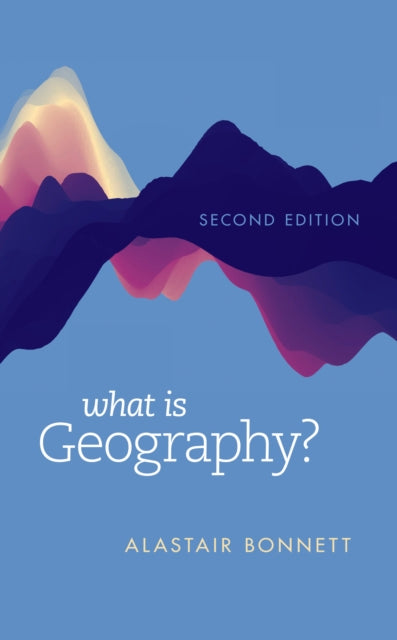
Alastair Bonnett
What Is Geography?
What Is Geography?
We can order this item for you. Delivery usually takes about 4 to 6 weeks.
This item is not held in our immediate stock. We will order it for you after checkout.
Estimated delivery: About 4 to 6 weeks
YOU SAVE £10.15
- Condition: Brand new
- UK Delivery times: Usually arrives within 2 - 3 working days
- UK Shipping: Fee starts at £3.89. Subject to product weight & dimension
Bulk ordering. Want 15 or more copies? Get a personalised quote and bigger discounts. Learn more about bulk orders.
Couldn't load pickup availability
- More about What Is Geography?
Geography is essential for understanding the world, covering human and natural realms, environment, space, and place, and methods and history. Bonnett's book is accessible and provides students with the ability to understand the subject without prior knowledge.
Format: Hardback
Length: 160 pages
Publication date: 29 June 2023
Publisher: Bloomsbury Publishing Plc
Geography is a fundamental discipline that plays a crucial role in understanding the world. This text provides a concise and accessible overview of the ideas and concepts that constitute geography, covering both the human and natural realms. It explores key themes such as environment, space, and place, as well as the methods and history of the discipline. The text is designed to be introductory but not simplified, making it accessible to students with no prior knowledge of geography. It will be of interest to anyone intrigued by the "geographical imagination."
Introduction
Geography is a fundamental discipline that plays a crucial role in understanding the world. This text provides a concise and accessible overview of the ideas and concepts that constitute geography, covering both the human and natural realms. It explores key themes such as environment, space, and place, as well as the methods and history of the discipline. The text is designed to be introductory but not simplified, making it accessible to students with no prior knowledge of geography. It will be of interest to anyone intrigued by the "geographical imagination."
Environment
Environment is a critical aspect of geography. It refers to the natural world that surrounds us, including the air, water, land, and all living things. Geography helps us to understand the relationships between these elements and how they affect our lives. For example, geography can help us to identify areas that are prone to natural disasters such as floods, hurricanes, and earthquakes. It can also help us to develop strategies for managing these disasters and protecting our communities. Geography can also help us to understand the impact of human activities on the environment. For example, deforestation, pollution, and climate change can have significant negative effects on the environment. Geography can help us to develop strategies for reducing these effects and promoting sustainable development.
Space
Space is another critical aspect of geography. It refers to the physical space that exists between objects. Geography helps us to understand the relationships between these objects and how they affect our lives. For example, geography can help us to identify areas that are suitable for agriculture, manufacturing, and transportation. It can also help us to develop strategies for managing these resources and promoting sustainable development. Geography can also help us to understand the impact of space on our lives. For example, the rise of space tourism and the development of space-based technologies can have significant positive effects on our lives. However, space can also have negative effects, such as the pollution of space and the potential for collisions with other objects.
Place
Place is a critical aspect of geography. It refers to the specific location of an object or event. Geography helps us to understand the relationships between these objects and events and how they affect our lives. For example, geography can help us to identify the location of a natural disaster, such as a flood or a hurricane. It can also help us to identify the location of a historical event, such as the birth of a nation or the signing of a treaty. Geography can also help us to understand the impact of place on our lives. For example, the location of a city can have significant effects on its economy, culture, and environment.
Methods
Geography has a variety of methods that it uses to study the world. These methods include fieldwork, mapping, and analysis. Fieldwork involves collecting data in the field, such as through surveys, interviews, and observations. Mapping involves creating maps of the world, which can help us to understand the relationships between different objects and events. Analysis involves analyzing the data that we collect to identify patterns and trends. Geography has a long history of using these methods to study the world. For example, the first maps of the world were created by the ancient Greeks, and these maps have been used to study the world for thousands of years.
History of Geography
Geography has a long and rich history. It has been studied by many different cultures throughout history, and it has played a critical role in shaping the world. For example, geography has helped us to identify the location of new resources, such as gold and oil. It has also helped us to develop strategies for managing these resources and promoting sustainable development. Geography has also played a critical role in shaping the political landscape of the world. For example, the borders of countries have been determined by geography, and geography has played a critical role in the development of international relations.
Conclusion
Geography is a fundamental discipline that plays a crucial role in understanding the world. This text provides a concise and accessible overview of the ideas and concepts that constitute geography, covering both the human and natural realms. It explores key themes such as environment, space, and place, as well as the methods and history of the discipline. The text is designed to be introductory but not simplified, making it accessible to students with no prior knowledge of geography. It will be of interest to anyone intrigued by the "geographical imagination."
Weight: 390g
Dimension: 237 x 159 x 14 (mm)
ISBN-13: 9781538160787
Edition number: Second Edition
UK and International shipping information
UK and International shipping information
We deliver throughout the United Kingdom and to 128 countries and territories worldwide, including the United States, Australia, Canada, Germany, Spain and France.