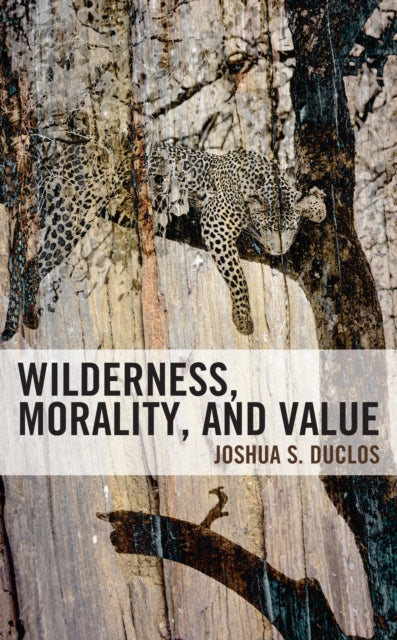
Joshua Duclos
Wilderness, Morality, and Value
Wilderness, Morality, and Value
We can order this item for you. Delivery usually takes about 4 to 6 weeks.
This item is not held in our immediate stock. We will order it for you after checkout.
Estimated delivery: About 4 to 6 weeks
- Condition: Brand new
- UK Delivery times: Usually arrives within 2 - 3 working days
- UK Shipping: Fee starts at £3.89. Subject to product weight & dimension
Bulk ordering. Want 15 or more copies? Get a personalised quote and bigger discounts. Learn more about bulk orders.
Couldn't load pickup availability
- More about Wilderness, Morality, and Value
Wilderness preservation raises moral questions due to the suffering of non-human inhabitants. Joshua S. Duclos argues that the value of wilderness is a narrow form of anthropocentric intrinsic value with a religio-spiritual dimension. He integrates scholarship from bioethics and environmental ethics to explore the ethics of wilderness in the Anthropocene.
Format: Hardback
Length: 162 pages
Publication date: 15 August 2022
Publisher: Lexington Books
Wilderness, Morality, and Value: A Philosophical Investigation
Wilderness is a natural environment that is untouched by human activities. It is often seen as a valuable resource for wildlife, providing them with a habitat to live in and a place to reproduce. However, some argue that wilderness can be bad for wildlife.
One of the main concerns is that wilderness can be a dangerous place for animals. Wild animals are often preyed upon by predators, and the lack of human presence can make it difficult for them to survive. This can lead to a decline in the population of certain species, and can also have a negative impact on the ecosystem as a whole.
Another concern is that wilderness can be a source of pollution. Wild animals can be exposed to pollutants such as pesticides, herbicides, and heavy metals, which can harm their health and reproductive ability. This can also have a negative impact on the ecosystem as a whole.
Despite these concerns, wilderness is still a valuable resource for wildlife. It provides a habitat for a wide range of species, and can help to maintain the balance of the ecosystem. Wild animals can also play an important role in the ecosystem, such as pollination and seed dispersal.
However, it is important to manage wilderness in a way that minimizes the negative impact on wildlife. This can include measures such as reducing the amount of pollution, providing habitat for wildlife, and managing the population of predators.
One of the challenges of managing wilderness is that it is a complex and dynamic environment. It is constantly changing, and it is difficult to predict how it will respond to human activities. This can make it difficult to develop effective management strategies.
In recent years, there has been a growing movement to protect wilderness. This movement has been led by environmentalists, who argue that wilderness is a valuable resource for wildlife and that it should be protected for future generations.
Environmentalists have developed a range of strategies to protect wilderness. These strategies include creating protected areas, reducing the amount of pollution, and managing the population of predators.
Protected areas are areas of land that are set aside for the protection of wildlife. These areas are typically managed by government agencies, and they are designed to protect the natural environment and the wildlife that live in it. Protected areas can include national parks, wildlife reserves, and wilderness areas.
Reducing the amount of pollution is another important strategy for protecting wilderness. This can be done by reducing the use of pesticides, herbicides, and heavy metals, and by promoting sustainable agriculture. Sustainable agriculture is a farming practice that is designed to protect the environment and to provide food for people.
Managing the population of predators is also an important strategy for protecting wilderness. This can be done by using techniques such as hunting, trapping, and habitat management. Hunting and trapping can be used to reduce the population of predators, but they must be done in a way that is sustainable and that does not harm the wildlife. Habitat management can be used to create habitats that are more suitable for wildlife, and to reduce the amount of competition between predators and prey.
Despite these strategies, wilderness is still facing a number of challenges. One of the biggest challenges is climate change. Climate change is causing the temperature of the Earth to rise, and this is causing a number of changes in the ecosystem. These changes are making it difficult for wildlife to survive, and they are also causing a number of changes in the landscape.
Another challenge is the loss of habitat. Habitat loss is caused by a number of factors, including deforestation, urbanization, and agriculture. Deforestation is the removal of trees from the forest, and it is causing a number of changes in the ecosystem. Urbanization is the growth of cities, and it is causing a number of changes in the landscape. Agriculture is the production of food, and it is causing a number of changes in the landscape.
To address these challenges, it is important to work together. Governments, businesses, and individuals can all play a role in protecting wilderness. Governments can create protected areas, reduce the amount of pollution, and manage the population of predators. Businesses can promote sustainable agriculture, and individuals can reduce their use of pesticides, herbicides, and heavy metals.
In conclusion, wilderness is a valuable resource for wildlife, but it can also be bad for wildlife. It is important to manage wilderness in a way that minimizes the negative impact on wildlife. This can include measures such as creating protected areas, reducing the amount of pollution, and managing the population of predators. By working together, we can protect wilderness for future generations.
Dimension: 229 x 152 (mm)
ISBN-13: 9781666901368
UK and International shipping information
UK and International shipping information
We deliver throughout the United Kingdom and to 128 countries and territories worldwide, including the United States, Australia, Canada, Germany, Spain and France.