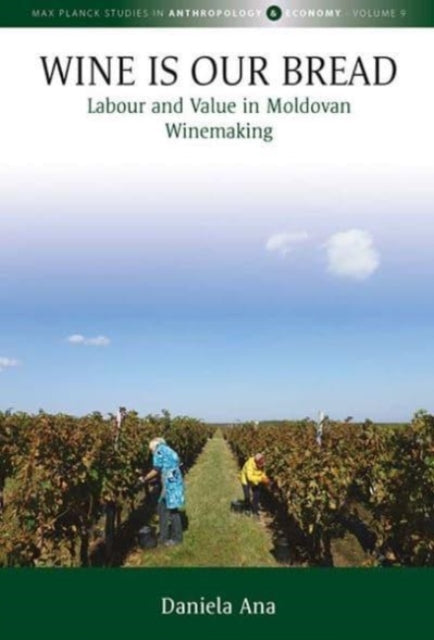
Daniela Ana
Wine Is Our Bread: Labour and Value in Moldovan Winemaking
Wine Is Our Bread: Labour and Value in Moldovan Winemaking
💎 Earn 496 Points (£4.96) on this item.
We can order this item for you. Delivery usually takes about 4 to 6 weeks.
This item is not held in our immediate stock. We will order it for you after checkout.
Estimated delivery: About 4 to 6 weeks
- Condition: Brand new
- UK Delivery times: Usually arrives within 2 - 3 working days
- UK Shipping: Fee starts at £3.89. Subject to product weight & dimension
Bulk ordering. Want 15 or more copies? Get a personalised quote and bigger discounts. Learn more about bulk orders.
Couldn't load pickup availability
- More about Wine Is Our Bread: Labour and Value in Moldovan Winemaking
Wine Is Our Bread explores how Moldovan winemakers have been affected by the country's entry into the globalized wine market, highlighting the creative destruction of local products and the exploitation of labour.
Format: Hardback
Length: 198 pages
Publication date: 13 May 2022
Publisher: Berghahn Books
Wine Is Our Bread: An Ethnographic Study of Moldovan Winemaking Workers and the Globalized Wine Market
Introduction:
Wine Is Our Bread is an ethnographic study that explores the experiences of workers in a prestigious winery in a Moldovan winemaking village. The book aims to understand how the country's recent entry into the globalized wine market has impacted their productive activities at home and in the winery and how their contributions to the value of commercial terroir wines contribute to the creative destruction of local products, their accelerated standardization, and the increased exploitation of labor. The book draws on theories of globalization, economic anthropology, and political economy to provide a comprehensive understanding of these complex issues.
The Moldovan Winemaking Village:
The Moldovan winemaking village is located in the southern part of the country, near the Black Sea. The village has a long history of winemaking, with many families having been involved in the industry for generations. The village is known for its high-quality wines, which are exported to many countries around the world.
The Globalized Wine Market:
The globalized wine market has had a significant impact on the Moldovan winemaking village. The market has led to increased competition, lower prices, and increased demand for wine. This has resulted in the expansion of the winery and the introduction of new technologies and practices. However, it has also led to the exploitation of labor and the degradation of the environment.
Workers in the Winery:
The workers in the winery are primarily Moldovan, with a few foreign workers. The workers are paid low wages, and they work long hours, often in difficult conditions. They are responsible for a variety of tasks, including harvesting grapes, processing grapes, and bottling wine.
The Impact of the Globalized Wine Market on Workers:
The globalized wine market has had a significant impact on the workers in the winery. The market has led to increased competition, lower prices, and increased demand for wine. This has resulted in the exploitation of labor and the degradation of the environment.
One of the main ways that the globalized wine market has impacted workers is through the use of cheap labor. The winery has been able to hire workers from other countries at lower wages than they would pay Moldovan workers. This has led to a decrease in the wages of Moldovan workers and has made it difficult for them to support their families.
In addition to the use of cheap labor, the globalized wine market has also led to the degradation of the environment. The winery has been using pesticides and fertilizers to grow grapes, which has led to soil erosion and water pollution. This has had a negative impact on the health of the workers and the surrounding community.
The Creative Destruction of Local Products:
The globalized wine market has led to the creative destruction of local products. Local products are unique and distinctive, and they are often valued for their quality and authenticity. However, the globalized wine market has led to the standardization of local products, which has made them less valuable.
The standardization of local products has been driven by the need to meet the demands of the global market. The winery has been forced to produce wines that are consistent in taste and quality, regardless of the season or the location of the grapes. This has led to the use of standardized techniques and equipment, which has reduced the cost of production but has also reduced the quality of the wine.
The increased exploitation of labor has also contributed to the creative destruction of local products. The winery has been able to hire workers at lower wages, which has led to a decrease in the quality of the wine. This has made it difficult for the winery to compete with other wineries in the global market.
Conclusion:
Wine Is Our Bread is an ethnographic study that explores the experiences of workers in a prestigious winery in a Moldovan winemaking village. The book aims to understand how the country's recent entry into the globalized wine market has impacted their productive activities at home and in the winery and how their contributions to the value of commercial terroir wines contribute to the creative destruction of local products, their accelerated standardization, and the increased exploitation of labor. The book draws on theories of globalization, economic anthropology, and political economy to provide a comprehensive understanding of these complex issues.
The Moldovan winemaking village is located in the southern part of the country, near the Black Sea. The village has a long history of winemaking, with many families having been involved in the industry for generations. The village is known for its high-quality wines, which are exported to many countries around the world.
The globalized wine market has had a significant impact on the Moldovan winemaking village. The market has led to increased competition, lower prices, and increased demand for wine. This has resulted in the expansion of the winery and the introduction of new technologies and practices. However, it has also led to the exploitation of labor and the degradation of the environment.
Workers in the winery are primarily Moldovan, with a few foreign workers. The workers are paid low wages, and they work long hours, often in difficult conditions. They are responsible for a variety of tasks, including harvesting grapes, processing grapes, and bottling wine.
The Impact of the Globalized Wine Market on Workers:
The globalized wine market has had a significant impact on the workers in the winery. The market has led to increased competition, lower prices, and increased demand for wine. This has resulted in the exploitation of labor and the degradation of the environment.
One of the main ways that the globalized wine market has impacted workers is through the use of cheap labor. The winery has been able to hire workers from other countries at lower wages than they would pay Moldovan workers. This has led to a decrease in the wages of Moldovan workers and has made it difficult for them to support their families.
In addition to the use of cheap labor, the globalized wine market has also led to the degradation of the environment. The winery has been using pesticides and fertilizers to grow grapes, which has led to soil erosion and water pollution. This has had a negative impact on the health of the workers and the surrounding community.
The Creative Destruction of Local Products:
The globalized wine market has led to the creative destruction of local products. Local products are unique and distinctive, and they are often valued for their quality and authenticity. However, the globalized wine market has led to the standardization of local products, which has made them less valuable.
The standardization of local products has been driven by the need to meet the demands of the global market. The winery has been forced to produce wines that are consistent in taste and quality, regardless of the season or the location of the grapes. This has led to the use of standardized techniques and equipment, which has reduced the cost of production but has also reduced the quality of the wine.
The increased exploitation of labor has also contributed to the creative destruction of local products. The winery has been able to hire workers at lower wages, which has led to a decrease in the quality of the wine. This has made it difficult for the winery to compete with other wineries in the global market.
In conclusion, Wine Is Our Bread is an ethnographic study that explores the experiences of workers in a prestigious winery in a Moldovan winemaking village. The book aims to understand how the country's recent entry into the globalized wine market has impacted their productive activities at home and in the winery and how their contributions to the value of commercial terroir wines contribute to the creative destruction of local products, their accelerated standardization, and the increased exploitation of labor. The book draws on theories of globalization, economic anthropology, and political economy to provide a comprehensive understanding of these complex issues.
Dimension: 229 x 152 (mm)
ISBN-13: 9781800733411
UK and International shipping information
UK and International shipping information
We deliver throughout the United Kingdom and to 128 countries and territories worldwide, including the United States, Australia, Canada, Germany, Spain and France.