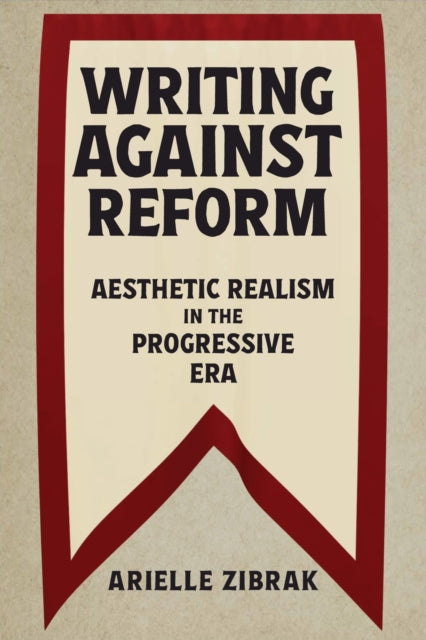
Arielle Zibrak
Writing against Reform: Aesthetic Realism in the Progressive Era
Writing against Reform: Aesthetic Realism in the Progressive Era
💎 Earn 136 Points (£1.36) on this item.
YOU SAVE £1.62
- Condition: Brand new
- UK Delivery times: Usually arrives within 2 - 3 working days
- UK Shipping: Fee starts at £3.89. Subject to product weight & dimension
Bulk ordering. Want 15 or more copies? Get a personalised quote and bigger discounts. Learn more about bulk orders.
Couldn't load pickup availability
- More about Writing against Reform: Aesthetic Realism in the Progressive Era
Reform literature became a prominent feature of the American literary landscape during the Progressive Era, with works like Upton Sinclair's "The Jungle" and Charlotte Perkins Gilman's "The Yellow Wall-Paper" topping bestseller lists and jolting middle-class readers into action. However, prominent writers such as Henry James, Edith Wharton, James Weldon Johnson, Rebecca Harding Davis, and Kate Chopin resisted explicit political rhetoric in their works and critiqued reform aesthetics, which often rang hollow. Arielle Zibrak's book "Writing against Reform" examines the critique of reform aesthetics within the tradition of American realist literature and promises to change the way we think about this period and many of America's leading writers.
Format: Paperback / softback
Length: 280 pages
Publication date: 29 February 2024
Publisher: University of Massachusetts Press
The Progressive Era saw a surge in reform literature that became a prominent feature of the American literary landscape. Works such as Upton Sinclair's "The Jungle," Charlotte Perkins Gilman's "The Yellow Wall-Paper," and Jacob Riiss's "How the Other Half Lives" topped bestseller lists and stirred middle-class readers into action. While realism and social reform had a long-standing relationship, prominent writers of the period, including Henry James, Edith Wharton, James Weldon Johnson, Rebecca Harding Davis, and Kate Chopin, avoided explicit political rhetoric in their own works and critiqued the prevailing reform aesthetics, which often felt hollow. Arielle Zibrak's book, "Writing against Reform," challenges our understanding of late nineteenth- and early twentieth-century American realist literature by examining the critique of reform aesthetics within this tradition. The book promises to reshape our perspective on the fiction of this period and the influential writers of America.
During the Progressive Era, reform literature emerged as a significant aspect of the American literary scene. Notable works like Upton Sinclair's "The Jungle," Charlotte Perkins Gilman's "The Yellow Wall-Paper," and Jacob Riiss's "How the Other Half Lives" reached the top of bestseller lists and galvanized middle-class readers into action. While realism and social reform had a longstanding connection, prominent writers of the period, including Henry James, Edith Wharton, James Weldon Johnson, Rebecca Harding Davis, and Kate Chopin, refrained from direct political commentary in their own works and critiqued the prevailing reform aesthetics, which often lacked substance.
However, Arielle Zibrak's book, "Writing against Reform," challenges our perception of late nineteenth- and early twentieth-century American realist literature by delving into the critique of reform aesthetics within this tradition. The book promises to reshape our understanding of the fiction of this period and the influential writers of America.
Weight: 418g
Dimension: 152 x 229 x 24 (mm)
ISBN-13: 9781625347718
UK and International shipping information
UK and International shipping information
We deliver throughout the United Kingdom and to 128 countries and territories worldwide, including the United States, Australia, Canada, Germany, Spain and France.